 Error Codes



How to remove drip pan from Amana refrigerator?
On the Amana ARB2257CW-PARB2257CW0 bottom-mount refrigerator, the drip pan (drain pan) typically sits underneath the cabinet near the compressor area and is accessed from the rear lower section. We recommend unplugging the refrigerator first, then sliding the pan out carefully to avoid spills.
- Unplug the refrigerator (or switch off power at the breaker).
- Pull the refrigerator straight out from the wall to create working space.
- Remove the lower rear access cover (if your unit has one).
- Locate the shallow plastic pan under the compressor and condenser area.
- Slide the pan straight out; keep it level because it may contain water.
- Wash with warm water and mild dish soap; dry fully before reinstalling.
A drip pan usually only holds a small amount of water from the defrost cycle. If it is overflowing or you see puddles, check these common causes:
- Drain tube partially clogged with debris or ice
- Refrigerator not level (water does not flow to the pan correctly)
- Excess humidity or frequent door openings causing heavy defrost water
- Pan cracked or warped
- Condenser area very dusty, slowing evaporation
| Symptom | Most likely cause | What to do next |
|---|---|---|
| Water on floor near front | Defrost drain issue | Clear the drain path; then monitor for 24 hours |
| Water only in pan | Normal operation | Clean pan and reinstall |
| Pan overflowing | Drain restriction or leveling | Clean drain, level cabinet, clean condenser area |
| Bad odor near back | Stagnant water in pan | Clean pan; sanitize lightly and dry |
Keeping the drip pan clean helps prevent odors and reduces the chance of water leaking onto the floor. It also gives you a good opportunity to vacuum dust from the condenser area so the refrigerator cools efficiently.
For a replacement drip tray used on this model, check the parts list for the matching pan; a commonly listed option for this model is tray, drip e WPW10292802.
Last updated: February 2026
What are the disadvantages of a bottom freezer refrigerator?
Bottom-freezer refrigerators like the Amana ARB2257CW-PARB2257CW0 keep fresh food at eye level, but the tradeoffs are more bending for frozen items, heavier freezer drawers that can wear hardware faster, and repairs that can cost more when drawer, ice maker, or water system parts are involved.
- You bend or squat more to reach frozen foods, especially items at the bottom of the drawer.
- Freezer drawers get heavy when fully loaded; that extra weight can stress slides, rollers, and door alignment.
- Freezer organization can be harder; stacked items and deep bins make it easier to “lose” food.
- If you use the freezer constantly, the drawer-style access can feel slower than a swing door.
- Some bottom-mount designs have less usable freezer space than you expect because of drawer hardware and bins.
Heavier drawers and frequent opening can increase wear on a few common areas:
| Area | What happens | What to check first |
|---|---|---|
| Door alignment and closing | Drawer or doors don’t seal evenly | Leveling, obstructions, gasket condition |
| Ice maker system | No ice, small cubes, jams | Water supply, fill issues, ice maker condition |
| Interior lighting/door sensing | Light stays on or won’t turn on | Door switch operation |
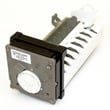
If your ice maker is acting up, the refrigerator ice maker D7824706Q is one of the model-matched parts listed for ARB2257CW-PARB2257CW0.
A bottom freezer that does not close and seal consistently can lead to temperature swings, frost buildup, and longer compressor run times. Keeping drawers aligned, seals clean, and airflow clear helps protect food quality and reduces strain on cooling components.
- Keep heavier frozen items (meat, bulk bags) closer to the top of the drawer.
- Do not overpack; leave space so the drawer closes without forcing it.
- Wipe and dry drawer rails and gaskets regularly to prevent sticking and ice buildup.
- If you have water and ice, replace filters on schedule and keep the supply line from kinking.
- Address sealing issues early; small alignment problems turn into frost and cooling complaints.
Last updated: February 2026
Why is the bottom of my freezer door not sealing?
On your Amana ARB2257CW-PARB2257CW0 bottom-mount refrigerator, the freezer door usually fails to seal at the bottom because the door is slightly out of alignment, the gasket is dirty or deformed, or the door is being held open by an overfilled bin or ice buildup. Fixing the seal prevents frost and temperature swings.
- Make sure nothing inside the freezer is pushing the door outward (bags, baskets, or a shifted drawer).
- Check for ice or frost along the bottom rail that keeps the door from closing fully.
- Clean the gasket and the cabinet sealing surface with warm water and mild dish soap; dry completely.
- Warm a wavy gasket section with a hair dryer on low for 1 to 2 minutes, then gently reshape it and close the door for 10 minutes.
- Confirm the refrigerator is level and slightly tilted back so the doors “self-close” the last inch.
A bottom gap often points to alignment, not just the gasket.
| What you see | Most likely cause | What to do next |
|---|---|---|
| Gap only at bottom corner | Door sag or hinge shift | Tighten hinge screws; re-level cabinet |
| Gap across the entire bottom | Gasket not seating or cabinet not level | Clean, warm/reshape gasket; adjust leveling legs |
| Door bounces back open | Ice buildup or drawer interference | Defrost/clear ice; reposition drawer/bin |
A poor freezer door seal pulls humid air into the freezer. That creates frost, longer run times, and warmer food temps, and it can also lead to water puddles when frost melts.
If the door is closing but the interior light stays on (which adds heat and can worsen sealing and frost), check the door switch operation. The correct switch for this model is the refrigerator switch W11396033.
For step-by-step DIY guidance on gasket-related sealing issues, use our how to fix a fridge door seal article.
Last updated: February 2026
How much does it cost to replace a compressor in an Amana refrigerator?
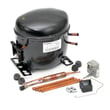
For Amana model ARB2257CW-PARB2257CW0, compressor replacement typically costs about $700 to $1,500 total (parts plus labor). The compressor itself is a major component; on this model, the listed compressor part is refrigerator compressor W10160407, and labor often makes up a large share of the final bill.
Compressor jobs usually include sealed-system work (recovering refrigerant, brazing, evacuating, recharging), so pricing varies by region and shop.
- Compressor part: commonly $300 to $600
- Labor: commonly $350 to $900
- Shop supplies and refrigerant handling: commonly $50 to $200
- Possible add-ons: drier replacement, start components, or condenser cleaning
- Whether the repair includes a sealed-system warranty from the servicer
- If the drier is replaced during the job (commonly recommended with compressor work)
- If the compressor failed due to a start device/overload issue instead of an internal failure
- Access and time on a bottom-mount design (moving the unit, clearing the machine compartment)
- Local labor rates and trip/diagnostic fees
These are examples of parts on this model that may be considered during diagnosis or repair:
| What it is | Why it matters | Example part on this model |
|---|---|---|
| Compressor | The pump that circulates refrigerant | Refrigerator compressor W10160407 |
| Overload | Protects the compressor from overheating/overcurrent | Refrigerator overload WP12555902 |
| Capacitor | Helps the compressor start and run efficiently (when used) | Refrigerator capacitor (listed for this model) |
| Condenser | Rejects heat; restricted airflow can stress the system | Condenser, e WP67006132 |
A compressor is one of the highest-cost refrigerator repairs. Getting the diagnosis right (compressor vs. start components vs. airflow issues) prevents paying for sealed-system work when a simpler electrical fix would restore cooling.
Last updated: February 2026
Why is my Amana refrigerator leaking water on the floor?
Water on the floor around your Amana ARB2257CW-PARB2257CW0 bottom-mount refrigerator is usually caused by a clogged defrost drain, a cracked or shifted drain pan, or a water-supply leak (ice maker or water line). Clearing the drain path and checking the water tubing connections typically stops the leak.
- Clogged defrost drain: Meltwater can back up and spill into the fresh food section, then run onto the floor.
- Drain pan problem: A pan that is cracked, out of position, or overflowing can drip underneath.
- Water line or fitting leak: If your unit has an ice maker or water dispenser, a loose fitting or damaged tube can leak.
- Ice maker fill issue: A misaligned fill tube or valve seep can create intermittent puddles.
- Door left ajar or bad seal: Excess frost can overwhelm the drain during defrost.
- Unplug the refrigerator and pull it out enough to inspect behind and underneath.
- Look for the source:
- Water only inside the fridge (under crisper) usually points to the defrost drain.
- Water only underneath/back often points to the drain pan or water line.
- Check the drain pan for cracks and correct placement.
- If you have an ice maker, inspect the supply line and fittings; also check the valve area for seepage.
- Clear the defrost drain using hot water and a turkey baster (work slowly to avoid overflow).
If you find a leak at the water supply connection or valve area, these parts are commonly involved:
| Leak location | What you may see | Part that may be involved |
|---|---|---|
| Back of fridge near water hookup | Drips at fittings or tubing | Refrigerator tube WP2300868 |
| Valve area (rear lower section) | Slow seep, wet cabinet base | Refrigerator valve WP12544002 |
| Under/near ice maker fill area | Ice buildup, occasional puddles | Refrigerator ice maker D7824706Q |
A small leak can damage flooring and can also lead to ice buildup, odors, and temperature swings if the defrost drain keeps freezing and overflowing. Fixing the source early helps your compressor and cooling system run more efficiently.
- Use our step-by-step checks in how to get rid of refrigerator puddles.
- If the leak is tied to the water system, follow how to diagnose a faulty refrigerator water inlet valve.
Last updated: February 2026





