 Installation guide
 Owner’s manual
 Error Codes



How do I get rid of standing water in my Kenmore dishwasher?
Standing water in your Kenmore dishwasher model 58716252402 usually means the unit did not drain at the end of the cycle. We recommend removing the water first (so you can work safely), then checking the drain path (filter area, drain hose, and sink air gap or disposer connection) to restore normal draining. See the 58716252402 owner's manual for your model’s drain and filter locations.
Step 1: Remove the standing water safely
- Turn off power at the breaker (or unplug the dishwasher).
- Place towels at the front of the dishwasher to catch spills.
- Scoop water out with a cup or small container.
- Soak up the remaining water with towels or a sponge.
- Remove the lower rack so you can access the sump area.
Step 2: Check the most common drain blockage points
Standing water is almost always caused by a restriction in the drain path.
- Filter and sump area: Clear food debris around the filter area and sump.
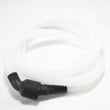
- Drain hose routing: Make sure the hose is not kinked or crushed behind the dishwasher.
- High loop or air gap: Verify the drain hose has a high loop under the counter; if you have a countertop air gap, clean it.
- Garbage disposer inlet: If the dishwasher drain connects to a disposer, confirm the disposer inlet knockout plug was removed.
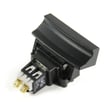
- Drain pump: If you hear humming but no draining, the pump may be jammed or failing; the pump 154580301 is the model-matched drain pump.
Quick symptom guide
| What you notice | Most likely cause | What to do next |
|---|---|---|
| Water remains after every cycle | Drain restriction | Check filter, hose, air gap/high loop |
| Hums but won’t drain | Pump jam or failed pump | Inspect pump area; replace pump if needed |
| Drains slowly | Partial clog | Clean air gap and hose; clear debris |
Why it matters
Standing water can cause odors, poor cleaning, and can lead to leaks if the dishwasher overfills. Restoring proper draining also helps the wash system recirculate filtered water the way it is designed to.
Last updated: January 2026
What does F2E2 mean on a Kenmore dishwasher?
On a Kenmore dishwasher, the F2E2 error code indicates a user interface (keypad) communication problem with the main electronic control. On model 58716252402, this typically points to a wiring/connection issue or a failing control panel or control board.
What to try first (quick checks)
- Reset power: turn the dishwasher off at the breaker for 1 minute, then restore power.
- Make sure the door is fully closed and latched; a loose latch can cause odd control behavior.
- Check for stuck keys: press each key once; a “stuck” button can trigger control errors.
- If the display is flashing or beeping, cancel the cycle and restart a normal wash.
- Review any model-specific diagnostics or indicator behavior in the 58716252402 owner's manual.
Likely causes and what they mean
| Likely cause | What you may notice | Typical fix |
|---|---|---|
| Loose or corroded wire connection between UI and control | Intermittent code, random beeping | Reseat connectors, inspect harness |
| Failing user interface / control panel | Some buttons do not respond | Replace the UI/control panel assembly |
| Failing electronic control board | Code returns after reset, cycles stop mid-wash | Replace the control board |
| Moisture intrusion at console | Code appears after heavy steam use | Dry console area, inspect seals |
Parts that are commonly involved
If the code returns after a power reset and basic checks, the repair often involves the control system.
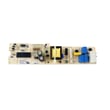
- Dishwasher control 5304512731 (main electronic control board)
- Dishwasher switch assembly 154852501 (user interface/control panel assembly)
Why it matters
F2E2 is a control communication fault; when the user interface and main control cannot “talk” reliably, the dishwasher may not start, may stop mid-cycle, or may not respond to button presses. Fixing it restores normal cycle selection and operation.
Last updated: January 2026
What are the commonly replaced parts in a dishwasher?
In a Kenmore dishwasher model 58716252402, the most commonly replaced parts are the ones tied to leaks, draining, heating, and wash performance: door seals and gaskets, drain components, the water inlet valve, the heating element, and spray components. Use the 58716252402 owner's manual to match symptoms to the right part.
Commonly replaced dishwasher parts (and what they affect)
- Door seals and gaskets: stop water leaks around the door and tub opening
- Drain parts (drain hose, drain pump): fix standing water and slow draining
- Water inlet valve: restores proper filling when the dishwasher under-fills or won’t fill
- Heating element: improves drying and helps maintain wash temperature
- Spray arm and wash system parts: restore spray pressure and cleaning performance
- Float switch / overfill protector: prevents overfilling; can cause fill problems if stuck
Model 58716252402 parts we see replaced often
These are common “first-check” items for this model when symptoms match:
| Symptom | Likely part area | Example part for this model |
|---|---|---|
| Water leaking at the door | Door seal | Dishwasher door seal 809006501 |
| Not drying well, water not heating | Heating circuit | Heater 154825001 |
| Won’t fill or fills too slowly | Fill system | Valve 154637401 |
| Not draining, water left in tub | Drain system | Hose 807117001 |
Quick checks before you buy a part
We recommend these simple checks first because they often solve the issue without replacing anything:
- Confirm the dishwasher is level; leaks can happen when it is tilted (installation guidance applies).
- Inspect for kinked water or drain hoses; kinks can cause fill and drain problems.
- If draining into a disposer for the first time, make sure the disposer inlet plug is knocked out.
- Clean the glass trap and check the overfill protector moves freely.
- Wipe up any spilled rinse aid; it can cause foaming and overflow.
Why it matters
Dishwashers usually fail in predictable ways: water leaks (seals), poor cleaning (spray and circulation), standing water (drain path), and poor drying (heater). Matching the symptom to the system helps you replace the right Kenmore part the first time.
Last updated: January 2026
What is the spinning thing at the bottom of a dishwasher called?
In the Kenmore 58716252402 dishwasher, the spinning part at the bottom is the lower spray arm (also called the wash arm). It rotates and sprays pressurized wash water up at the dishes to remove food soil during the wash cycle; see the 58716252402 owner's manual.
What it does (and what else can spin)
The lower spray arm is part of the wash system that pumps water through the arm and out of small spray holes. Many Kenmore dishwashers also alternate wash action between spray arms during the cycle.
- Sprays water at the lower rack and up toward the upper rack
- Helps move food soil toward the filter and collection area
- Alternates with other spray arms on many models
- Can stop spinning if blocked by tall items or heavy loading
- Needs clear spray holes to maintain good wash pressure
Common symptoms when the lower spray arm is the issue
Cleaning problems usually show up first when the arm cannot rotate freely or the spray holes are restricted.
| Symptom | Most common cause | What to check first |
|---|---|---|
| Dishes still dirty on bottom rack | Spray holes clogged | Clear spray arm holes with warm water |
| Upper rack not cleaning well | Blocked rotation or poor circulation | Make sure nothing hits the arm |
| Clicking or thumping sound | Arm striking dishes | Reload for clearance |
| Weak spray pattern | Debris in arm or filter area | Clean filter area and spray arm |
Quick checks we recommend
- Pull out the lower rack and spin the arm by hand; it should rotate freely.
- Look for utensils, labels, or large pans that can stop rotation.
- Check the spray holes for mineral buildup or food debris.
- Load so nothing protrudes into the spray arm path.
If you need a replacement
For this model, match the replacement by the exact listing: dishwasher spray arm 5304513274 (part number 154597503).
Why it matters
The lower spray arm is the main delivery point for wash water. When it cannot rotate or spray evenly, water circulation drops and cleaning performance suffers even with the right detergent and cycle.
Last updated: January 2026





