
Where is the reset button on a Craftsman table saw?
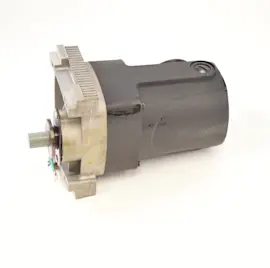
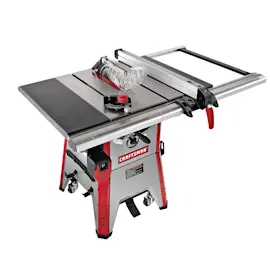
On many Craftsman table saws like model 11322411, there is not a separate external “reset button” on the switch. The reset is typically the motor overload reset, located on or near the motor housing; restoring power requires resetting that overload and correcting what caused it to trip.
Where to look on a Craftsman 11322411
Most 10-inch tilting arbor bench saws use a motor with a manual overload reset. Common locations include:
- End bell of the motor (often behind small plastic caps or covers)
- Side of the motor housing near the wiring junction area
- Near the motor’s capacitor cover (if equipped)
If your saw suddenly stopped and the switch still feels normal, the overload reset is the first place we check.
How to reset it safely
- Unplug the saw.
- Let the motor cool for 10 to 20 minutes.
- Locate the overload reset on the motor.
- Press the reset mechanism (button or internal spring-style reset, depending on motor design).
- Plug in and test with no load.
Before you run it again, check these common trip causes
- Dull blade or wrong blade for the cut
- Feed rate too fast, stock binding, or pinching at the back of the blade
- Misaligned rip fence or miter gauge causing friction
- Extension cord too long or too small gauge (voltage drop)
- Sawdust buildup restricting motor ventilation
Quick symptom guide
| What happened | Most likely cause | What we do next |
|---|---|---|
| Motor stops mid-cut, restarts after cooling | Overload tripped | Reset overload; reduce load and binding |
| Motor hums but won’t spin | Start circuit issue or jam | Unplug; check blade spins freely; inspect wiring |
| Trips breaker immediately | Short or severe overload | Inspect cord, plug, switch, and motor wiring |
Why it matters
The overload reset is a safety device that protects the motor windings from overheating. If it trips repeatedly, fixing the underlying load or electrical issue prevents motor damage and nuisance shutdowns.
For additional DIY safety guidance before troubleshooting electrical components, use our are diy appliance repairs safe article.
Last updated: February 2026
What are the common table saw mistakes?
Common table saw mistakes on a Craftsman 11322411 (10-inch tilting arbor bench saw) include skipping PPE, removing safety devices, using poor cutting technique, and running a dull or wrong blade. These errors increase kickback risk, reduce cut accuracy, and can damage the workpiece.
Most common mistakes we see
- Not wearing PPE (eye protection, hearing protection, and a dust mask when needed)
- Cutting without a splitter or riving knife (when your setup supports it)
- Standing directly behind the board during a rip cut (kickback path)
- Using the rip fence and miter gauge together to guide the same cut (can pinch the blade)
- Using a dull, dirty, or incorrect blade for the material
- Setting the blade too high above the workpiece
- Cutting freehand instead of using the fence, miter gauge, or a sled
- Not using push sticks or push blocks for narrow rips
Quick setup checks before you cut
- Confirm the blade is sharp, clean, and tightened.
- Set blade height so gullets are just above the top surface of the wood (a low, controlled exposure).
- Verify the fence is parallel to the blade and locks firmly.
- Use outfeed support for long boards; don’t “catch” the board as it exits.
- Keep the work flat to the table and tight to the fence or miter gauge.
Safe technique: rip cuts vs. crosscuts
| Cut type | Use this guide | Avoid this mistake |
|---|---|---|
| Rip cut (with the grain) | Rip fence, push stick/push block | Freehand ripping; reaching over the blade |
| Crosscut (across the grain) | Miter gauge or crosscut sled | Using fence and miter gauge together |
Why it matters
Most table saw injuries and ruined cuts trace back to kickback and loss of control. Good stance (off to the side), correct guides (fence or miter gauge, not both), and a sharp blade keep the cut predictable and the stock stable.
Helpful DIY safety guidance
For a practical overview of safe DIY habits before starting repairs or adjustments, use our are diy appliance repairs safe guide.
Last updated: February 2026
Can you use an 8 inch blade on a 10 inch table saw?
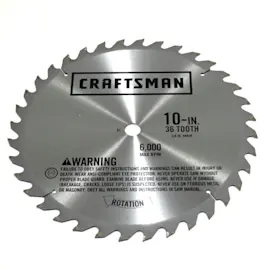
Yes, you can use an 8-inch blade on a 10-inch table saw like the Craftsman 11322411 as long as the blade’s arbor hole matches your saw’s arbor size and the blade is rated for the saw’s RPM. Expect reduced maximum cut depth compared with a 10-inch blade.
What changes when you drop from 10-inch to 8-inch
An 8-inch blade sits lower in the table, so it cannot cut as deep.
- Shallower cut capacity: you lose roughly 1 inch of max depth versus a 10-inch blade.
- Guard and splitter/riving knife fit: the factory blade guard setup may not align correctly with a smaller blade.
- Dust collection and kickback control: misalignment can reduce safety and cut quality.
- Throat plate clearance: the opening is usually fine, but a zero-clearance insert made for a 10-inch blade may not support the workpiece as well with a smaller blade.
Quick compatibility checklist (before you install)
Use this list for any blade swap on the Craftsman 11322411.
- Match the arbor hole (commonly 5/8 inch on many 10-inch bench saws).
- Confirm the blade’s max RPM rating meets or exceeds the saw’s no-load speed.
- Verify the blade’s kerf works with your splitter/riving knife (if equipped).
- Make sure the blade clears the throat plate and raises/tilts without rubbing.
- Re-check blade-to-miter-slot parallel and fence alignment after changes.
8-inch dado sets on a 10-inch saw
Many 8-inch dado sets are commonly used on 10-inch table saws because dado cuts are not through-cuts and do not require full blade diameter. The key is still arbor fit, RPM rating, and having the correct throat plate and guarding approach for dado work.
| Blade type | Typical use on a 10-inch saw | Main tradeoff |
|---|---|---|
| 10-inch standard blade | General ripping and crosscutting | Full cut depth |
| 8-inch standard blade | Thin stock, specialty grinds | Reduced cut depth |
| 8-inch dado set | Grooves, dados, rabbets | Requires dado throat plate and setup changes |
Why it matters
Using the wrong arbor size, an under-rated RPM blade, or a mismatched guard/splitter setup increases vibration, burning, poor tracking, and kickback risk. A correct match keeps cuts accurate and the saw safer to operate.
For general DIY safety practices before repairs or adjustments, use are diy appliance repairs safe.
Last updated: February 2026
Does Craftsman make a good table saw?
Yes. Craftsman table saws, including the Craftsman 11322411 10-inch tilting arbor bench saw, are a good choice for DIYers who want solid cutting capability at a reasonable cost. They are best for light to moderate use; accuracy and long-term durability depend heavily on setup, alignment, and maintenance.
What “good” usually means for a table saw
A table saw feels “good” when it delivers repeatable cuts, stays aligned, and runs smoothly.
- Fence locks parallel to the blade and stays put during a rip cut
- Blade and miter slots align so crosscuts track straight
- Arbor and bearings run true with minimal vibration
- Motor starts and runs consistently without bogging on typical stock
- Safety features are used every time (guard, splitter/riving knife if equipped, push stick)
Strengths and trade-offs you can expect
Because we do not have model-specific documentation for 11322411 here, we focus on what’s typical for Craftsman bench and contractor-style saws of this era.
| What you care about | Typical Craftsman experience | Best practice to get better results |
|---|---|---|
| Cut accuracy | Good after tuning; can drift if fence is out | Square and calibrate the fence and miter gauge |
| Power for DIY | Strong for plywood and common hardwoods | Use a sharp, correct blade for the cut |
| Vibration/noise | Varies by stand, belt, and bearings | Level the saw, check pulleys/belt, tighten fasteners |
| Longevity | Good with maintenance | Keep it clean, aligned, and don’t force feed rate |
Quick checks before you decide it’s “not good”
These steps fix most complaints about wandering cuts and burning.
- Verify the blade is parallel to the miter slot
- Confirm the fence is parallel to the blade (or slightly relieved at the outfeed)
- Inspect the blade for pitch buildup, missing teeth, or dullness
- Check for play in the arbor (bearing wear shows up as wobble)
- Make sure the table is flat and the saw is stable on its bench/stand
Why it matters
Most “bad table saw” experiences come from alignment, fence setup, or a dull blade, not from the brand name. A tuned Craftsman 11322411 can produce clean, repeatable cuts for DIY projects, while a poorly aligned saw of any brand will frustrate you.
For general repair readiness and the right hand tools for adjustments, see must have tools for appliance repair.
Last updated: February 2026