
Can you teach yourself to use a lathe?
Yes. You can teach yourself to use a lathe, including the Craftsman 10128940 12" metal turning lathe, by starting with basic operations and practicing on simple projects while following strict safety habits. Most beginners build usable skills quickly with consistent, hands-on time.
A safe self-teaching path that works
- Start with lathe safety basics: eye protection, no gloves near rotating work, tie back hair, remove jewelry.
- Learn the controls and what each one does: spindle speed, feed direction, carriage travel, cross-slide, compound.
- Practice on mild steel or aluminum with short stock; avoid long, unsupported pieces at first.
- Do facing and straight turning before you try drilling, boring, taper turning, or threading.
- Measure often with calipers or a micrometer; accuracy comes from checking and adjusting.
- Keep a log of speeds, feeds, and tool angles that worked for each material.
What to learn first (in order)
| Skill | What you’re aiming for | Common beginner mistake |
|---|---|---|
| Facing | Flat, square end | Too much tool overhang causing chatter |
| Straight turning | Consistent diameter | Running too fast or too slow for the material |
| Center drilling + drilling | Straight hole on center | Not supporting the work or using dull bits |
| Parting | Clean cutoff | Tool not square to the work or poor chip clearing |
Setup checks before every practice session
- Confirm the work is clamped securely in the chuck and the chuck key is removed.
- Set tool height on center; off-center tools cut poorly and can grab.
- Choose a conservative spindle speed; increase only after the cut is stable.
- Use cutting oil when appropriate; it improves finish and tool life.
- Stand out of the line of fire when starting the spindle.
Why it matters
A metal lathe can remove material fast, and mistakes happen quickly. A structured learning order (setup, facing, turning, measuring, then advanced cuts) reduces crashes, improves surface finish, and helps you build repeatable machining habits.
For general DIY readiness and safe repair habits around tools and electrical components, we recommend reviewing are diy appliance repairs safe.
Last updated: February 2026
What are common lathe repair issues?
Common repair issues on the Craftsman 10128940 12-inch metal turning lathe include spindle vibration or chatter, worn bearings, feed or carriage movement problems, and electrical faults such as a bad switch or damaged wiring. These problems typically show up as poor surface finish, inconsistent cuts, overheating, or a lathe that will not start.
Most common problems (and what you notice)
- Chatter or vibration: rippled finish, tool squeal, visible shaking at certain speeds
- Worn spindle or motor bearings: rumbling noise, heat at the headstock, increasing runout
- Inaccurate feed or backlash: overshooting dimensions, inconsistent thread pitch, sloppy handwheel feel
- Drive issues (belt, pulleys, gears): slipping under load, speed changes on their own, clicking or grinding
- Electrical issues (cord, switch, wiring): intermittent power, tripped breaker, no response when switched on
- Lubrication problems: stiff slides, accelerated wear, hot bearings or gears
Quick checks we recommend before you buy parts
- Confirm the model number on the machine tag is 10128940 (small differences can change parts fit).
- Isolate the symptom: noise, vibration, accuracy, or power.
- Check the basics: belt tension, pulley alignment, gear engagement, and obvious loose fasteners.
- Measure runout (if you have a dial indicator) at the spindle and at the workpiece.
- Inspect wiring for cracked insulation, loose terminals, or heat discoloration.
Symptom-to-cause guide
| Symptom | Most likely causes | First action |
|---|---|---|
| Chatter during cuts | Tool overhang, loose gibs, worn bearings, incorrect speed/feed | Tighten gibs, reduce overhang, adjust speed/feed |
| Poor accuracy/backlash | Worn lead screw/nut, loose cross slide, misalignment | Check backlash, adjust gibs, verify alignment |
| Overheating headstock | Low/old lubricant, bearing wear, excessive preload | Verify lubrication, check bearing noise/heat |
| Won’t start or cuts out | Bad switch, damaged cord, loose wiring, blown fuse | Inspect wiring, test switch continuity |
Why it matters
Lathe issues compound quickly: vibration and poor lubrication accelerate wear on bearings, gears, and ways, and accuracy problems can ruin parts and tooling. Catching the root cause early protects the spindle, carriage, and motor.
For safe electrical troubleshooting steps, use our guide: how to use a multimeter to test electrical parts video.
Last updated: February 2026
What are the 5 main parts of a lathe?
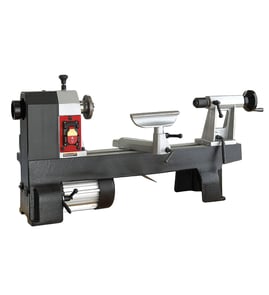
On a Craftsman 10128940 12" metal turning lathe, the five main assemblies you work with most are the bed, headstock, carriage, tailstock, and the feed/change-gear system (often a quick-change gearbox on many lathes). Together, they support the workpiece, spin it, and move the cutting tool accurately.
The 5 main parts and what they do
- Bed: The rigid base that everything mounts to; it keeps the lathe aligned and stable.
- Headstock: Houses the spindle and drive; it spins the chuck or faceplate that holds the work.
- Carriage: Moves the cutting tool along the bed; includes the cross-slide/compound on many lathes.
- Tailstock: Supports the free end of long work and holds tools like drill chucks and centers.
- Feed and threading drive (change gears or quick-change gearbox): Controls feed rate and thread pitch by driving the lead screw/feed rod.
Quick identification guide (what to look for)
| Part | Where it is | What you’ll notice | Common use |
|---|---|---|---|
| Bed | Bottom, full length | Long ways/rails | Alignment and support |
| Headstock | Left end | Spindle, speed controls | Turning power source |
| Carriage | Middle, rides on bed | Handwheels, tool post | Tool movement |
| Tailstock | Right end | Quill/ram and handwheel | Support, drilling |
| Feed/threading drive | Along front/left area | Gears/levers, lead screw | Feeds and threading |
Why it matters
Knowing these five parts helps you troubleshoot symptoms fast. For example, taper in a cut often points to bed alignment or tailstock setup, while poor thread quality often points to the feed/threading drive setup.
Helpful next step for parts lookup
When you’re ready to match a worn component (like a lead screw, gear, belt, or bearing) to the correct replacement, start with your exact model identification using how to find your appliance model number (and what it means for parts).
Last updated: February 2026