


How to disassemble a KitchenAid blender blade?
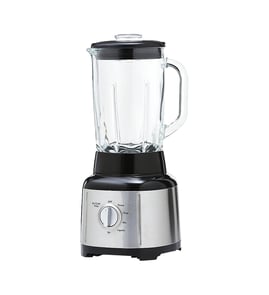
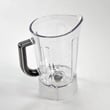
To disassemble the blade assembly on your KitchenAid KSB580NK0 blender, remove the jar from the base, protect your hands with cut-resistant gloves, then loosen the retaining fastener on the underside of the jar. Many KitchenAid blade retainers use reverse threads, so loosening can be the opposite direction from normal.
- Unplug the blender base and move it away from the work area
- Empty the jar and rinse off residue so parts do not slip
- Wear cut-resistant gloves; the blade edges are sharp even when dull
- Work over a towel to keep the jar from rolling and to catch small parts
- If the jar is cracked or the blade is bent, replace the assembly instead of forcing it
- Remove the jar from the blender base.
- Turn the jar upside down on a folded towel.
- Locate the retainer/fastener on the bottom of the jar (often a winged nut-style retainer).
- Hold the blade assembly steady from inside the jar (with a glove or thick towel).
- Loosen the bottom retainer. If it does not loosen in the usual direction, try the opposite direction because reverse-thread retainers are common on blender blade assemblies.
- Lift out the blade assembly and remove the seal/gasket.
If you see leaks, wobble, or grinding, replacing wear parts prevents repeat failures.
| Symptom | Most likely issue | What we replace most often |
|---|---|---|
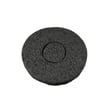
| Leaks under jar | Worn seal | Seal WP9709366 |
| Blade assembly loose or jar damage | Jar or blade assembly wear | Jar WPW10555711 |
| Loud rattling at base drive | Worn drive coupling | Coupling WPW10279256 |
A properly seated seal and correctly tightened retainer keep the jar from leaking and protect the motor drive system. Over-tightening or cross-threading can crack the jar or strip the retainer, leading to bigger repairs.
Last updated: February 2026
Why is my KitchenAid blender jug leaking from the bottom?
A bottom leak on your KitchenAid KSB580NK0 blender jar almost always comes from a worn seal at the blade/jar interface or a cracked jar base; less often, liquid wicks down from the lid and looks like a bottom leak. Replacing the leaking jar assembly is the most reliable fix.
- Unplug the blender and remove the jar from the motor base.
- Fill the jar halfway with water and set it on a dry paper towel for 5 to 10 minutes.
- Look for drips at the blade area and around the jar bottom.
- Check for hairline cracks in the jar, especially near the bottom corners and around the blade mount.
- Confirm the lid is sealing; splashes can run down the outside and mimic a bottom leak.
| What you see | Most likely cause | What we do next |
|---|---|---|
| Drips start under the blade area | Worn or damaged seal | Replace the jar assembly: jar WPW10555711 |
| Leak only when blending hot liquids | Seal distortion from heat/pressure | Let liquids cool, avoid overfilling; replace jar if leak persists: jar WPW10555711 |
| Slow seepage plus burning smell or noise | Drive coupling wear (can contribute to poor sealing/fit) | Inspect and replace: coupling WPW10279256 |
| Water appears at bottom but jar passes water test | Liquid running down outside from lid/overfill | Reduce fill level, reseat lid, wipe exterior before testing |
A leaking jar can let liquid reach the drive area and motor base, which can cause slipping, unusual noise, and premature wear of the coupling and internal components.
If you plan to troubleshoot electrical symptoms after a leak (no power, intermittent operation), use: how to use a multimeter to test electrical parts video.
Last updated: February 2026
How to remove blender drive coupling?
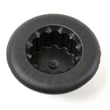
To remove the blender drive coupling on your KitchenAid KSB580NK0, unplug the blender, remove the jar, then unthread the coupling from the motor shaft (most couplings loosen by turning clockwise because they use a left-hand thread). If the coupling is stripped or cracked, replace it with the correct part.
- Unplug the blender; never work on the base while it is connected to power.
- Remove the jar and set it aside; if needed, remove the jar WPW10555711 to access the base safely.
- Protect the housing with a towel to prevent scratches.
- Use a work glove for grip and to protect your hands.
- Hold the motor shaft still: If you can access the shaft from below, hold it steady (some designs allow this; others do not).
- Turn the coupling to loosen: Many KitchenAid style couplings are left-hand threaded, so you loosen by turning clockwise.
- Break it free gently: If it is stuck, use a firm, controlled tap on the coupling (not the housing) to start it moving.
- Spin it off by hand once it starts turning.
- If the coupling is rounded off, cracked, or slipping, plan to replace it with the coupling WPW10279256.
- If the blender base rocks or vibrates while you work, check the rubber feet; a missing foot can make removal harder (see foot WPW10524701).
| What you see | Likely cause | What we recommend |
|---|---|---|
| Coupling will not budge | Thread-locking, corrosion, overtightened | Controlled taps, better grip, hold shaft if possible |
| Coupling spins but won’t drive jar | Stripped coupling | Replace coupling |
| Loud rattling or wobble | Base not stable | Replace missing/worn foot |
The drive coupling is the sacrificial link between the motor and the jar blade drive. Replacing a worn coupling early helps protect the motor shaft and reduces slipping, noise, and poor blending performance.
Last updated: February 2026
Can I put my KitchenAid blender in the dishwasher?
Yes, you can usually wash some KitchenAid blender parts in the dishwasher, but we recommend keeping the KitchenAid KSB580NK0 motor base out of the dishwasher and hand-washing any parts that contain bearings, seals, or drive components to prevent leaks and premature wear.
Use the top rack when possible and avoid heated dry if you want to be extra gentle.
- Blender jar (if it is a one-piece jar assembly)
- Lid and removable cap
- Measuring cup insert (if included)
- Non-electrical accessories
If your jar assembly includes a built-in blade and seal, frequent dishwasher cycles can shorten seal life over time.
These items can trap water, damage electrical components, or degrade lubricated parts.
- Motor base and controls
- Power cord and plug
- Drive coupling area under the jar
- Any part with a press-fit seal or bearing
For KSB580NK0, the power cord W11197488 is an electrical component and should only be wiped clean, not submerged.
This method is effective for smoothies, sauces, and everyday residue.
- Fill the jar halfway with warm water.
- Add a drop of dish soap.
- Run on low for 10 to 20 seconds.
- Rinse and air-dry with the lid off.
Dishwasher heat and detergents can accelerate wear on seals and drive parts. Check these common wear items:
| Symptom | Most common cause | What to inspect/replace |
|---|---|---|
| Leaks under jar | Worn seal | Seal WP9709366 |
| Jar not turning | Stripped drive | Coupling WPW10279256 |
| Excess vibration | Jar or blade assembly issue | Jar WPW10555711 |
Keeping water out of the motor base and protecting seals helps your KitchenAid KSB580NK0 blend consistently, prevents leaks onto the base, and reduces the chance of drive coupling wear.
Last updated: February 2026