Error Codes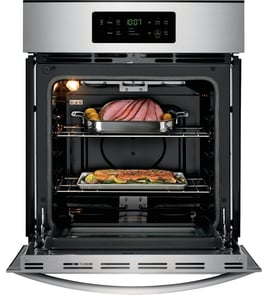



How to tell if a wall oven is gas or electric?
A wall oven is electric if it has a heavy power cord or hardwired connection (typically 240V) and no gas supply line; it is gas if it connects to a gas line and uses an igniter or burner flame. The GE JKS06 wall oven parts list shown here is for an electric wall oven.
- Look behind or under the oven (or in the cabinet below) for a flexible gas line; gas ovens have one.
- Check the electrical connection: electric wall ovens are usually hardwired or use a large 240V plug.
- Look inside the oven while it heats: gas ovens use a burner/igniter; electric ovens heat with hidden or exposed elements.
- Check your home setup: if there is no gas service to the kitchen, the oven is electric.
- If the oven light is out, that does not indicate gas vs. electric, but it is a common, easy fix on many models.
| What you find | Gas wall oven | Electric wall oven |
|---|---|---|
| Utility connection | Gas line + standard power | 240V hardwire or 240V plug |
| Heat source | Burner flame (with igniter) | Bake/broil elements |
| Common service clue | Igniter issues, weak flame | Element, relay, or wiring issues |
Gas and electric wall ovens use different heating components and wiring. Confirming the fuel type first helps you choose the right troubleshooting steps and the correct replacement parts for your GE JKS06.
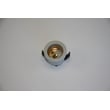
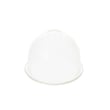
If your oven works but the cavity light does not, a burned-out bulb is a common cause. For this model’s parts list, see the range oven light bulb 40A15.
Last updated: February 2026
How long does a GE wall oven last?
Most GE wall ovens typically last 15 to 20 years with normal household use. For your GE JKS06 wall oven, consistent cleaning, avoiding door slams, and fixing small issues early (like a failing oven light or worn door seal) helps you reach the high end of that range.
A wall oven’s life is mostly driven by heat stress on electrical parts, how often it runs at high temperatures (broil, self-clean), and how well the door seals.
Big lifespan factors:
- Cooking frequency (daily use shortens lifespan compared to occasional use)
- High-heat cycles (broil and self-clean add extra wear)
- Door seal condition (heat leaks make components work harder)
- Electrical health (loose connections and heat-damaged wiring)
- Cleaning habits (grease buildup can cause overheating and odors)
These steps prevent common failures in older GE wall ovens.
- Keep the door gasket clean and seated evenly all the way around
- Wipe spills after the oven cools; avoid letting grease bake on repeatedly
- Do not use foil on the oven bottom (it can trap heat and damage surfaces)
- If the oven light stops working, replace the bulb promptly to avoid socket damage
- If you smell hot wiring or see flickering lights, stop using the oven and inspect wiring connections
| Symptom | Most common cause | What to check first |
|---|---|---|
| Oven light out | Burned-out bulb | Replace range oven light bulb 40A15 |
| Light still out after bulb | Worn socket | Inspect/replace receptacle WB08T10026 |
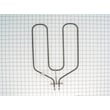
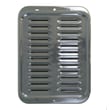
| Longer preheat, weak broil | Broil element wearing out | Inspect broil unt fx WB44X134 for blisters or breaks |
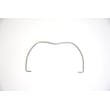
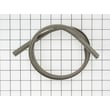
| Hot exterior, uneven baking | Door seal leaking | Check range oven door gasket WB2X2058 for gaps or tears |
A wall oven that is losing heat (bad gasket) or has aging electrical connections runs hotter and longer to maintain temperature. That extra runtime accelerates wear on heating elements, wiring, and controls, shortening overall lifespan.
Last updated: February 2026
What are the electrical requirements for a wall oven?
Most wall ovens like the GE JKS06 require a dedicated 208/120V or 240/120V, 60 Hz single-phase circuit sized to the oven’s nameplate rating; we recommend confirming the exact amperage on the model’s rating plate before wiring or breaker changes. For safe diagnosis of power issues, use a meter and follow proven electrical testing steps.
- Voltage: 208/120V or 240/120V AC
- Frequency: 60 Hz
- Phase: single-phase
- Circuit: dedicated branch circuit (no other major loads)
- Wiring: copper is standard; aluminum wiring requires approved connectors and correct installation
Use the oven’s rating plate (usually on the oven frame behind the door, or on the side trim) to match the circuit to the appliance.
- Find the kW or amps listed on the rating plate
- Match breaker size to the nameplate requirement (common wall-oven ranges are 30A to 50A, depending on wattage)
- Verify the supply is correct at the junction box before reconnecting
- If the oven shares a circuit, move it to a dedicated circuit to prevent nuisance trips
| Nameplate load (approx.) | Common breaker range | Common wire size range |
|---|---|---|
| Lower wattage wall oven | 30A | 10 AWG copper |
| Mid-range wall oven | 40A | 8 AWG copper |
| Higher wattage wall oven | 50A | 6 AWG copper |
Correct voltage, breaker sizing, and proper connections prevent nuisance breaker trips, slow preheat, weak broil performance, and overheated wiring at the junction box.
- Check for a tripped breaker (reset fully OFF then ON)
- Measure supply voltage with a multimeter at the junction box
- Inspect for heat damage or loose connections
- If the oven light is out, replace the bulb and inspect the socket: range oven light bulb 40A15 and receptacle WB08T10026
- Use our guide: how to use a multimeter to test electrical parts video
Last updated: February 2026
Why is my GE JKS06 wall oven not turning on?
If your GE JKS06 wall oven will not turn on, the most common causes are a tripped double-pole breaker, a loose/burned connection in the junction box, or a failed control power path (wiring, safety device, or control). Start with power checks, then inspect for heat damage.
Turn off the breaker before removing panels or touching wiring. Wall ovens are heavy; use a second person if you need to pull the unit forward.
- Reset the double-pole breaker fully: switch OFF, then ON.
- Confirm the oven is getting full power at the junction box (a partial power loss can leave the display dead).
- With power off, inspect junction box wire nuts and terminals for discoloration, melted insulation, or a burnt smell.
- Check the control area wiring harness for loose plugs or overheated connectors.
- If the breaker trips when you try to power up, look for a shorted wire or component, especially around the oven light circuit.
A shorted light socket or damaged lamp wiring can trip the breaker or take out a fuse in some designs.
| Symptom | Most likely cause | Best first action |
|---|---|---|
| No display, no interior light | Breaker/junction box power issue | Reset breaker; inspect junction box connections |
| Breaker trips immediately | Shorted wiring or component | Inspect wiring and light socket area for damage |
| Display works but won’t heat | Heating circuit/control issue | Check bake/broil functions; inspect connectors |
Most “dead” wall ovens fail due to power delivery problems (breaker or junction box). Fixing overheated or loose connections prevents repeat shutdowns and protects the control.
Last updated: February 2026