 Owner’s manual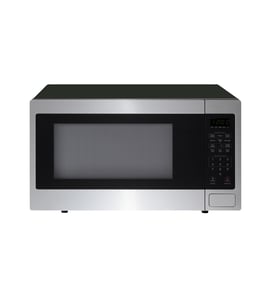




What is the average lifespan of a countertop microwave?
A countertop microwave like the Frigidaire FFCM1134LS typically lasts 7 to 8 years with normal household use and basic care. In heavy-use situations (large family, frequent cooking cycles, poor ventilation, little cleaning), 4 to 5 years is a common lifespan.
Most countertop microwaves fall into these practical ranges:
- Light use (reheating only, a few times/week): 8 to 10 years
- Normal use (daily reheating and occasional cooking): 7 to 8 years
- Heavy use (multiple long cycles per day): 4 to 6 years
- Commercial-style use: replace sooner; these units are not built for that duty cycle
These issues commonly lead to early failure in countertop microwaves:
- Running the microwave empty (overheats internal components)
- Blocked vents or tight placement that traps heat
- Grease buildup around the waveguide cover and cavity surfaces
- Door slamming or a door that does not close squarely (interlock wear)
- Repeated arcing/sparking from metal, foil, or damaged interior coating
Use these habits to extend the life of your FFCM1134LS:
- Keep 2 to 3 inches of clearance around side and rear vents
- Wipe the cavity weekly; keep the turntable and roller ring clean
- Heat liquids with a microwave-safe cover to reduce splatter
- Stop using it if you see sparks; inspect and correct the cause before running again
- Follow cleaning and operating guidance in the FFCM1134LS owner's manual
| If you notice | What it usually means | Typical next step |
|---|---|---|
| Runs but does not heat | High-voltage circuit issue | Professional diagnosis recommended |
| Dead/no display | Power supply, fuse, or door switch issue | Check outlet; then diagnose |
| Loud buzzing or burning smell | High-voltage component stress | Stop using; service decision |
| Door won’t latch smoothly | Interlock/door alignment wear | Address promptly for safety |
Microwaves contain high-voltage components; when performance drops (no heat, arcing, burning odor), continued use can quickly turn a small issue into a major failure. Good airflow and routine cleaning are the easiest ways to protect the magnetron and door interlocks.
Last updated: February 2026
What is a standard size countertop microwave?
Most standard countertop microwaves are about 20 to 22 inches wide, 12 to 14 inches tall, and 15 to 18 inches deep, typically in the 0.9 to 1.3 cubic foot range. For the exact exterior and cavity dimensions of your Frigidaire FFCM1134LS, use the specs in the FFCM1134LS owner's manual.
These ranges cover the majority of countertop models and help you plan for fit, ventilation, and door swing.
- Compact: 0.5 to 0.9 cu. ft. (often 17 to 19 in. wide)
- Standard/medium: 0.9 to 1.3 cu. ft. (often 20 to 22 in. wide)
- Large: 1.4 to 2.2 cu. ft. (often 23 to 24+ in. wide)
- Typical height: 12 to 14 in.
- Typical depth: 15 to 18 in. (deeper if the handle protrudes)
| Size class | Capacity (cu. ft.) | Typical width | Best for |
|---|---|---|---|
| Compact | 0.5 to 0.9 | 17 to 19 in. | Dorms, small kitchens |
| Standard | 0.9 to 1.3 | 20 to 22 in. | Most households |
| Large | 1.4 to 2.2 | 23 to 24+ in. | Big dishes, frequent use |
Measure first, then compare to the microwave’s listed dimensions (and leave breathing room).
- Measure opening width, height, and depth where the microwave will sit
- Allow space behind and above for airflow (follow the manual’s guidance)
- Include door swing and handle clearance so it opens fully
- Confirm the microwave sits on a flat, stable surface
- Plan for a nearby properly grounded outlet (avoid extension cords)
“Standard size” is mainly about fit and usability. A microwave that is too deep can block airflow; one that is too wide can overhang a cart or shelf; and insufficient clearance can cause overheating or nuisance shutoffs.
Last updated: February 2026
What is the most reliable countertop microwave?
The most reliable countertop microwave is a simple, right-sized unit (typically 0.9 to 1.6 cu. ft., 900 to 1200 watts) with strong door-switch alignment and good airflow. For your Frigidaire FFCM1134LS, follow the care and ventilation guidance in the FFCM1134LS owner's manual to maximize long-term reliability.
Reliability usually comes down to a few components holding up over years of heat and vibration:
- Door interlock switches staying aligned
- Magnetron and high-voltage components heating consistently
- Control panel responding without missed inputs
- Turntable system rotating smoothly (motor, coupler, roller ring)
- Cooling vents staying clear to prevent overheating
When you compare countertop microwaves, prioritize these practical factors:
- Wattage: 900 to 1200 watts for everyday cooking (shorter run times)
- Controls: straightforward keypad and fewer “extra” features
- Fit: smallest capacity that fits your most-used dishes
- Ventilation: clear intake and exhaust paths; avoid tight enclosures
- Door feel: closes evenly and firmly without slamming
| Decision point | Reliability-friendly choice | Why it helps |
|---|---|---|
| Controls | Basic keypad, fewer modes | Fewer failure points |
| Size | Right-sized cavity | Less wasted space to heat |
| Airflow | Open vents, easy cleaning | Reduces heat stress |
| Cooking habits | Shorter cycles, fewer re-cooks | Less wear per meal |
- Keep vents clear and leave breathing room around the cabinet
- Clean splatters before they carbonize and cause arcing
- Never run the microwave empty
- Use microwave-safe containers and covers
If “unreliable heating” is the concern, use why is my microwave not heating to pinpoint common causes.
Most early microwave failures trace back to overheating, arcing from buildup, or door-switch problems. Choosing a simple unit and keeping airflow and the cavity clean protects the parts that most often end service life.
Last updated: February 2026


