- Kenmore refrigerator water filters
- Whirlpool refrigerator water filters
- Samsung refrigerator water filters
- GE refrigerator water filters
- LG refrigerator water filters
- Frigidaire refrigerator water filters
- KitchenAid refrigerator water filters
- Maytag refrigerator water filters
- Kenmore Elite refrigerator water filters
- Estate refrigerator water filters
- GE Profile refrigerator water filters
- Amana refrigerator water filters
- Bosch refrigerator water filters
- Dacor refrigerator water filters
- Electrolux refrigerator water filters
Top DIY repair help
View All Repair Categories
Appliances
Lawn & Garden
Power Tools
Home Improvement
Sports & Leisure
Heating & Cooling
How to remove grease from your oven
less than a minute readJul 25Kim Hillegass
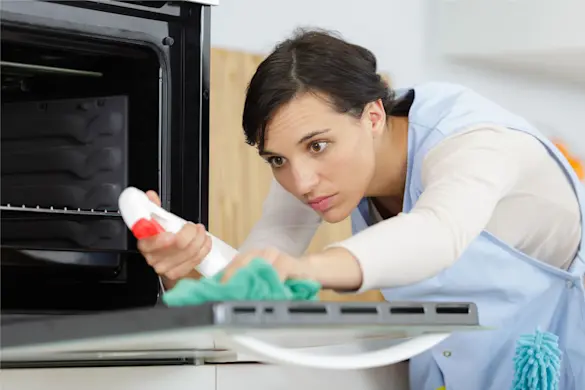
Struggling with stubborn grease stains in your oven? No worries, we’ve all been there. Dealing with the greasy aftermath of your favorite meals is no fun. But did you know that baked-on mess can slow down your oven, give off nasty smells and can even become a fire hazard?
It helps to understand why grease builds up and what it can do if left unchecked. Once you’ve picked the best cleaning method for your oven, follow the step-by-step process below to get it sparkling clean - and keep it that way.
Why grease buildup in ovens happens and why it matters
Grease buildup in ovens is a common issue, especially after cooking hearty meals. Understanding why it accumulates, the risks of leaving it unchecked, and where it hides will help you clean more effectively.
How grease accumulates in your oven
Grease mostly comes from cooking oils, fats, and food splatter. These substances drip or splatter onto oven surfaces like the walls, racks, and door. If they’re not cleaned up promptly, they harden and become much harder to remove.
The risks of ignoring grease buildup
Letting grease build up isn’t just gross; it can be dangerous. Grease can ignite under high heat, increasing the risk of a kitchen fire. It can also interfere with your oven’s performance, leading to uneven cooking and even damage to components like the bake element.
Common areas for grease accumulation
Watch out for these hot spots:
Oven floor: Especially around or under the heating element.
Racks: Grease tends to collect underneath.
Oven door: The glass window can get cloudy with grease buildup, making it hard to see inside.
Choosing the right cleaning method
Getting rid of grease is easier when you use the right cleaning method. You want something that cuts through grime without damaging your oven.
Always check your owner’s manual before using any cleaner or technique. Some ovens have specific recommendations or restrictions for what can be used safely.
Using the self-clean function (if available)
If your oven has a self-cleaning cycle, that’s often the simplest way to handle grease. This feature heats the oven to a very high temperature to burn off food residue and grease, reducing it to ash that can be easily wiped away.
Be sure to:
Remove the racks first, unless your manual says otherwise.
Ventilate the kitchen well, as the cycle can produce strong odors.
Wait until the oven cools completely before wiping up the ash.
Self-cleaning is powerful, but not ideal for light messes or delicate surfaces. Use it sparingly and follow all manufacturer guidelines.
Commercial oven cleaners
Products like Easy-Off and other commercial oven cleaners are formulated to cut through heavy grease quickly. These can be especially helpful if you’re dealing with years of baked-on buildup or if natural methods haven’t worked.
If you go this route:
Use in a well-ventilated area to avoid inhaling fumes.
Wear gloves and follow label instructions carefully.
Avoid using on self-cleaning ovens unless the cleaner specifically says it’s safe for that type.
Baking soda as a natural oven cleaner
Baking soda is safe, non-toxic, and excellent at breaking down baked-on grease. Its slightly gritty texture makes it ideal for scrubbing without scratching surfaces.
Alternative methods
If baking soda’s not your go-to, try one of these:
Vinegar and water: A simple spray of vinegar and water works well for light grease. Let it sit for a few minutes, then wipe clean.
Lemon juice: A natural degreaser with a fresh scent. Apply it with a sponge or cloth.
Ammonia for metal racks: For tough grease on oven racks, place them in a sealed bag with a bit of ammonia and leave overnight.
Factors to consider
Always choose a cleaner based on your oven type. Some methods may be suitable, while others could potentially damage the oven surface coating. You should also think about any allergies or sensitivities to certain cleaning agents.
Step-by-step cleaning process
Here’s how to tackle oven grease from start to finish.
Preparation: Gather supplies
You’ll need:
Rubber gloves
Oven cleaner or homemade solution
Sponge or non-abrasive brush
Plastic scraper
Microfiber cloth
Application: Apply the cleaning solution
1. Remove loose crumbs and debris.
2. If you’re using a commercial cleaner, read and follow all label directions carefully. These products may require ventilation, protective gear, or a specific wait time.
3. Apply your cleaning solution to interior surfaces, focusing on greasy spots.
4. Let it sit for 10–15 minutes (or as directed by the product label).
5. Scrub gently using your sponge or brush.
6. Use a plastic scraper for tough stains, being careful not to scratch.
7. Wipe with a damp microfiber cloth to remove residue.
8. Dry with a clean cloth.
Techniques for stubborn grease stains
Not sure how to clean baked-on grease in your oven? Whether you're using baking soda, vinegar, or the self-clean function, here’s how to tackle the toughest spots.
Baking soda paste: Mix baking soda and water into a paste, apply to stains, and let sit overnight.
Vinegar and water spray: Works especially well on the oven door glass exterior. If grease is trapped between the panes, you may need to disassemble the door to clean the glass inside.
Ammonia bag method: Great for cleaning removable metal racks outside the oven.
Keep your oven clean with regular maintenance
Cleaning your oven doesn’t have to be a massive chore. Tackle spills early and do a quick wipe-down after roasting or baking greasy foods. Regular DIY wall oven or range maintenance helps it perform better and last longer.
Need grease-fighting help? Our home cleaning products can make it easier to cut through buildup and keep your oven spotless.
Need help with parts or a deeper fix? Explore DIY repair help for your wall oven or range to diagnose common issues and keep your appliance running like new.