Owner’s manual
 Error Codes



What is the average lifespan of a KitchenAid refrigerator?
Most KitchenAid refrigerators last 14 to 17 years on average, and a realistic overall range is 10 to 20 years depending on usage, installation conditions, and maintenance. For your KitchenAid KBFS25EWMS8 bottom-mount refrigerator, consistent cleaning and quick repairs are what most often push lifespan toward the high end.
- 10 to 12 years: Heavy use, dusty environment, poor airflow around the cabinet
- 14 to 17 years: Typical household use with routine maintenance
- 18 to 20 years: Excellent airflow, clean coils, good door sealing, timely part replacement
- Vacuum dust from the condenser area regularly (better cooling, less compressor strain).
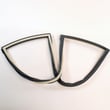
- Keep door gaskets clean and sealing tightly; warm air leaks force longer run times.
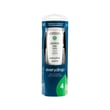
- Replace water and air filtration on schedule if your unit is equipped.
- Keep freezer drawers and vents clear so the evaporator fan can move air.
- Fix small issues early (leaks, noisy fan, slow ice production) before they stress major components.
| Category | Examples | What you usually notice |
|---|---|---|
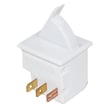
| Wear/maintenance items | Door gasket, switches, filters | Sweating/condensation, warm spots, lights not working |
| Cooling system parts | Evaporator fan motor, condenser, compressor | Warm fridge/freezer, loud humming, poor temperature recovery |
| Water/ice system parts | Ice maker, inlet valve, filter head | No ice, small cubes, slow fill, dispenser issues |
If you are already seeing temperature swings or moisture around the doors, checking the seal and alignment is a smart first step; our KBFS25EWMS8 owner’s manual covers operating and care guidance.
A refrigerator that runs longer to hold temperature uses more energy and wears out high-cost components sooner (especially the compressor and fans). Simple airflow and sealing maintenance is the most reliable way to protect the cooling system.
Last updated: January 2026
How to remove bottom grill from KitchenAid refrigerator?
On the KitchenAid KBFS25EWMS8 bottom-mount refrigerator, the bottom grill (toe kick plate) typically snaps onto the lower frame. We remove it by gripping the grill at the ends and pulling straight forward to release the retaining clips, then lifting it away.
- Unplug the refrigerator or switch off power at the breaker for safer handling.
- Open both fresh food doors for better access.
- Grip the grill firmly near the left and right ends (not the center).
- Pull the grill straight toward you to pop it off the lower frame clips.
- If it resists, work side-to-side gently while pulling forward (avoid bending the grill).
To reinstall, align the toe kick plate with the lower frame tabs/clips and press it straight back until it snaps into place.
- Check for hidden screws at the ends or underneath (some toe kicks use screws depending on configuration).
- Look for a water line or wiring routed near the bottom; do not pull hard if something is snagging.
- If the grill is warped, warm it slightly to reduce brittleness, then pull forward evenly.
| What you see | Most likely cause | What to do |
|---|---|---|
| Grill flexes but will not release | Clips still engaged | Pull from both ends evenly, straight forward |
| One side releases, other side stuck | Clip hung up | Re-seat the loose side, then pull both ends together |
| Hard stop, no movement | Screws present | Remove screws first, then pull forward |
Removing the bottom grill gives access for cleaning the condenser area and checking for debris that can reduce cooling efficiency and increase compressor run time.
For model-specific illustrations and access points, use the KBFS25EWMS8 owner's manual.
Last updated: January 2026
What is the most common problem with a KitchenAid refrigerator?
The most common KitchenAid refrigerator problems are ice maker issues and cooling problems. On the KitchenAid KBFS25EWMS8, we most often see slow or no ice production, warm temperatures, or unusual noise caused by airflow restrictions, water supply problems, or a failing fan or control component (see the KBFS25EWMS8 owner's manual for model-specific checks).
- Ice maker not making ice or slow ice: water supply issue, clogged filter path, or a failing ice maker
- Fridge warm, freezer cold (or vice versa): evaporator airflow problem or frost buildup
- Water leaking or puddles: defrost drain restriction or drain tube issue
- Loud humming, clicking, or buzzing: condenser area airflow issue or a start component problem
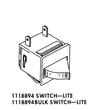
- Lights not working when door opens: door switch problem
- Confirm controls are set to normal temps (typical targets: 37°F fresh food, 0°F freezer).
- Make sure vents inside the compartments are not blocked by food packages.
- Check door sealing all the way around; gaps cause moisture, frost, and temperature swings.
- If ice or water is involved, verify the household shutoff valve is fully open and the supply line is not kinked.
- Clean condenser coils if accessible; dust buildup commonly causes poor cooling and noise.
| Symptom | Commonly involved part | Example part for this model |
|---|---|---|
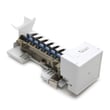
| No ice / intermittent ice | Ice maker assembly | Refrigerator ice maker assembly W10884390 |
| Warm temps / noisy airflow | Evaporator fan motor | Refrigerator evaporator fan motor WPW10128551 |
| Water under fridge / in freezer | Drain tube | Refrigerator drain tube W10619951 |
| Water dispenser weak / no fill | Water inlet valve assembly | Refrigerator water inlet valve assembly WPW10420083 |
Ice maker and cooling complaints usually share the same root causes: restricted airflow, restricted water flow, or a component that is not switching on when it should. Catching it early helps prevent food spoilage, frost buildup, and repeat leaks.
Last updated: January 2026