

How long is a normal wash cycle on a KitchenAid dishwasher?
On the KitchenAid KUDS01DLSS6 dishwasher, a Normal wash cycle typically runs about 1.5 to 2.5 hours. Cycle time changes based on incoming water temperature, soil level, and whether the dishwasher extends the wash to improve cleaning and drying.
What makes the Normal cycle longer or shorter?
- Water heating time: cooler supply water can add time while the heater boosts temperature.
- Soil sensing (if equipped): heavier soil can trigger longer wash/rinse segments.
- Drying option: heated dry usually adds time compared to air dry.
- Water fill and drain performance: slow filling or partial draining can extend the cycle.
- Load and loading: tightly packed racks can reduce spray coverage and lead to longer operation.
Quick time guide (typical ranges)
| Cycle/condition | Typical total time |
|---|---|
| Normal, average soil | 1.5 to 2.5 hours |
| Normal with heated dry | 2.0 to 3.0 hours |
| Heavy soil conditions | 2.5 to 4.0 hours |
| Quick/1-hour style cycles (if available) | 0.75 to 1.5 hours |
If your cycle suddenly takes much longer
We recommend checking these common causes first:
- Run hot water at the sink until it is hot before starting the dishwasher.
- Clean the filter area and check for food debris around the sump.
- Make sure the spray arms spin freely; clear blocked spray holes.
- Confirm the drain path is clear; a restricted hose can slow draining.
- If drying is poor and the unit keeps extending time, inspect the heating circuit; the heater element WPW10082892 is a common part involved in water heating and drying.
Why it matters
Cycle time is one of the best clues to performance. A Normal cycle that is consistently much longer than usual often points to cold incoming water, restricted wash/drain flow, or a heating issue, all of which can also affect cleaning and drying.
Related help: how long is a dishwasher cycle
Last updated: February 2026
How to identify a KitchenAid dishwasher model?
To identify your KitchenAid dishwasher model, we look for the rating label on the tub frame just inside the door. On the KitchenAid KUDS01DLSS6 dishwasher, that label lists the model number and serial number you will need for parts and troubleshooting.
Where to find the model and serial number
Most KitchenAid dishwashers place the rating label in one of these spots:
- On the left side of the tub opening (most common)
- Along the top edge of the tub opening
- On the right side of the tub opening
- Occasionally on the door edge itself
What to write down (and why)
Record the information exactly as shown on the label.
- Model number (example: KUDS01DLSS6) to match parts diagrams and fit
- Serial number to identify production range and compatible revisions
- Electrical ratings (volts/amps) for safe service checks
- Type or series codes (if listed) for more precise part matching
Why it matters
KitchenAid dishwashers can look identical across multiple model numbers, but use different racks, seals, spray arms, or pump components. Using the correct model number helps us match the right replacement part the first time.
Quick part-matching tip for this model
If you are ordering a common wear item, confirm the model number first, then match the part by name and ID.
| Common need | Example part for KUDS01DLSS6 | What it affects |
|---|---|---|
| Not draining or leaking at the hose | Dishwasher drain hose 8269144A | Drain flow, leaks, siphoning |
| Poor drying or steam leaking | Dishwasher vent gasket WP8269259 | Vent sealing and moisture control |
| Not drying, water not heating | Heater element WPW10082892 | Water temperature and drying |
If you are troubleshooting after you find the model number
Once you have the model number, use the display behavior or blinking patterns to narrow the issue using KitchenAid he dishwasher error codes.
Last updated: February 2026
How to fix rubber seal on KitchenAid dishwasher?
On KitchenAid dishwasher model KUDS01DLSS6, a “rubber seal” issue is usually a door gasket that has pulled out of its channel or is torn. We fix it by cleaning the channel, pressing the gasket in evenly all the way around, and replacing it if it is hardened, split, or permanently deformed.
Quick checks before you start
- Turn off power at the breaker; the door area is close to wiring.
- Inspect the gasket for flat spots, cracks, or missing sections.
- Check for food debris, detergent buildup, or mineral scale in the gasket channel.
- Confirm the door closes squarely and latches without forcing.
- Look for leaks at the bottom corners first; that is where mis-seated gaskets show up.
Reseat the door gasket (most common fix)
- Open the door and gently pull the gasket out only where it is loose.
- Clean the channel with warm water and a soft brush; wipe dry.
- Starting at the top center, press the gasket into the channel using your fingers.
- Work down both sides evenly; do not stretch the gasket.
- Close and latch the door for several hours so the gasket “sets” into position.
What “good” looks like
| Check | Correct result | What it means if not correct |
|---|---|---|
| Gasket sits flush in channel | Even, continuous fit | It is twisted, stretched, or not fully seated |
| Door closes easily | No slamming needed | Hinge, latch, or gasket alignment issue |
| No drips at corners | Dry after a cycle | Gasket damaged or door not sealing square |
When to replace parts instead of reseating
Replace the gasket or related sealing parts when you see any of these:
- The rubber feels stiff, brittle, or sticky
- Tears, splits, or chunks missing
- The gasket repeatedly pops out of the channel
- Leaks continue after reseating and cleaning
For leak symptoms that point to other seals, we commonly check the dishwasher vent gasket WP8269259 and the gasket W11196317 (door seal), depending on where water shows up.
Why it matters
A properly seated door gasket keeps wash pressure inside the tub, prevents leaks onto the floor, and helps drying performance by controlling airflow through the vent.
Last updated: February 2026
What's the average lifespan of a KitchenAid dishwasher?
A KitchenAid dishwasher typically lasts 10 to 14 years with normal household use. For your KitchenAid KUDS01DLSS6, lifespan depends most on water quality, how often it runs, and whether wear items like seals and drain components are kept in good shape.
Typical lifespan and what affects it
Most dishwashers reach the 10 to 14 year range when these conditions are controlled:
- Hard water (scale buildup can shorten heater and pump life)
- Heavy daily loads (more cycles equals more wear on the motor and seals)
- Poor draining (standing water stresses the pump and can cause odors)
- Overloading racks (can damage rack parts and reduce cleaning performance)
- Skipped maintenance (soil buildup increases strain on circulation)
What “end of life” usually looks like
These are the most common symptoms that show up as a dishwasher ages:
- Not cleaning well even after cleaning spray arms
- Not drying (often tied to heating performance)
- Intermittent draining or slow drain
- Leaks at the door or underneath
- Loud grinding or humming during wash
Quick symptom-to-system guide
| Symptom | Most likely system | Common next step |
|---|---|---|
| Not drying | Heating circuit | Check the heater element WPW10082892 for visible damage and test continuity |
| Not draining | Drain path | Inspect the dishwasher drain hose 8269144A for kinks, clogs, or a blocked air gap |
| Leaking at door | Door sealing | Inspect and replace the gasket W11196317 if torn, flattened, or loose |
| Poor cleaning, noise | Wash circulation | Check for debris and wear in the pump area; service may involve the pump motor W10782773 |
Maintenance that helps you reach the full lifespan
We recommend these habits to keep a KitchenAid dishwasher running longer:
- Run hot water at the sink before starting a cycle
- Clean the sump area and remove debris regularly
- Use the right detergent amount for your water hardness
- Keep spray arm holes clear of seeds, labels, and glass
- Fix small leaks quickly to prevent motor and wiring damage
Why it matters
Dishwashers often fail early from scale, restricted water flow, and small leaks. Staying ahead of those issues protects high-cost components like the circulation motor and heater, and it keeps cycle times and cleaning performance consistent.
Last updated: February 2026
What is the most common problem with a KitchenAid dishwasher?
For KitchenAid model KUDS01DLSS6, the most common issues we see are poor cleaning (food left on dishes) and drainage problems (water left in the tub). These usually trace back to restricted water flow through spray components, a clogged drain path, or a worn seal or gasket that causes leaks.
Most common symptoms and what they usually mean
- Dishes still dirty: spray arm ports blocked, chopper area clogged, or weak wash circulation
- Standing water after a cycle: drain hose restriction or a drain pump issue
- Leaks at the door: door seal or other gasket not sealing evenly
- Not drying well: heater circuit issue or venting problem
- Unusual grinding or buzzing: debris in the chopper area or a failing pump motor
Quick checks we recommend first (no parts swapping)
- Clean the sump area and remove any labels, glass, or seeds.
- Spin the spray arms by hand; they should turn freely and not hit racks.
- Check the drain hose routing for kinks and make sure the high loop is in place.
- Run hot water at the sink for 30 to 60 seconds before starting the cycle.
- Use the right detergent amount and avoid overloading, especially blocking the detergent cup.
Parts that commonly solve these problems on KUDS01DLSS6
If your symptoms match, these model-compatible parts are common fixes:
| Symptom | Likely area | Example model-compatible part |
|---|---|---|
| Not draining, water left in tub | Drain path | Dishwasher drain hose 8269144A |
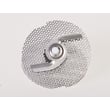
| Grinding, poor cleaning | Food chopper | Dishwasher chopper assembly W10083957V |
| Leaking at the door | Door sealing | Gasket W11196317 |
| Not drying, water not heating | Heating circuit | Heater element WPW10082892 |
| Weak wash action or no wash | Wash pump motor | Pump motor W10782773 |
Error codes can speed up the diagnosis
If your dishwasher shows a fault code, use our KitchenAid-specific guide to match the code to the failed system before ordering parts: KitchenAid microclean he dishwasher error codes.
Why it matters
Poor cleaning and draining problems often get worse over time; restricted flow makes cycles run longer, leaves residue on dishes, and can contribute to odors and leaks. Catching the root cause early helps protect the pump, heater, and door sealing surfaces.
Last updated: February 2026