Installation guide
 Owner’s manual


What is the average lifespan of a Kenmore washer?
A Kenmore washer like model 11025842400 typically lasts 10 to 15 years with normal household use. How long yours runs well depends most on installation, load habits, and whether wear items (like the lid switch, drain pump, or drive coupling) get replaced when symptoms first show up.
Typical lifespan and what changes it
Most top-load washers in this class land in the 10 to 15 year range, but these factors move the needle:
- Overloading (stresses the drive system, clutch, and suspension)
- Unbalanced loads (increases vibration and wear)
- Water quality (sediment can shorten valve and pump life)
- Installation conditions (level floor, correct drain setup, proper power)
- Maintenance and timely part replacement
Quick “repair or replace” guide
Use this as a practical decision check.
| What you’re seeing | Common direction | Parts often involved on 11025842400 |
|---|---|---|
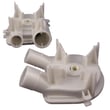
| Won’t drain or leaves water | Repair first | Washer drain pump WP3363394, drain hose, clogs |
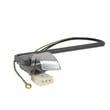
| Won’t spin or stops when lid closes | Repair first | Washer lid switch WP3949238 |
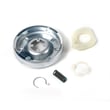
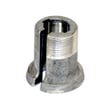
| Agitates poorly or “slips” | Repair first | Agitator dog 80040, washer motor coupling 285753A |
| Loud banging, walking, chronic imbalance | Inspect and repair | Washer suspension spring WP63907, basket issues |
| Multiple major failures plus leaks/rust | Replace often makes sense | Gear case, tub, basket, seals |
Why installation matters (more than most people think)
A correct setup reduces strain and prevents early failures. For this washer’s installation requirements, we follow the clearances, drain height, and electrical specs in the 11025842400 installation guide. Key points called out there include:
- Dedicated grounded 3-prong outlet (no adapter, no extension cord)
- 120V, 60 Hz, 15 or 20 amp fused supply recommended
- Water pressure typically 5 to 100 psi
- Standpipe height 39 to 96 inches from the bottom of the washer
- Level floor (max slope about 1 inch under the washer)
Signs your washer is nearing end of life
These symptoms usually mean the machine is approaching replacement time unless a single clear repair fixes it:
- Repeated leaks from the tub area
- Burning smell or repeated motor overheating
- Frequent out-of-balance shutdowns even with proper loading
- Grinding noises during spin that return after repairs
- Repair costs stacking up across multiple systems
Last updated: February 2026
What is the capacity of Kenmore model 11025842400?
The Kenmore washer model 11025842400 has a 3.2 cu. ft. wash basket capacity, which is a common size for this style of top-load washer and supports everyday loads like towels, jeans, and mixed fabrics.
How to confirm capacity for your exact configuration
Capacity is sometimes listed with the model’s feature set and basket style. For the most reliable confirmation, check the specifications section in the 11025842400 owner's manual.
What 3.2 cu. ft. means for real-world loads
A 3.2 cu. ft. top-load washer typically handles these load types well:
- 2 to 3 bath towels plus a few hand towels
- A mixed load of shirts, underwear, and light pants
- Several pairs of jeans (avoid packing tightly)
- A small bedding load (one lighter comforter or blanket)
- Medium loads wash best when items can move freely
Loading guidance (helps cleaning and reduces out-of-balance)
We recommend these habits for this Kenmore washer:
- Load loosely; do not press clothes down into the basket
- Mix large and small items to balance the spin
- Choose a water level that lets items circulate (not jam)
- Use the correct cycle and water temperature for fabric type
- If the washer shakes or “walks,” re-level the cabinet per the installation guide
Quick reference table
| Capacity | Best for | Common mistake to avoid |
|---|---|---|
| 3.2 cu. ft. | Everyday family laundry, towels, mixed loads | Overfilling, which reduces agitation and can cause off-balance spinning |
Why it matters
Knowing the capacity helps you size loads correctly, which improves wash performance, reduces wear on drive components (like the clutch and motor coupling), and helps prevent vibration during spin.
Last updated: February 2026
How to identify a Kenmore washer model?
To identify your Kenmore washer model, we look for the model and serial tag on the washer cabinet or around the lid or door opening. For Kenmore model 11025842400, the tag is typically on the back of the control panel or on the main cabinet near the bottom; confirm the exact location in the 11025842400 owner's manual.
Where to look on model 11025842400
Check these common label locations first:
- Back of the control panel (rear panel area)
- Left or right side of the main cabinet near the bottom edge
- Under the lid along the top rim of the cabinet (top-load styles)
- Around the lid opening where the cabinet top meets the tub opening
- If your washer has a door (some Kenmore designs do), inside the door jamb
What to write down (so you get the right parts)
Record the information exactly as printed on the tag:
- Model number (example: 11025842400)
- Serial number (helps with production variation)
- Any type or series code listed
- Electrical rating info (useful for motor or timer matching)
Quick ID checklist
| Item on tag | Why it matters | Example |
|---|---|---|
| Model number | Matches diagrams and part lists | 11025842400 |
| Serial number | Confirms version changes | Varies |
| Brand | Helps narrow compatible parts | Kenmore |
Why it matters
Kenmore washers often have multiple revisions within the same family, and small differences can change which lid switch, drain pump, or motor coupling fits. Using the exact model number helps us match parts like the washer lid switch WP3949238 correctly.
Last updated: February 2026
Does my Kenmore top load washer have a filter?
Yes, Kenmore top load washer model 11025842400 uses a drain pump system that can trap debris, but it typically does not have a quick-access, front clean-out filter like many front-load washers. We recommend checking the drain path and pump area when you have slow draining or leftover water; see the 11025842400 installation guide.
Where “filtering” happens on this washer
On this style of top-load washer, lint and small items are usually managed by the wash action and the drain system rather than a removable filter you clean every month.
Common places debris collects:
- The drain hose (kinks, clogs, or restricted standpipe)
- The pump inlet area (coins, socks, hair pins)
- The tub to pump hose (if equipped)
- The standpipe or laundry tub drain
- The lid switch circuit (if the washer will not drain or spin)
Quick checks you can do safely
Before any inspection, unplug the washer and turn off the water supply.
- Confirm the drain hose is not kinked or crushed
- Verify the standpipe height is in the typical range for this design (about 39 to 96 inches from the bottom of the washer)
- Make sure the drain can handle fast pump-out (a restricted household drain can mimic a “clogged filter”)
- If the washer hums but will not drain, suspect a blocked pump
- If the washer will not drain or spin at all, suspect a lid switch issue
Parts that commonly solve “no drain” symptoms
If you find the pump is jammed, leaking, or the impeller is damaged, replacement is often the fix.
| Symptom | Most common cause | Part to check for this model |
|---|---|---|
| Won’t drain, pump hums | Pump jammed or failed | Washer drain pump WP3363394 |
| Won’t drain or spin, acts “dead” mid-cycle | Lid switch not closing | Washer lid switch WP3949238 |
| Drains slowly | Drain hose or household drain restriction | Drain hose and standpipe setup |
Why it matters
A restricted drain path can leave water in the tub, cause poor spin performance, and lead to odors. Keeping the drain hose routing and pump area clear helps the washer complete the drain and spin portions of the cycle reliably.
Last updated: February 2026
How to reset a Kenmore 11025842400 washer?
To reset your Kenmore washer model 11025842400, we recommend doing a simple power reset: turn the cycle control to Off, unplug the washer for 1 minute, then plug it back in and select a new cycle. This clears many “stuck” timer and control conditions.
Quick reset steps (power reset)
- Turn the Cycle selector (timer) knob to Off.
- Press Pause/Cancel (if your console has it), then wait 10 seconds.
- Unplug the washer (or switch the breaker off).
- Wait 60 seconds.
- Plug back in (or turn breaker on).
- Select a cycle and pull the timer knob (or start the cycle) to test.
If the washer still will not start or advance
A “reset” will not fix a failed safety switch or a no-drain condition. Check these common causes:
- Lid not fully closed or lid switch not clicking
- Washer will not drain, so it will not spin
- Timer knob not engaging or not advancing
- Excessive vibration from an unlevel washer
| Symptom after reset | Most common check | Related part for this model |
|---|---|---|
| Won’t run at all | Lid switch operation | Washer lid switch WP3949238 |
| Hums but won’t drain/spin | Drain pump and drain path | Washer drain pump WP3363394 |
| Agitates poorly | Agitator dogs worn | Agitator dog 80040 |
Why it matters
Resetting restores power to the timer and controls, which often clears a paused cycle or a control that did not “home” correctly. If the problem repeats, the washer is usually reacting to a real condition (lid safety, draining, or a mechanical drive issue) rather than needing frequent resets.
Helpful reference
For cycle and control details (including how the timer is intended to be set for rinse and spin), use the 11025842400 owner's manual.
Last updated: February 2026
Is it worth repairing a Kenmore washing machine?
Yes, it’s usually worth repairing a Kenmore washer, especially a proven direct-drive model like Kenmore 11025842400, when the fix is a common wear part and the machine is otherwise in good shape. Repairs such as a lid switch, drain pump, or motor coupling often restore full operation for far less than replacement.
When repair is the smart choice
We typically recommend repair when the washer still fills, drains, and the tub and cabinet are solid.
- The problem is isolated (no multiple symptoms at once)
- The washer is not leaking from the tub or gear case area
- The basket spins true (no severe wobble or banging)
- You can complete the repair safely with basic tools
- The part is a common failure item (coupling, lid switch, pump, clutch)
Common “worth it” repairs for this model
| Symptom | Likely area | Example part for Kenmore 11025842400 |
|---|---|---|
| Won’t spin or drain | Lid switch circuit | Washer lid switch WP3949238 |
| Won’t drain, hums, or drains slowly | Pump or blockage | Washer drain pump WP3363394 |
| Agitates but won’t spin (or vice versa) | Drive system wear | Washer motor coupling 285753A |
| Weak agitation | Agitator dogs | Agitator dog 80040 |
When replacement makes more sense
If the washer has major mechanical wear, repair costs can stack up quickly.
- Oil/grease leaking under the washer (often gear case related)
- Loud grinding during spin that persists after leveling
- Repeated out-of-balance issues even with proper loading
- Rusted-through cabinet or tub damage
- Multiple expensive parts needed at the same time (timer, motor, gear case)
Quick checks before you decide
These steps help you avoid paying for parts you do not need.
- Confirm the washer is properly leveled to reduce vibration and noise
- Verify your drain setup meets the standpipe height guidance (commonly 39 to 96 inches)
- Make sure the washer is plugged into a grounded 3-prong outlet (no extension cord)
- Check for simple clogs in the drain hose and pump area
Why it matters
A solid Kenmore top-load washer can run for years after a targeted repair, and fixing a single failed part often restores agitation, spin, and draining without the cost and hassle of replacing the entire machine. For model-specific installation and electrical requirements, use the 11025842400 installation guide.
Last updated: February 2026