Installation guide
 Owner’s manual
 Error Codes


How do I tell what model Kenmore stove I have?
For a Kenmore range, the model number is printed on the serial plate; on model 79046783906, it’s typically on the oven front frame behind the oven door or behind the storage/broil drawer. Once you find it, record both the model and serial number for parts lookup and service.
Where to look on your Kenmore range
Check these common serial plate locations first:
- Oven front frame: open the oven door and look along the frame edge
- Behind the drawer: pull out the storage or broil drawer and look on the frame behind it
- Back panel area: some ranges also label near the rear access area (use a flashlight)
- Inside the door jamb area: look for a metal plate or sticker with “Model” and “Serial”
For diagrams and the exact location callouts for your unit, use the 79046783906 installation guide.
What the model number looks like (and what to write down)
On the serial plate, we recommend recording these items exactly as shown:
- Model number (example: 79046783906)
- Serial number
- Any lot number or letter (if listed)
Quick ID table
| Label on serial plate | What it means | Why you need it |
|---|---|---|
| Model | Identifies the exact range design | Ensures correct parts fit |
| Serial | Identifies your specific unit | Helps match production changes |
| Lot/letter (if present) | Factory run identifier | Helps confirm compatible revisions |
Why it matters
Kenmore ranges can look similar across different series; the model number is what ties your appliance to the correct wiring diagram, installation specs, and parts list (like a bake element, surface element, or oven temperature sensor). Using the exact model number prevents ordering the wrong part.
Last updated: February 2026
What causes a Kenmore oven to stop working?
On the Kenmore 79046783906 electric range, an oven that “stops working” is usually caused by a power supply problem (tripped breaker or loose connection), a failed heating component (bake or broil circuit), or a control/safety issue such as an overheat condition or a bad temperature-sensing circuit. For model-specific operating checks, use the 79046783906 installation guide.
Quick checks we recommend first
- Confirm the range has full power (both legs of 240V); reset the double breaker fully OFF then ON.
- Make sure all controls are set to OFF after any timed cooking; then try Bake 350°F again.
- Remove any packaging or items stored in the oven or drawer before testing.
- Test Bake and Broil separately; each should make its element glow red during operation.
- If the display is on but heat never starts, suspect a sensor or control-related fault.
Most common causes (electric range)
| Symptom | Likely cause | What to check next |
|---|---|---|
| No heat in Bake, Broil works | Bake circuit issue | Inspect element wiring; consider replacing the bake element if damaged |
| No heat in Broil, Bake works | Broil circuit issue | Inspect broil element and connections |
| Oven heats wrong or shuts off | Temperature sensing problem | Check/replace the range oven temperature sensor 5304504897 |
| Oven dead or intermittent | Power connection problem | Check cord/terminal block for heat damage; verify tight connections |
| Stops during/after self-clean | Overheat protection or cooling issue | Let it cool fully; check airflow and cooling fan operation |
Why the temperature sensor is a frequent culprit
The oven control relies on the sensor to regulate temperature. If the sensor drifts out of range or its wiring connection is poor, the control can stop heating to prevent overheating or may trigger an error condition.
Why it matters
When an oven stops heating, continuing to cycle power and retry functions can mask an underlying electrical or overheating problem. Verifying Bake and Broil operation (elements glowing red) helps narrow the failure to a specific circuit so you replace the right part the first time.
Last updated: February 2026
What replacement parts are most commonly needed for the 79046783906?
For the Kenmore 79046783906 electric range, the most commonly replaced parts are the ones that handle heat, temperature sensing, and everyday wear items like oven lights. We recommend matching parts by model and symptom, then confirming fit and access steps in the installation guide.
Commonly replaced parts for this model
These are frequent fixes when a burner will not heat, the oven bakes unevenly, the light is out, or controls act up:
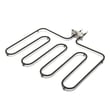
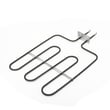
- Range bake element 318254906 (oven not heating or slow preheat)
- Frigidaire range broil element 318255605 (no broil or weak broil)
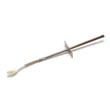
- Range oven temperature sensor 5304504897 (temperature inaccurate, overbakes, underbakes)
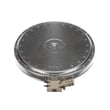
- Range dual radiant surface element 316555800 or surface element 5304533520 (surface burner not heating)
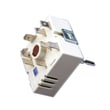
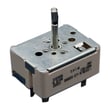
- Range surface element control switch 318293830 (burner stuck on high, cycles incorrectly, will not turn on)
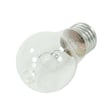
- Appliance light bulb, 40-watt 316538904 or range oven light socket 316116400 (oven light not working)
Quick symptom-to-part guide
| Symptom | Most likely part(s) to check | What we see most often |
|---|---|---|
| Oven will not bake | Bake element, wiring | Element opens or terminal connection burns |
| Oven temperature off | Temperature sensor | Sensor drift causes consistent offset |
| No broil | Broil element | Element fails and will not glow/heat |
| One surface burner dead | Surface element, control switch | Element or switch contacts fail |
| Oven light out | Light bulb, light socket, lens | Bulb burns out; socket can overheat |
Before you order: 5 checks that prevent wrong-part returns
- Confirm the full model number from the serial plate (commonly on the oven front frame behind the door or behind the drawer).
- Identify whether the issue is bake, broil, or a surface element problem.
- Look for visible damage: blisters, breaks, or burn marks on elements and wiring.
- If you are testing electrical parts, shut off power at the breaker first.
- Use a meter to confirm an open element or failed switch when symptoms are unclear.
Why it matters
Ranges like the Kenmore 79046783906 rely on correct heat output and accurate sensing; replacing the right heating element or sensor restores cooking performance and helps prevent repeat failures caused by overheating connections.
Last updated: March 2026