


Where to find model number on crosley dryer?
On a Crosley dryer like model CEDX463MQ0, the model number is printed on a rating label attached to the cabinet. You’ll usually find it when you open the dryer door, or on the back of the dryer near the top.
Most common places to check
- Inside the door opening on the cabinet frame (often the easiest spot)
- Back panel near the top edge
- Door opening lip around the front panel
- Lower front area behind the toe panel (on some dryer designs)
What the label looks like
The rating label typically includes:
- Model number (example: CEDX463MQ0)
- Serial number
- Electrical or gas information (voltage, amps, BTU rating)
- Manufacturer information
Quick tips to find it faster
- Use a flashlight and look for a white or silver sticker with dense text.
- Wipe lint or dust off the cabinet edge; labels can blend in.
- If the label is damaged or missing, use the parts diagrams to match key components such as the dryer timer WP8299781 or door switch WP3406105 to confirm you’re shopping the correct section.
Why it matters
Using the exact model number ensures you get the right Crosley dryer parts (belt, heating element, thermal fuse, timer) and avoids ordering a similar-looking part that will not fit or wire up correctly.
Common label locations by dryer style
| Dryer style | Most likely label location | Next best location |
|---|---|---|
| Front-load dryer | Inside door opening on cabinet frame | Back panel near top |
| Compact or stacked unit | Inside door opening | Side panel or back panel |
Last updated: February 2026
What are common dryer part failures?
On the Crosley CEDX463MQ0 dryer, the most common part failures usually show up as no heat, no tumble, squealing/thumping, or long dry times. In most cases, the root cause is a heating safety part (fuse/thermostat), a drum drive part (belt/idler/support), or an airflow restriction.
Most common failures and the symptoms they cause
- No heat or weak heat: failed heating element, high-limit thermostat, operating thermostat, or thermal cut-off
- Dryer runs but won’t tumble: broken drum belt or a seized drum support component
- Squealing, grinding, or thumping: worn support parts, idler pulley wear, or blower wheel issues
- Long dry times: restricted venting, lint buildup, or a weak heater combined with poor airflow
- Won’t start: door switch, push-to-start switch, timer, or motor problem
Parts that commonly fail on this model
These are frequent replacement items for the CEDX463MQ0 when troubleshooting the symptoms above:
| Symptom | Likely part | Example part for this model |
|---|---|---|
| No heat | Heating element | Dryer element 279838 |
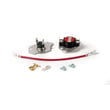
| Shuts off from overheating or no heat | Thermal cut-off kit | Dryer thermal cut-off fuse kit 279816 |
| Runs but drum doesn’t turn | Drum belt | Dryer drum belt 341241 |
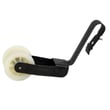
| Squeals or belt slips | Idler pulley | Idler pulley WP691366 |
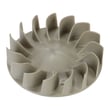
| Poor airflow, loud rumble | Blower wheel | Dryer blower wheel WP694089 |
Quick checks we recommend before replacing parts
- Confirm airflow: clean the lint screen, check the vent hose for kinks, and make sure the outside vent hood opens fully.
- Match the symptom to the system:
- Heat problem: heater circuit and safety thermostats/fuses
- Tumble/noise problem: belt, idler, supports, blower wheel
- No-start problem: door switch, start switch, timer, motor
- Inspect for heat damage: a blown thermal cut-off often points to restricted airflow that must be corrected.
Why it matters
Dryers are designed to shut down heat when temperatures rise too high. Fixing airflow issues first helps prevent repeat failures of heating parts like the thermal cut-off, high-limit thermostat, and heating element.
Last updated: February 2026
How to reset a dryer that won't heat?
For the Crosley CEDX463MQ0 dryer, there usually is not a single “reset button” that restores heat. Restoring heat typically means resetting power and correcting the overheat condition that tripped a safety device (often tied to airflow), then replacing the failed heating safety part if it will not reset.
Safe “reset” steps we recommend first
- Unplug the dryer (or switch the breaker off) for 2 to 5 minutes.
- Clean the lint screen completely.
- Check airflow: disconnect the vent hose and make sure the exhaust path is not crushed or clogged.
- Run a timed dry, high heat cycle for 3 to 5 minutes and check for heat.
- If the dryer heats with the vent disconnected, the venting is restricted and must be cleaned before continued use.
What usually stops heat on this model
On a standard electric dryer like the CEDX463MQ0, “no heat” is most often caused by an open heating circuit or a tripped heat safety.
| Symptom | Most likely area | What to check next |
|---|---|---|
| Drum tumbles, no heat | Heating circuit | Heating element, thermal cut-off, thermostats |
| Heat comes and goes | Overheating from poor airflow | Venting, lint chute, blower wheel |
| Long dry times, weak airflow | Vent restriction or blower issue | Vent run, lint buildup, blower wheel |
Parts commonly involved (and when to consider them)
- If the dryer tumbles but never heats, test the heating element and heat safeties; the dryer element 279838 is a common failure item.
- If the dryer overheated (burning smell, very hot cabinet, repeated no-heat), the thermal cut-off often opens and is typically replaced as a set; use the dryer thermal cut-off fuse kit 279816.
- If airflow is weak even with a clear vent, inspect the blower housing and wheel; a stripped or broken wheel can reduce airflow.
Why it matters
A dryer that is not heating is often protecting itself from overheating. Fixing airflow (lint screen, lint chute, venting, blower) prevents repeat failures of the heating element, thermostats, and thermal cut-off.
Last updated: February 2026
Why is my Crosley dryer not drying?
If your Crosley dryer model CEDX463MQ0 runs but clothes stay damp, the most common causes are restricted airflow (lint screen, lint chute, venting), a failed heating component, or an overheat safety opening the heat circuit. Start with airflow checks first because they cause most “no dry” complaints.
Quick checks that fix most “not drying” problems
- Clean the lint screen before every load.
- Check the outside vent hood; make sure the flap opens strongly while drying.
- Inspect the vent hose behind the dryer; straighten kinks and remove crushed sections.
- Run a timed dry cycle and confirm you feel strong airflow at the vent.
- Avoid overloading; tightly packed loads dry slowly even when the dryer heats.
Heat vs airflow: what the symptoms usually mean
| What you notice | Most likely issue | What to check next |
|---|---|---|
| Dryer heats but takes too long | Airflow restriction | Lint screen, vent hose, vent hood, internal lint path |
| Dryer tumbles but has little or no heat | Heating circuit problem | Heating element, thermostats, thermal cut-off |
| Dryer stops heating mid-cycle | Overheating from poor airflow | Venting plus thermal cut-off/high-limit thermostat |
| Dryer tumbles, no heat, airflow seems OK | Electrical/heat control issue | Operating thermostat, wiring connections |
Parts that commonly cause “no heat” on CEDX463MQ0
If airflow is good and the dryer still will not dry, these parts are frequent fixes:
- Dryer element 279838 (open element can prevent heating)
- Dryer thermal cut-off fuse kit 279816 (opens if the dryer overheats)
- Dryer high-limit thermostat WP3977767 (can open the heater circuit)
- Dryer operating thermostat WP3387134 (controls cycling heat)
Why it matters
Restricted venting makes drying times longer and can overheat the dryer, which can open safety devices like the thermal cut-off. Fixing airflow first often restores normal drying and helps protect the heating system.
For step-by-step airflow guidance, use dryer takes a long time to dry.
Last updated: February 2026
What does CE mean on my dryer?
On a Crosley dryer model CEDX463MQ0, a CE display is treated as an electronic/control-related fault indication on many dryers; it often shows up when the control is seeing an abnormal condition in the start, door, or heat-safety circuits. Start with a safe reset and basic checks, then test the most common components.
What to do first (safe, quick checks)
- Unplug the dryer (or switch off the breaker) for 5 minutes, then restore power and try a Timed Dry cycle.
- Confirm the dryer has proper power; most electric dryers require 240V and a half-tripped breaker can cause odd behavior.
- Clean the lint screen and make sure the exhaust vent is not crushed, kinked, or clogged.
- Close the door firmly; if the door switch is not made, the dryer may not start.
- If the dryer starts and stops quickly, stop using it until airflow and overheat protection are checked.
Parts that commonly cause no-start or shutdown symptoms
If CE appears with “won’t start,” “stops,” or intermittent operation, these parts are common checks on this dryer design:
- Dryer push-to-start switch WP3977456 (sends the start signal)
- Door switch WP3406105 (confirms the door is closed)
- Dryer thermal cut-off fuse kit 279816 (opens if overheating occurs)
Quick symptom guide
| What you see with CE | First thing to check | Typical direction |
|---|---|---|
| Nothing happens when you press Start | Door fully closed, start switch | Start/door circuit issue |
| Runs briefly then stops | Venting, lint buildup, thermal cut-off | Overheating or restricted airflow |
| Comes and goes | Wire connections at switches and heater circuit | Loose or heat-damaged terminals |
Why it matters
When the control detects an unsafe or abnormal condition, it can interrupt the motor or heat circuit. Fixing airflow problems and any failed safety parts prevents repeat shutdowns and helps protect the heater and wiring.
For maintenance steps that reduce overheating and nuisance shutdowns, use how to clean and maintain your clothes dryer.
Last updated: February 2026








