Installation guide
 Owner’s manual
 Error Codes


How do I tell what model my Kenmore dryer is?
Your Kenmore dryer’s model number is printed on the model and serial number plate. On Kenmore model 11062832101, that plate is on the dryer cabinet and is typically easiest to see when you open the door; it lists both the model number and serial number you will use for parts and service.
Where to look for the model number plate
Check these common locations on Kenmore dryers:
- Open the dryer door and look on the door opening (cabinet frame) area
- Look just inside the door on the front panel area
- Check the back of the dryer near the top (some installations make this harder to see)
- If the label is worn, use a flashlight and look for faint stamped or printed characters
For the exact label location and how it’s referenced in documentation, use the owner's manual.
What to write down (and why)
Record both numbers exactly as shown:
- Model number (example format: 110.XXXXXXXX)
- Serial number (unique to your dryer)
- Date of purchase (helpful for your records)
Why it matters
The model number ensures we match the correct Kenmore dryer parts list, diagrams, and compatible replacement parts (like a dryer drum belt, heating element, or door switch). The serial number helps identify production details when troubleshooting.
Quick checklist before ordering parts
Use this checklist so you get the right part the first time:
- Match the model number character-for-character (including all digits)
- Confirm the dryer type (electric vs. gas) from the label and your setup
- Compare the part name in the diagram to the symptom (no heat, won’t start, squealing)
- If you are replacing wear items, consider a kit (belt, rollers, idler) instead of one piece
Model number vs. serial number (at a glance)
| Item | What it identifies | Used for |
|---|---|---|
| Model number | The dryer design and parts compatibility | Finding the correct parts list and diagrams |
| Serial number | Your specific unit | Production details and recordkeeping |
Last updated: February 2026
How do I tell if my dryer heating element is bad?
If your Kenmore dryer model 11062832101 runs but does not heat, the heating element is a top suspect, but first confirm the dryer is actually getting full power (many electric dryers use two fuses or breakers). Then test the element for continuity; an open circuit means the element is bad.
Quick signs the heating element is failing
- Dryer tumbles normally but clothes stay damp or cold
- Dry times suddenly get much longer on a heat cycle
- No heat after the dryer has run about 5 minutes on a full heat cycle
- You see a broken coil or burn spot on the element housing (after unplugging and opening the cabinet)
Confirm it is not a power supply issue first
Our installation instructions for this style of dryer recommend running a full heat cycle and checking for heat after 5 minutes. If there is no heat, check the home electrical supply because there may be two fuses or circuit breakers feeding the dryer.
- Make sure the dryer is plugged into a grounded outlet
- Verify the dryer door fully closes (a bad door switch can stop heat on some models)
- Check both fuses/breakers are intact and not tripped
- Confirm the cycle is a heat cycle (not Air/Fluff)
How to test the heating element (basic multimeter check)
- Unplug the dryer (or switch off both breakers).
- Access the heater terminals (location varies by design; use the owner's manual).
- Remove at least one wire from the element terminal.
- Measure resistance across the element terminals.
What the meter results mean
| Test result | What it usually means | Next step |
|---|---|---|
| Continuity present; resistance typically ~10 to 50 ohms | Element is likely OK | Check thermal cut-off, high-limit thermostat, airflow/venting |
| No continuity; reads OL/infinite | Element is bad | Replace the element |
| Continuity to metal housing (short to ground) | Element is shorted | Replace the element |
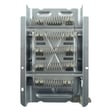
If you need the correct replacement for this model, use the dryer element 279838.
Why it matters
A failed heating element stops proper drying, but restricted venting or a blown thermal cut-off can create the same “no heat” symptom. Checking power and airflow first helps prevent repeat failures after you replace parts.
Last updated: February 2026
What are common problems with Kenmore dryers?
Common problems with Kenmore dryers like model 11062832101 include no heat (often a tripped breaker or blown fuse), long dry times from restricted venting, and a dryer that will not run due to door or start-switch issues. Many symptoms trace back to airflow, power, or a worn drive system.
Most common symptoms and what they usually mean
- Not drying satisfactorily: lint screen clogged, exhaust vent/hood clogged, or vent crushed or kinked
- Dryer runs but no heat: one of two breakers tripped or one fuse blown (dryer can still tumble)
- Dryer will not run: door not fully closed, START not pressed, cycle not selected, or power cord not firmly plugged in
- Lint on clothes: lint screen clogged, load too large, or overdrying causing static
- Noise or drum not turning: worn belt, pulley, or support rollers (common wear items)
Quick checks we recommend first (fast, no tools)
- Clean the lint screen before every load.
- Run the dryer 5 to 10 minutes and check strong airflow at the outside exhaust hood.
- Confirm the dryer is on a heat cycle (not Air Dry).
- Check both dryer breakers (many electric dryers use a 2-pole breaker).
- Make sure the door closes firmly and the START button is pressed.
Parts that commonly fix these problems
If basic checks point to a failed component, these are frequent replacements for this Kenmore model:
| Symptom | Common part to check | Example part on this model page |
|---|---|---|
| Drum will not turn | Belt or drive wear items | Dryer drum belt 341241 |
| No heat | Heating circuit components | Dryer element 279838 |
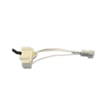
| Will not start when door closes | Door switch | Dryer door switch WP3406107 |
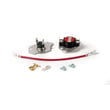
| Overheats or shuts off | Thermal protection | Dryer thermal cut-off fuse kit 279816 |
Why it matters
Airflow and power issues can make the dryer seem “broken” when it is actually a clogged vent, a tripped breaker, or a simple setting issue. Fixing airflow also helps drying performance and reduces overheating that can damage thermostats and fuses.
For model-specific operating and troubleshooting steps, follow the owner's manual.
Last updated: February 2026
What is the OEM part number 11062832101?
For Kenmore dryer model 11062832101, 11062832101 is the dryer model number, not an OEM part number. If you’re looking for the OEM part number for a specific replacement part (like the heater, belt, or door switch), match the part by name in the parts list and confirm it in the owner's manual.
Common OEM parts customers mean for this model
These are some of the most commonly replaced OEM parts listed for Kenmore 11062832101:
- Dryer element 279838 (heats the air for drying)
- Dryer drum belt 341241 (turns the drum)
- Dryer door switch WP3406107 (lets the dryer run only when the door is closed)
- Dryer thermal cut-off fuse kit 279816 (safety cut-off for overheating)
- Dryer high-limit thermostat WP3977767 (limits heater temperature)
How to identify the right OEM part number (fast)
Use this checklist to avoid ordering the wrong part:
- Find the symptom (no heat, won’t start, squealing, drum not turning)
- Locate the matching part name in the parts list for model 11062832101
- Confirm the part location and access steps in the installation guide
- Compare your old part’s markings (numbers stamped on the part) to the listing
- Replace related wear items together when appropriate (belt plus support components)
Quick reference table
| If your dryer does this | Likely part to look up | Example part on this model |
|---|---|---|
| Runs but no heat | Heating circuit component | Dryer element (279838) |
| Drum won’t turn | Belt or drive system | Dryer drum belt (341241) |
| Won’t start when door closes | Door interlock | Dryer door switch (WP3406107) |
| Stops heating, overheats, or trips safety | Safety cut-off | Dryer thermal cut-off fuse kit (279816) |
Why it matters
Kenmore model numbers (like 11062832101) identify the appliance; OEM part numbers identify the exact replacement component. Using the correct OEM part number helps ensure proper fit, safe operation, and correct electrical ratings.
Last updated: February 2026
What size is a Kenmore Model 11062832101 dryer?
The Kenmore dryer model 11062832101 is a standard 27-inch class dryer. For installation planning, use the exact cabinet dimensions and required clearances shown in the Installation guide; it also calls out the typical rear clearance needed for the exhaust vent elbow.
Dimensions and clearances to plan for
Use these planning points from the installation information for model 11062832101:
- Standard footprint class: about 27 inches wide
- Rear clearance for venting: minimum 5-1/2 inches behind the dryer for the exhaust vent with elbow (most installations)
- Side clearance: 1 inch recommended on each side to reduce noise transfer
- Door swing: allow enough room for the door to open fully
- Closet installs: the closet door needs required ventilation openings (top and bottom)
Quick planning table
| What you need | What to plan for | Where to confirm |
|---|---|---|
| Width fit | 27-inch class cabinet | Installation guide |
| Depth fit | Cabinet depth plus vent elbow space | Installation guide |
| Recessed/closet space | Minimum spacing plus door ventilation | Installation guide |
How we recommend measuring your space
- Measure the opening width at the front and back.
- Measure depth from the back wall to the front edge of the installed position.
- Add at least 5-1/2 inches behind the dryer for the vent elbow.
- Confirm the door can open fully and does not hit walls, trim, or a washer.
Why it matters
Correct sizing protects airflow. When the dryer is pushed too close to the wall or installed without proper clearances, vent restriction increases drying time and can cause overheating.
Last updated: February 2026