Owner’s manual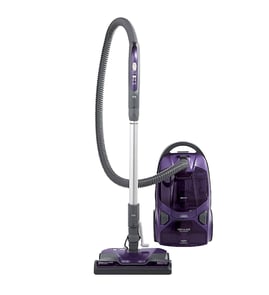

Are Kenmore canister vacuums any good?
Yes. Kenmore canister vacuums are known for strong suction and solid carpet cleaning, especially when you use the correct floor tool and settings. For the Kenmore 1162461290 canister vacuum, the 1162461290 owner's manual also highlights performance features like suction control and airflow indicators that help keep cleaning consistent.
A canister vacuum is usually a great choice when you want strong pickup with better reach under furniture than many uprights.
Common strengths customers value:
- Strong suction for carpets and area rugs
- Better reach for stairs, corners, and under furniture (hose and wand)
- Bagged cleaning that helps contain dust and odors
- Adjustable suction control for drapes, upholstery, and lightweight rugs
- Power nozzle (Power-Mate) style cleaning pattern for deep carpet passes
Common tradeoffs to expect:
- Canister body can feel bulky to pull around
- Hose and attachments take more storage space
- Tight spaces can require more maneuvering than a stick vacuum
The 1162461290 manual calls out features that directly affect cleaning results and reliability.
| Feature | What it does | Why it helps |
|---|---|---|
| Suction control | Lets you decrease or increase suction | Prevents lightweight rugs or drapes from “sticking” while keeping full power for carpet |
| Performance indicator (light or red-line window on some models) | Signals reduced airflow | Helps you catch a full bag, dirty filter, or clog before suction drops |
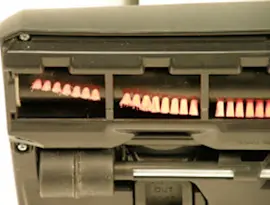
| Overload protector (Power-Mate) | Shuts off the power nozzle if overloaded | Helps protect the brush and belt when something jams |
These habits make a bigger difference than most people expect:
- Use slow, straight push-pull strokes on carpet; avoid fast, jerky passes
- Check the hose for twisting before pulling the canister
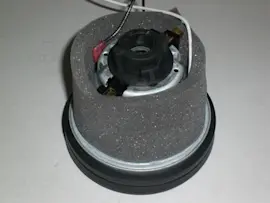
- Keep airflow open; check common clog points periodically (unplug first)
- Close suction control for best stair cleaning; place the canister carefully on stairs
- Reset the Power-Mate overload protector if it trips after clearing the cause
Most “bad vacuum” complaints come from restricted airflow (full bag, dirty motor safety filter, or a clog) or from using the wrong suction setting for the surface. Keeping airflow strong is what preserves the suction Kenmore canisters are known for.
Last updated: January 2026
What model is my Kenmore vacuum?
Your Kenmore vacuum’s model number is printed on the model and serial number plate; for Kenmore canisters like model 1162461290, you’ll typically find it on the bottom of the canister and also on the bottom of the Power-Mate nozzle. Use the format shown in the 1162461290 owner's manual.
Check these common locations first:
- Bottom of the canister (model and serial number plate)
- Bottom of the Power-Mate (nozzle) for its separate model and serial numbers
- Owner’s manual cover or the “parts and features” section
- Original box or purchase paperwork (often repeats the model)
Kenmore floor care model numbers often start with 116.. In the manual for this vacuum, the “copy your model and serial numbers” section shows spaces for:
| Item | What you’re looking for | Typical location |
|---|---|---|
| Canister model number | Starts with 116 | Bottom of canister |
| Canister serial number | Letters and numbers | Bottom of canister |
| Power-Mate model number | Separate from canister | Bottom of Power-Mate |
| Power-Mate serial number | Separate from canister | Bottom of Power-Mate |
- Write down both the canister and Power-Mate model numbers; they can be different.
- Copy the number exactly, including all digits (no spaces).
- If the label is worn, use a flashlight and take a close-up photo to zoom in.
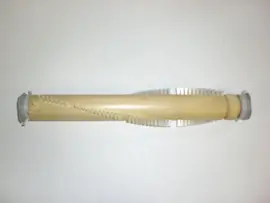
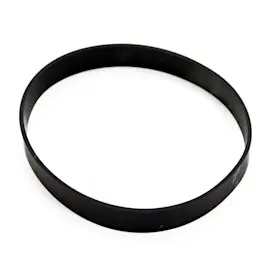
The correct model number is the fastest way to match the right vacuum bags, filters, belt, brush roll, and electrical parts to your exact Kenmore vacuum configuration.
Last updated: January 2026
Who is making Kenmore vacuums now?
For Kenmore canister vacuums like model 1162461290, Kenmore is a brand name and the vacuum is built by a manufacturing partner under license. The most common current partner associated with newer Kenmore vacuum production is Cleva North America (Cleva), while older Kenmore vacuums were built by other manufacturers depending on the model and era.
The most reliable way is to match the model number and then check the identification label and parts breakdown for that exact unit.
- Confirm the model number is 1162461290 (not just “116.24612”)
- Check the rating label on the canister body (often near the cord reel or underside)
- Look for a manufacturer name, factory code, or “made in” information
- Use the parts list and diagrams tied to your exact model number
- Cross-check the manual for the correct model family and features
For model-specific identification details and safe handling guidance, use the 1162461290 owner's manual.
Kenmore has used different manufacturing partners over time. That is why two Kenmore vacuums can look and perform differently even though they share the Kenmore name.
| What you’re comparing | What it usually means | Why it matters |
|---|---|---|
| Model number (example: 1162461290) | Identifies the exact design and parts set | Ensures you get the right bags, filters, belts, and brush parts |
| Production era | Older vs. newer manufacturing partner | Helps explain differences in hose style, attachments, and power nozzle design |
| Parts compatibility | Model-specific | Prevents ordering the wrong consumables |
Knowing the actual manufacturer is less important than knowing the exact model number, because parts, attachments, and service procedures are model-specific. For example, the 1162461290 manual outlines household-use expectations, safety instructions, and maintenance sections like bag changing, motor safety filter cleaning, and belt and brush care.
Last updated: January 2026