Installation guide
 Owner’s manual
 Error Codes


How do I reset my KitchenAid dishwasher?
To reset your KitchenAid dishwasher model KUDK03CTSS3, cancel the current cycle and let it drain, then restore normal operation by restarting the cycle. If the control is still unresponsive, power-cycle the dishwasher for 2 full minutes to reboot the electronic control.
Reset steps for KUDK03CTSS3
- Cancel and drain: Close the door firmly, cancel the wash cycle, and let the dishwasher complete the drain (about 2 minutes if needed).
- Power-cycle reset (control reboot): Turn power off at the breaker (or unplug if accessible) for 2 full minutes, then restore power.
- Restart correctly: Run hot water at the nearest sink until hot, turn it off, close the door so it latches, then press START/RESUME.
- If it stopped mid-cycle: Wait a few minutes; the motor resets itself after an overload, then press START/RESUME.
If it still will not start after resetting
These are the most common causes that make a dishwasher seem like it will not reset:
- Door not fully closed and latched
- Household breaker tripped or fuse blown
- Water shutoff valve turned off
- Overfill protection float stuck (press down to release)
- Normal pauses during the main wash (some cycles pause briefly by design)
Symptom guide
| What you see | Best reset action | What to check next |
|---|---|---|
| Won’t start or lights act odd | Power-cycle for 2 minutes | Door latch, breaker/fuse |
| Stuck with water in the tub | Cancel and drain | Drain hose, drain pump |
| Stops during cycle | Wait, then press START/RESUME | Motor overload condition |
| Not draining after cancel | Cancel and drain, then inspect | Hose routing, pump area |
Why it matters
A proper reset clears an interrupted cycle and reinitializes the control so the dishwasher can latch, fill, wash, and drain normally. Letting the cancel-drain finish also prevents standing water that can trigger repeat no-start or no-drain symptoms.
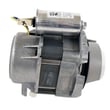
For model-specific control behavior and troubleshooting, use the KUDK03CTSS3 owner’s manual. If you are chasing a no-drain problem after resetting, the dishwasher not draining video is a strong next step; a common repair part is the dishwasher drain pump WPW10348269.
Last updated: February 2026
How to fix rubber seal on KitchenAid dishwasher?
On the KitchenAid KUDK03CTSS3 dishwasher, a loose or leaking rubber door seal is usually fixed by cleaning the channel and pressing the gasket fully into place evenly all the way around the tub opening; then keep the door closed for several hours so the seal can “set” in position.
Before you start
- Turn off power at the breaker; we do not work around a live dishwasher.
- Let the unit cool if it recently ran; internal surfaces can be hot.
- Inspect the seal for rips, flattening, or hardened sections.
- Remove sharp items from the racks; they can damage the door seal.
- Confirm you are working on the door perimeter seal (not the bottom door sweep).
Reseat the rubber door seal (most common fix)
- Open the door and pull the gasket out only where it is loose.
- Clean the channel and the gasket with warm water and mild dish soap; wipe dry.
- Starting at the top center, press the gasket into the channel using your fingers.
- Work down both sides, pressing in small sections so it seats evenly.
- Close and latch the door; keep it closed for several hours (overnight works well).
For the correct gasket orientation and seating points, follow the KUDK03CTSS3 owner’s manual.
If it still leaks after reseating
- Check for dishes or racks contacting the door and pushing the seal out of place.
- Look for a warped inner door panel or debris on the tub lip.
- Verify the dishwasher is level and properly secured; a tilted unit can cause door sealing issues.
- If the gasket is torn or permanently compressed, replace it (match by model KUDK03CTSS3).
Quick diagnosis guide
| What you see | Likely cause | Best next step |
|---|---|---|
| Drips from the top corners | Seal not fully seated | Reseat from top center outward |
| Leak only during drain | Drain issue, not door seal | Check hose routing and pump |
| Seal keeps popping out | Rack interference or misalignment | Adjust loading, check level |
Why it matters
A properly seated door gasket keeps wash water inside the tub, protects the door liner, and prevents moisture damage to nearby cabinets and flooring.
Last updated: February 2026
What does 03 mean on a dishwasher?
On a KitchenAid dishwasher like model KUDK03CTSS3, “03” is most often shown as part of an error code (for example F03) that points to a drain problem: the dishwasher is detecting that wastewater is not leaving the tub as expected. Start by checking for a blockage and confirming the drain path is installed correctly using the KUDK03CTSS3 owner’s manual.
What to check first (fast drain checks)
- Cancel the cycle and let the dishwasher try to drain.
- Look for standing water in the bottom of the tub after the cycle ends.
- Check the sink drain and garbage disposer inlet for clogs (a blocked disposer inlet can stop draining).
- Inspect the drain hose for kinks, crushing, or a low loop that is missing.
- Make sure the dishwasher door is fully closed and latched; some models will stop mid-cycle if the door isn’t secure.
- If the unit has power but stops or behaves oddly, check the home breaker or fuse.
Common causes and likely fixes
| Symptom you see | Most common cause | What usually fixes it |
|---|---|---|
| Water remains in tub | Drain path blocked | Clear hose, disposer inlet, sink drain; verify routing |
| Hums but won’t drain | Drain pump jammed or failed | Clear debris; replace dishwasher drain pump WPW10348269 if needed |
| Drains slowly | Partial clog or restricted hose | Straighten hose; remove buildup; confirm proper high loop |
| Stops during cycle | Power interruption or control issue | Reset breaker; check wiring; follow diagnostics in manual |
Why it matters
A drain-related “03” condition can leave dirty water in the tub, reduce cleaning performance, and cause the dishwasher to pause or end a cycle early. Fixing the drain path first prevents unnecessary part replacement.
When to use error-code diagnostics
If “03” appears with other characters (like an “F” or additional numbers), use the model’s diagnostic steps and code definitions in the KitchenAid microclean he dishwasher error codes guide to pinpoint whether the issue is draining, sensing, or cycle-related.
Last updated: February 2026
What is the most common problem with a KitchenAid dishwasher?
On the KitchenAid KUDK03CTSS3 dishwasher, the most common issue we see is a drain-related problem: water left in the tub because the drain path is restricted (filter or hose) or the drain pump is failing. The troubleshooting steps in the KUDK03CTSS3 owner's manual help confirm the cause.
Quick checks we recommend first
- Cancel the cycle and let the dishwasher run its drain period; wait until it finishes draining.
- Check that the door is fully closed and latched (a loose latch can stop a cycle mid-drain).
- Verify the kitchen sink drain and garbage disposer are clearing normally (a backup can slow dishwasher draining).
- Inspect the drain hose routing for kinks, crushing, or a low loop issue.
- If the unit will not fill or seems to stall, press the overfill protection float down to be sure it moves freely.
What usually causes “won’t drain” symptoms
| Likely cause | What you notice | What to do next |
|---|---|---|
| Clog in drain path | Standing water, gurgling, slow drain | Clear debris from the sump area and check hose routing |
| Drain hose restriction | Drains sometimes, then stops | Inspect/replace the hose if soft-collapsed or blocked |
| Drain pump problem | Hums, intermittent draining, no drain | Test and replace the pump if it is not moving water |
Parts that commonly fix drain problems
If your checks point to a failed component, these model-matched parts are common solutions:
- Dishwasher drain pump WPW10348269 (pump that pushes water out during drain)
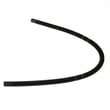
- Dishwasher drain hose 8269144A (hose from dishwasher to drain connection)
- Dishwasher drain hose WPW10545278 (alternate drain hose used on some installations)
Why it matters
A dishwasher that cannot drain often leaves dirty water in the tub, can stop mid-cycle, and can cause poor cleaning results because the next wash starts with contaminated water. Restoring proper draining protects the pump motor and improves wash performance.
Last updated: February 2026
What's the average lifespan of a KitchenAid dishwasher?
A KitchenAid dishwasher typically lasts 10 to 15 years with normal household use and routine care. For your KitchenAid model KUDK03CTSS3, following the cleaning and operating guidance in the KUDK03CTSS3 owner’s manual helps you get the longest service life.
What affects dishwasher lifespan the most
- Hard water and mineral buildup (can reduce cleaning performance and strain the pump system)
- Filter and sump cleanliness (food debris left behind increases wear)
- Loading habits (overloading can stress racks, spray action, and door latching)
- Detergent and rinse aid use (improves cleaning and helps reduce residue)
- Drain performance (slow draining can leave standing water and odors)
Maintenance that extends life (simple, high impact)
The KUDK03CTSS3 user instructions include a practical cleaning method: place 2 cups of white vinegar in a dishwasher-safe cup on the bottom rack and run a complete cycle using an air-dry or energy-saving dry option (no detergent). Use this routine periodically to help control odor and buildup.
Quick checklist
| Task | Good interval | Why it matters |
|---|---|---|
| Run a vinegar cleaning cycle | Monthly to quarterly | Helps reduce film, odor, and buildup |
| Check for standing water after cycles | Weekly | Early warning of drain restrictions |
| Inspect racks and tines | Monthly | Prevents rust and broken rack parts |
| Confirm door closes and latches firmly | Ongoing | Prevents mid-cycle stops and leaks |
When “end of life” is really a repairable issue
Many “old dishwasher” symptoms are caused by a few common parts and restrictions.
- Not draining well: check the drain path; a failing dishwasher drain pump WPW10348269 can also cause poor draining
- Not filling: verify water supply and consider the dishwasher water inlet valve WPW10158389
- Stops mid-cycle or won’t run: check household power, then follow the troubleshooting steps in the manual
Why it matters
A dishwasher that is cleaned regularly and drains properly usually reaches the upper end of the 10 to 15 year range; neglecting buildup and drain issues often shortens life by increasing motor and pump wear.
Last updated: February 2026