Owner’s manual
 Error Codes



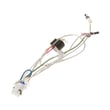
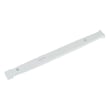
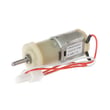
How to remove bottom grille on GE refrigerator?
On the GE GFE26GSKFSS bottom-mount refrigerator, the bottom grille (base grille) typically comes off by releasing the retaining clips or removing a couple of screws (model variations exist), then pulling the grille straight out from the bottom front. For the exact fastener locations and safe handling, use the owner's manual.
Quick steps to remove the bottom grille
- Unplug the refrigerator or switch off power at the breaker (safer around wiring and fans).
- Pull the refrigerator straight out a few inches if you need more hand room; avoid rolling over the power cord or water line.
- Look along the top edge and corners of the grille for screws; remove them if present.
- If there are no screws, grip the grille near both ends and pull straight outward to pop the clips free.
- Tilt the grille slightly and lift it away from the cabinet.
- Set the grille aside where it will not get stepped on or warped.
Reinstalling the grille
- Line up the grille tabs with the slots in the cabinet frame.
- Press evenly along the grille until the clips snap in.
- Reinstall any screws you removed and tighten them snug (do not overtighten).
What to check while the grille is off
Removing the grille is often done for cleaning and airflow. While it is off, we recommend:
- Vacuum dust from the front intake area.
- Check for signs of water drips or a puddle under the unit.
- Listen for unusual fan noise when the refrigerator is running.
- Confirm the grille is not cracked or bowed (a poor fit can rattle).
| Symptom | Common cause | What to do next |
|---|---|---|
| Grille will not budge | Hidden screws or tight clips | Recheck corners and top edge; pull evenly with both hands |
| Grille pops off but will not go back on | Tabs not aligned | Start at one side, align tabs, then press across |
| Rattling after reinstall | Clip not seated | Press along the full length until fully snapped in |
Why it matters
The base grille helps protect components and supports proper airflow at the bottom front of the refrigerator. Keeping that area clean can help cooling performance and reduce noise.
If you need replacement parts for your refrigerator, you can order them from the parts list for this model or search by model number on Sears PartsDirect.
Last updated: February 2026
What is the most common problem with a GE refrigerator?
The most common problem we see with GE refrigerators (including model GFE26GSKFSS) is a cooling complaint: the fresh food section gets warm, the freezer temperature drifts, or temperatures swing. In many cases, the root cause is restricted airflow or a failed cooling component such as the evaporator fan motor or a temperature sensor.
Most common causes of poor cooling
- Dirty condenser coil causing the compressor to run longer and cool less efficiently
- Evaporator fan not running or running intermittently (air is not circulating through the compartments)
- Frost buildup from a defrost system issue (defrost heater or defrost bi-metal thermostat)
- Temperature sensor reading incorrectly and sending bad feedback to the control
- Door not sealing well, letting warm air and moisture in
Quick checks you can do first (no parts)
- Confirm vents inside the refrigerator are not blocked by food packages
- Set temperatures to normal targets and give the unit 24 hours to stabilize
- Listen for the evaporator fan: it typically runs when the compressor is running and the doors are closed
- Check door gaskets for gaps, tears, or areas that do not grip the cabinet
- Clean dust from the condenser area (unplug the refrigerator first)
Parts that commonly fix cooling symptoms on GFE26GSKFSS
If basic airflow and cleaning checks do not solve it, these model-matched parts are common next steps:
| Symptom | Likely area | Example part for this model |
|---|---|---|
| Warm fresh food, freezer OK or both warm | Air circulation | GE refrigerator evaporator fan motor WR60X26866 |
| Temps swing, unit runs too long | Temperature feedback | Refrigerator temperature sensor WR55X10025 |
| Frosted back wall, weak airflow | Defrost system | Refrigerator defrost heater WR51X10132 or refrigerator defrost bi-metal thermostat WR50X10108 |
| Door not closing tight, moisture/frost | Door sealing | Refrigerator freezer door gasket WR14X36194 |
Why it matters
Cooling problems are usually progressive: restricted airflow and incorrect temperature sensing can force longer run times, create frost buildup, and lead to food spoilage. Catching the issue early often prevents secondary problems like ice blockage and repeated temperature alarms.
Helpful references for this model
- Use the owner's manual for recommended temperature settings, control features, and operating tips.
- If your unit is showing a fault code, use GE refrigerator error codes to match the code to the most likely system.
You can order replacement parts for your GE GFE26GSKFSS from the parts list for this model, or search by model number on Sears PartsDirect.
Last updated: February 2026
How do I find the model number on my GFE26GSKFSS?
On your GE GFE26GSKFSS bottom-mount refrigerator, the model and serial numbers are printed on a label inside the fresh food (refrigerator) compartment. Look on the left side, near the middle of the compartment; write the numbers down exactly as shown.
Where to look (exact location)
Use this quick checklist to find the data plate:
- Open the fresh food (upper) door
- Look along the left interior wall
- Aim for the middle height of the compartment
- Find a label that lists Model # and Serial #
- Copy the model number exactly (letters and numbers matter)
For a diagram and additional identification details, check the owner's manual.
Why the exact model number matters
GE uses model numbers to match the correct parts and diagrams for your specific refrigerator configuration (controls, dispenser setup, door style, and internal components). Using the full model number helps ensure the right fit for items like a water filter, control board, or evaporator fan motor.
Common label-reading tips
If the label is hard to read:
- Wipe it gently with a damp cloth, then dry it
- Use a flashlight and view from an angle to reduce glare
- Take a close-up photo and zoom in
- Record both model and serial numbers for future repairs
Quick reference
| What you need | Where you’ll find it | What it’s used for |
|---|---|---|
| Model number | Left side, mid-level inside fresh food compartment | Correct parts lookup and diagrams |
| Serial number | Same label as model number | Date/production info and service records |
Last updated: March 2026