Installation guide
 Owner’s manual
 Error Codes


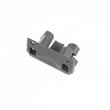
How to fix rubber seal on KitchenAid dishwasher?
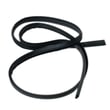
On KitchenAid dishwasher model KUDS30FXSS1, a loose or leaking rubber seal is usually fixed by fully reseating the gasket evenly in its channel and then keeping the door closed for a period so the seal “sets” in place. Use steady pressure; do not stretch the gasket.
Quick fix steps (door gasket)
- Turn off power to the dishwasher at the breaker.
- Open the door and inspect the gasket channel for food debris, detergent buildup, or warping.
- Clean the channel with warm water and a mild detergent; dry it completely.
- Starting at the top center, press the gasket into the channel a few inches at a time.
- Work down both sides evenly; keep the gasket relaxed (no pulling or stretching).
- Close and latch the door and keep it closed for several hours (overnight is ideal).
If the “seal” you mean is a rubber washer or gasket at a water fitting
During installation, rubber washers at fittings must be seated correctly and tightened enough to seal, but not overtightened. If you see drips at the water inlet connection:
- Confirm the rubber washer is seated flat in the fitting.
- Hand-tighten the coupling first to avoid cross-threading.
- Snug with pliers only as needed to stop leaks.
- Recheck for leaks with a paper towel under the fitting.
Common symptoms and what they point to
| Symptom | Most likely cause | What to do |
|---|---|---|
| Water at bottom corners of door | Gasket not fully seated or twisted | Reseat gasket evenly; latch door overnight |
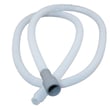
| Water only during drain | Drain hose connection leaking | Inspect hose and clamps; correct routing |
| Door feels “too light” or drops | Door balance hardware issue | Inspect hinge/link components |
Why it matters
A properly seated door gasket prevents leaks that can damage flooring and helps the dishwasher maintain correct wash pressure and drying performance.
For diagrams and model-specific guidance, follow the steps in the KUDS30FXSS1 owner’s manual.
Last updated: February 2026
What is the average lifespan of a KitchenAid dishwasher?
A KitchenAid dishwasher typically lasts 10 to 14 years with normal household use. For your KitchenAid KUDS30FXSS1 undercounter dishwasher, consistent cleaning, correct installation, and fixing small issues early (drain, heating, or rack problems) helps you reach the high end of that range.
What affects dishwasher lifespan most
- Water quality: hard water speeds up mineral buildup on the heater and inside the sump
- Maintenance: keeping the filter and spray paths clear reduces strain on the motor
- Loading habits: overloading can damage racks, wheels, and wash performance
- Drying setup: using rinse aid improves drying and helps control deposits
- Early repairs: replacing a worn pump, valve, or heater prevents bigger failures
Quick maintenance checklist (monthly)
- Run a hot cycle and confirm the wash time and options are behaving normally (many efficient models average 2 to 3 hours per load).
- Use rinse aid consistently for better drying and reduced hard-water deposits.
- Inspect the racks for broken wheels, stops, or adjusters; repair before the rack starts binding.
- Check for slow draining or standing water after a cycle.
- Listen for new grinding or humming noises during wash or drain.
Common “wear items” and what they impact
| Symptom | Likely area | Example model-compatible part |
|---|---|---|
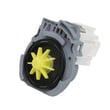
| Water left in tub | Drain system | Dishwasher drain pump WPW10348269 |
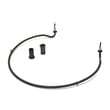
| Poor drying, cool water | Heating circuit | Dishwasher heater W10703867 |
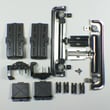
| Upper rack won’t stay on track | Rack hardware | Dishwasher dishrack slide rail stop, upper WPW10195622 |
Why it matters
Dishwashers often fail from avoidable strain: restricted draining, mineral buildup, and worn rack hardware can force longer run times and extra load on the sump and motor. Keeping the unit installed correctly and maintained helps protect the most expensive assemblies.
Where to confirm model-specific care and setup
For the exact maintenance guidance, cycle behavior, and installation requirements for KUDS30FXSS1, follow the KUDS30FXSS1 installation guide and the KUDS30FXSS1 owner’s manual.
Last updated: February 2026
What is the most common problem with a KitchenAid dishwasher?
The most common KitchenAid dishwasher issue is poor wash results (dishes still dirty) caused by restricted water flow from a clogged filter or spray arm, or low fill. On the KitchenAid KUDS30FXSS1, drainage problems and door leaks are also frequent when hoses, pumps, or seals wear.
Most common symptoms and what they usually point to
- Dirty dishes or grit left behind: clogged spray arm holes, restricted filter area, or weak circulation
- Standing water in the tub: drain path restriction, kinked drain hose, or a failing drain pump
- Leaks at the bottom of the door: worn lower door seal or door not closing squarely
- No water entering: water supply off, inlet valve issue, or fill restriction
- Won’t start or stops mid-cycle: door not fully latched, power supply problem, or control issue
Quick checks we recommend first (fast, no parts)
Use the steps in the KUDS30FXSS1 installation guide to confirm basics like power, water supply, and a proper drain connection.
- Verify the water supply is turned on and the dishwasher fills early in the cycle
- Check the drain hose routing for kinks and confirm it is fully seated and clamped at the connector
- Confirm the door closes tightly and latches
- Run the shortest cycle and, after about 2 minutes, open the door and confirm water is in the bottom of the tub
- Reset power at the breaker for 1 minute, then retry a normal cycle
Common parts involved (when checks don’t fix it)
| Problem you see | Part that often fixes it | What it does |
|---|---|---|
| Standing water | Dishwasher drain pump WPW10348269 | Pumps water out through the drain hose |
| Leaking at door bottom | Seal WPW10497235 | Seals the lower edge of the door to prevent drips |
| Weak cleaning, odd wash noise | Dishwasher sump and motor assembly WPW10780877 | Circulates wash water through the spray system |
Why it matters
Most “KitchenAid dishwasher not cleaning” and “dishwasher not draining” complaints come down to water movement: the unit must fill correctly, circulate strongly, and drain freely. Fixing restrictions early prevents repeat clogs, odors, and pump strain.
Last updated: February 2026