Owner’s manual



How do I hard reset my LG dryer?
To hard reset your LG DLE3777W dryer, turn the dryer off and disconnect power for about 5 minutes (unplug it or switch the breaker off), then restore power and try starting a cycle again. This clears many temporary control glitches.
Hard reset steps (LG DLE3777W)
- Press Power to turn the dryer off.
- Unplug the dryer (or turn the circuit breaker off).
- Wait 5 minutes.
- Plug the dryer back in (or turn the breaker on).
- Press Power, select a cycle, and press Start/Pause.
For control panel features like Child Lock and cycle behavior, follow the operating instructions in the DLE3777W user manual.
If it still will not start after a reset
A reset will not fix a failed switch, airflow problem, or heating issue. Check these common causes next:
- Door not fully closed; the door switch must sense the door is shut.
- Child Lock enabled (look for “CL” on the display).
- House power issue (tripped breaker, loose cord, or outlet problem).
- Overheating/airflow restriction (lint screen, lint screen housing, or venting clogged).
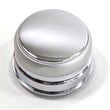
- Control knob not selecting a cycle properly.
Quick part checks that match this model
| Symptom | What to inspect | Model-matched part example |
|---|---|---|
| Won’t start when door closes | Door switch operation | Dryer door switch EBF61496102 |
| Long dry times or overheating | Lint screen fit and airflow | Dryer lint filter 5231EL1003B |
Why it matters
Resetting restores normal operation after a power surge or a “stuck” control state, but repeated resets usually point to an underlying issue (like a door switch problem or restricted venting) that can cause no-start symptoms or poor drying performance.
Last updated: January 2026
What is the most common problem with LG dryers?
For LG dryers like model DLE3777W, the most common repair issue is no heat or weak heat, which is most often tied to the heating circuit (heating element on electric models) and heat-safety components. Airflow restrictions (lint and venting) are also a frequent root cause.
Most common issues (and what they usually look like)
- Heating problem: dryer runs but clothes stay damp or take too long.
- Overheating shutdown: cycle stops early, or heat cuts in and out.
- No-start condition: dryer will not run at all (door switch, power, controls).
- Noise/vibration: thumping, squealing, or rumbling as the drum turns.
- Sensor drying complaints: cycle ends too soon or time jumps around.
Quick checks we recommend first (before replacing parts)
Use these steps for DLE3777W to avoid replacing good parts:
- Clean the lint screen every load; wash it with a nylon brush periodically if residue builds up.
- Confirm strong airflow outside at the vent hood; weak airflow often causes long dry times and overheating.
- Avoid crushed or extra-long vent runs; keep elbows to a minimum.
- Try a timed dry cycle to compare results vs sensor dry.
- If the dryer is gas, confirm the gas supply valve is fully open and the burner ignites.
Parts that commonly relate to “no heat” on this model
If your DLE3777W tumbles but does not heat, these model-compatible parts are common suspects:
| Symptom | Likely area | Example compatible part from this model page |
|---|---|---|
| No heat (electric) | Heating circuit | Kenmore elite dryer heating element assembly 5301EL1001J |
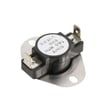
| Heat cuts out or overheats | Safety thermostat | Dryer high-limit thermostat 6931EL3003D |
| Erratic temps or poor sensor drying | Temperature sensing | Dryer thermistor AGM30045804 |
Why it matters
Heat complaints are often caused by restricted venting, and that same restriction can overheat the dryer and damage heat components. Fixing airflow first can restore drying performance and help prevent repeat failures.
For cycle behavior, venting requirements, and troubleshooting steps specific to this platform, follow the guidance in the DLE3777W dryer manual.
Last updated: January 2026
Is 7.4 cubic feet a large dryer?
Yes. A 7.4 cu. ft. dryer is considered large capacity for a full-size dryer. For the LG DLE3777W specifically, the use and care manual lists an IEC capacity of 7.3 cu. ft., which still falls in the large-capacity range; see the DLE3777W manual for the model’s stated capacity and loading guidance.
How the DLE3777W compares
The DLE3777W’s published IEC capacity is 7.3 cu. ft., so it is essentially the same class as a 7.4 cu. ft. dryer for everyday use.
| Capacity range (cu. ft.) | Common description | Typical use |
|---|---|---|
| Under 6.5 | Standard | Smaller loads, smaller households |
| 7.0 to 7.5 | Large capacity | Towels, bedding, family loads |
| 8.0+ | Extra-large | Very large loads, frequent bulky items |
What “large capacity” means in real use
A large drum helps items tumble freely so heated air can move through the load.
- Handles larger mixed loads (jeans, shirts, towels)
- Better room for bulky items (comforters, blankets) to tumble
- Can reduce the number of loads you run
- Helps prevent tight packing that causes long dry times
Tips to get the best drying performance
Even with a large drum, airflow and loading matter most.
- Clean the lint screen before every load (a clogged screen slows drying)
- Do not pack the drum tight; leave space for tumbling
- Use Sensor Dry for most loads; use Time Dry for heavyweight or bulky items
- If drying is slow, check venting for restrictions and keep the duct run as short as practical
Why it matters
Choosing the right capacity helps you dry bulky items more evenly and can cut down on cycle time. With the DLE3777W, correct loading and good vent airflow are just as important as drum size.
Last updated: January 2026