Error Codes



What is the most common problem with Samsung washing machines?
The most common problems we see on Samsung washers like model WF203ANS are spin issues (won’t spin or shakes/bangs), draining problems (won’t drain or stops mid-cycle), and fill problems (slow fill or no fill). Many start with load balance, clogs, or water supply restrictions.
Most common symptoms and what they usually mean
- Excessive vibration or banging during spin: load is unbalanced, washer is not level, or a suspension/balance component is stressed.
- Won’t drain or leaves water in the tub: drain pump or drain path is restricted; coins, lint, or small socks are common culprits.
- Won’t fill or fills slowly: water supply valves are closed, inlet screens are clogged, or an inlet valve is failing.
- Stops mid-cycle or won’t complete a cycle: often triggered by a drain/fill issue or a door lock/communication problem.
- Door area leaks: door boot (bellows) or clamp is loose, damaged, or not seated correctly.
Quick checks we recommend before replacing parts
- Redistribute the load and run a Spin-only cycle; avoid washing one heavy item by itself.
- Confirm the washer is level (front-to-back and side-to-side) and the feet are firmly on the floor.
- Check drain flow: make sure the drain hose is not kinked and the standpipe is not backing up.
- Verify water supply: both hot and cold valves fully open; hoses not kinked.
- Inspect for door boot leaks: look for tears, debris on the sealing surface, or a clamp that has slipped.
Parts that commonly solve these problems on WF203ANS
| Problem area | What fails most often | Example part on this model |
|---|---|---|
| No fill or slow fill | Inlet valve sticking or restricted | Washer water inlet valve DC62-30314K |
| Won’t drain | Drain pump jammed or failed | Washer drain pump DC96-01414A |
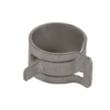
| Door leak at front | Boot clamp loose or damaged | Washer door boot spring clamp DC97-04973B |
Why it matters
Spin, drain, and fill problems can trigger error codes, extend cycle times, and cause leaks or water left in the drum. Catching the root cause early helps prevent repeat failures and reduces wear on the motor, tub, and control components.
If you’re ordering parts, match by model WF203ANS and use the parts list for this washer; you can also search by model on Sears PartsDirect.
Last updated: February 2026
How do I fix a 4E error on my Samsung washer?
The 4E error on your Samsung WF203ANS washer means the washer is not getting water fast enough or at all. We fix it by confirming strong water supply to the inlet hoses, clearing inlet screen blockages, and then checking the fill components such as the washer water inlet valve DC62-30314K.
Step-by-step checks (most fixes)
- Turn both hot and cold water faucets fully on.
- Straighten any kinked, crushed, or pinched inlet hoses.
- Unscrew the hoses at the washer and rinse the small mesh inlet screens (sediment can block them).
- Verify the home water pressure is strong at the hose ends (briefly aim into a bucket).
- Clean the detergent drawer and dispenser passages; overflow or siphon issues can mimic a fill problem.
- Power reset: unplug the washer (or switch off the breaker) for 2 minutes, then retry a normal cycle.
When it points to a part problem
If the supply is good and screens are clean but 4E returns quickly, the washer is usually failing to open a fill valve electrically or mechanically.
Common part-related causes include:
- A sticking or failed inlet valve solenoid
- Debris inside the valve body
- Loose wiring at the valve or control
- A control issue that is not sending voltage to the valve
Parts on this model that commonly relate to 4E
| Symptom you notice | Most likely area | Part to consider |
|---|---|---|
| No water enters at all | Fill valve not opening | Washer water inlet valve DC62-30314K or washer water inlet valve DC62-30312J |
| Water enters very slowly | Clogged screens or weak supply | Clean screens first; replace valve if needed |
| Error appears after moving washer | Hose kink or loose connection | Re-seat hoses; check clamps and routing |
Why it matters
A 4E condition stops the cycle to prevent running the washer without proper water level. Fixing the supply restriction or a failing inlet valve protects the control, prevents repeated cycle interruptions, and helps avoid poor wash performance.
Ordering the right replacement
We recommend matching parts to your exact WF203ANS configuration before ordering. You can order replacement parts from the parts list for this model, or search by model number on Sears PartsDirect.
Last updated: February 2026
What is the average lifespan of a Samsung washing machine?
Most Samsung washing machines last 10 to 15 years with normal household use. For your Samsung WF203ANS front-load washer, consistent maintenance and quick repairs (especially for draining, filling, and door-seal leaks) keep it running closer to the high end; you can order common replacement parts on this model’s parts list or search by model at Sears PartsDirect.
Typical lifespan (what to expect)
Samsung front-load washers like WF203ANS commonly fall into these ranges:
| Usage and care level | Typical lifespan | What usually ends it first |
|---|---|---|
| Light use, good care | 12 to 15 years | Wear items (door boot, pump) |
| Average family use | 10 to 12 years | Drain/fill issues, vibration wear |
| Heavy use, poor care | 7 to 10 years | Pump, leaks, control problems |
What extends the life of a WF203ANS washer
We see the biggest lifespan gains from a few habits:
- Do not overload; heavy loads strain the motor, tub bearings, and suspension
- Use the right detergent amount (especially HE detergent) to reduce residue buildup
- Leave the door slightly open between loads to reduce odor and mildew
- Check pockets and use garment bags for small items to protect the drain pump
- Level the washer and keep it stable to reduce vibration damage
Parts that commonly affect “how long it lasts”
When a washer is otherwise in good shape, replacing a few parts often restores reliable operation:
- Filling problems (slow fill, no fill): washer water inlet valve DC62-30314K or washer water inlet valve DC62-30312J
- Draining problems (won’t drain, stops mid-cycle): washer drain pump DC96-01414A or Samsung washer drain pump DC31-00054A
- Leaks at the door or boot area: Samsung washer door boot DC64-01479A and the boot retaining clamps such as washer door boot spring clamp DC97-04973B
Why it matters
A washer’s “lifespan” is usually determined by whether it can still wash and spin reliably without leaks. On front-load models, small issues like a weak drain pump, restricted inlet valve screens, or a worn door boot can look like a major failure, but they are often straightforward repairs.
Last updated: February 2026