Owner’s manual
 Error Codes



How big is the LG dle4970w?
The LG DLE4970W dryer is 27 inches wide x 45 3/8 inches high x 28 3/8 inches deep; with the door open, depth is about 50 1/4 inches. For the most reliable fit details for your laundry space, we recommend confirming clearances in the DLE4970W owner's manual.
Dimensions and weights (quick reference)
| Measurement | Size |
|---|---|
| Width | 27 in. |
| Height | 45 3/8 in. |
| Depth (door closed) | 28 3/8 in. |
| Depth (door open) | 50 1/4 in. |
Typical shipping carton size is 29 1/2 in. W x 48 in. H x 31 1/4 in. D.
What to measure before you buy or move the dryer
- Measure the doorway and hallway width on the path to the laundry area.
- Confirm depth with the door open so you can load and unload comfortably.
- Leave space for the vent duct and power cord behind the dryer.
- Plan for side and rear clearance to reduce vibration and improve airflow.
- If stacking or placing in a closet, verify top clearance and any shelf interference.
Why it matters
Correct measurements help prevent delivery surprises, reduce installation issues, and support proper airflow. Good airflow is also a key factor in drying performance and helps prevent overheating.
If you are troubleshooting long dry times after installation, our dryer takes a long time to dry guide walks through common airflow and venting checks.
Last updated: February 2026
How to hard reset LG sensor dry dryer?
To hard reset an LG DLE4970W Sensor Dry dryer, we turn the dryer off, cut power at the breaker (or unplug it) for a few minutes, then restore power and start a new cycle. This clears most control glitches and false sensor behavior.
Hard reset steps (recommended)
- Press Power to turn the dryer off.
- Unplug the dryer or switch OFF the circuit breaker.
- Wait 3 to 5 minutes.
- Restore power (plug back in or switch breaker ON).
- Press Power, select a cycle, then press Start/Pause.
If the dryer still acts “stuck” in Sensor Dry
These checks fix the most common causes of Sensor Dry not finishing or not sensing correctly:
- Clean the lint screen before every load; confirm it seats fully in the housing.
- Check airflow: crushed vent hose, clogged vent, or blocked exterior hood.
- Avoid overloading; mixed fabric loads can confuse moisture sensing.
- Try a Timed Dry cycle to confirm the heater and motor run normally.
- If the drum turns but drying is inconsistent, inspect the moisture sensor bars and wiring.
Parts that commonly affect Sensor Dry performance
If resetting does not help and symptoms match, these model-compatible parts are common suspects:
| Symptom | Likely area | Example part for DLE4970W |
|---|---|---|
| Stops early or runs too long | Moisture sensing | Dryer moisture sensor 6500EL3001A |
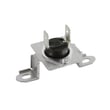
| Overheats or shuts off on heat | Temperature safety control | Dryer high-limit thermostat 6931EL3003D |
| No/weak heat or erratic temps | Temperature feedback | Dryer thermistor AGM30045804 |
Why it matters
A proper hard reset restores the control board’s normal logic after a power glitch. If airflow is restricted or a sensor is dirty or failing, Sensor Dry can misread moisture and either end too soon or keep running.
For cycle behavior details and control panel functions, follow the steps in the DLE4970W owner’s manual.
Last updated: February 2026
How to test an LG dryer heating element?
To test the heating element in your LG DLE4970W electric dryer, we unplug the dryer, access the heater terminals, and measure resistance (ohms) with a multimeter; a good element typically shows continuity and a steady resistance reading. Use the DLE4970W owner's manual for the correct access panels and safety notes.
Tools and safety we use
- Unplug the dryer (or switch off the breaker) before opening any panels
- Multimeter set to resistance (ohms)
- Phillips screwdriver or nut driver (panel screws vary)
- Work gloves (sheet metal edges are sharp)
- Phone camera to record wire locations before removal
Step-by-step: test the heating element
- Disconnect power to the dryer.
- Open the cabinet to reach the heater housing (panel location varies by model; follow the DLE4970W owner's manual).
- Label and remove the wires from the heating element terminals (pull on connectors, not wires).
- Measure resistance across the element terminals with the meter probes.
- Check for a short to ground: place one probe on an element terminal and the other on bare metal of the heater housing; the meter should show no continuity.
What readings mean
Typical electric dryer heating elements read in a moderate ohms range; the exact value varies by design.
| Meter result | What it usually means | What we do next |
|---|---|---|
| Steady resistance reading (not OL) | Element likely OK | Check airflow, thermostats, and wiring |
| OL or no continuity | Element is broken (open) | Replace the heater assembly/element |
| Continuity to cabinet (short to ground) | Element is shorted | Replace the heater assembly/element |
Related checks (common “no heat” causes)
If the element tests good, we focus on the rest of the heating circuit and airflow:
- House power: confirm the dryer has full 240V supply (a tripped breaker can leave it running but not heating)
- Overheating protection: test the high-limit thermostat such as dryer high-limit thermostat 6931EL3003D
- Temperature sensing: a failed dryer thermistor AGM30045804 can cause heat problems
- Lint restriction: clean the lint screen and venting; restricted airflow can trip thermostats
- Wiring/connectors: look for burnt terminals at the heater and thermostats
Why it matters
A correct ohms and ground test prevents unnecessary part replacement and helps pinpoint whether the “no heat” problem is the heating element, a thermostat/thermistor, or an airflow issue.
Last updated: February 2026
What is the average lifespan of an LG dryer?
LG dryers typically last 10 to 15 years. For your LG DLE4970W, lifespan depends most on airflow (venting and lint control), load size, and how quickly you address wear items like the drum belt and support rollers; our DLE4970W owner's manual covers the maintenance basics.
What affects dryer lifespan the most
- Vent restriction (long runs, crushed flex duct, clogged hood) increases heat and run time
- Lint buildup in the lint screen area and blower housing strains the motor and heater
- Overloading accelerates wear on the drum belt, idler pulley, and rollers
- High heat cycles used constantly can shorten heater and thermostat life
- Delayed repairs (squealing, thumping, burning smell) often lead to bigger failures
Quick maintenance plan (keeps an LG dryer in the 10 to 15 year range)
- Clean the lint screen every load; wash and fully dry it monthly if you use dryer sheets
- Check airflow at the outside vent hood; strong, steady exhaust matters
- Inspect and clean the vent duct at least yearly (more often with pets or long vent runs)
- Avoid overfilling; leave room for clothes to tumble freely
- If you hear squealing or thumping, service the drum support system promptly
Common wear parts and what they usually mean
| Symptom | Most common cause | Example part for DLE4970W |
|---|---|---|
| Drum won’t turn, motor runs | Broken/slipping belt | Dryer drum belt 4400EL2001F |
| Squeal, thump, rumble | Worn roller or idler | Dryer drum support roller 4581EL2002H |
| Long dry times, overheating | Airflow issue or temperature sensing problem | Dryer thermistor AGM30045804 |
Why it matters
A dryer that runs hot or takes too long to dry wears out the heating system, motor, and drum support parts faster. Good airflow and routine cleaning reduce stress on key components and extend the usable life of the DLE4970W.
Last updated: February 2026
What is the most common problem with LG dryers?
The most common LG dryer problem is poor drying performance: the dryer runs but clothes stay damp or take too long. On the LG DLE4970W, this is usually caused by restricted airflow (lint buildup or a crushed vent) or a heat-control failure involving the heating circuit, thermostats, or temperature sensing.
Quick checks we recommend first (fast, no parts)
- Clean the lint screen before every load and confirm it seats fully.
- Check the outside vent hood for a strong, steady airflow.
- Inspect the vent path for kinks, long runs, or heavy lint buildup.
- Try a timed dry cycle; if timed dry works better than sensor dry, focus on sensors and airflow.
- Review operating and maintenance steps in the DLE4970W owner's manual.
Other very common LG dryer issues (and what they look like)
LG dryers also commonly have tumbling and noise complaints, plus sensor and safety-switch issues.
| Symptom | Most likely area | Example model-matched part to consider |
|---|---|---|
| Drum will not tumble, motor runs | Belt or idler system | Dryer drum belt 4400EL2001F |
| Thumping, squealing, rumbling | Drum support rollers or idler pulley | Dryer drum support roller 4581EL2002H |
| Dryer shuts off, overheats, or cycles heat oddly | High-limit or blower thermostat | Dryer high-limit thermostat 6931EL3003D |
| Sensor dry ends too soon or acts inconsistent | Moisture sensing circuit | Dryer moisture sensor 6500EL3001A |
Error codes and what they usually point to
If your LG DLE4970W displays an error code, use it to narrow the diagnosis before replacing parts.
- Heating-related codes often point to temperature sensing or airflow problems.
- Airflow warnings often point to vent restriction (lint, long ducting, blocked hood).
- Door-related issues can be caused by a failing switch or misaligned door.
For code meanings and next steps, use LG dryer error codes.
Why it matters
Airflow and heat problems do more than slow drying; they can overheat the dryer, shorten the life of components like thermostats and the heating element, and increase energy use. Fixing venting and maintenance first prevents repeat failures.
Last updated: February 2026