Owner’s manual
 Error Codes


What number should my Amana freezer be set at?
For Amana refrigerator model ABC2037DES, we set the freezer temperature control to 4 for normal operation. That starting point is designed to keep the freezer at or near 0°F (-17.8°C) once temperatures stabilize.
Recommended starting settings (ABC2037DES)
Use these initial control settings after plugging the refrigerator in:
- Set the freezer control to 4
- Set the refrigerator control to 4
- Let the unit run 8 to 12 hours before adding food
- After loading food, allow 24 hours for temperatures to stabilize
For the exact control style and adjustment steps on your unit, follow the ABC2037DES owner's manual.
How to fine-tune the freezer setting
If the freezer is not holding close to 0°F, adjust gradually:
- If the freezer is too warm, move the freezer control up one number
- If the freezer is too cold, move the freezer control down one number
- Change only one number at a time
- Wait 24 hours between adjustments
Quick guide
| What you notice | What to do | What to expect |
|---|---|---|
| Ice cream is soft, ice cubes look wet | Increase freezer setting by 1 | Colder freezer after 24 hours |
| Food is freezing solid in the refrigerator section | Lower freezer setting by 1 (then recheck fridge temp) | Less overall cooling after 24 hours |
| Temps swing after big grocery load | Keep at 4, recheck in 24 hours | Stabilizes as food chills |
Why it matters
Setting the freezer control correctly helps the entire cooling system run as designed. On this style of Amana bottom-mount refrigerator, changing the freezer control can also affect refrigerator temperatures, so small, timed adjustments prevent overcooling or warm spots.
Last updated: January 2026
Are bottom mount fridges better?
Yes, a bottom-mount refrigerator like Amana model ABC2037DES is better for many kitchens because the fresh-food section sits at eye and waist level, so everyday items are easier to see and reach while the freezer stays in a lower drawer.
What “better” usually means in real use
Bottom-mount designs tend to fit households that cook often and want quick access to refrigerated foods.
- Less bending for milk, produce, and leftovers (fresh-food compartment is higher)
- Freezer items are stored in pull-out drawers, which can help organization
- Wide shelves make it easier to store platters and meal-prep containers
- Often feels more ergonomic for daily use than a top-freezer layout
Trade-offs to consider
A bottom-mount is not automatically the best choice for every home.
- You bend more for frozen foods (ice cream, frozen meals)
- Freezer drawers can be heavier when fully loaded
- Some bottom-mount models have more door bins and drawer parts to keep clean
- If the refrigerator is installed too tight, airflow and door swing can become an issue
Quick comparison
| Feature | Bottom-mount refrigerator | Top-freezer refrigerator |
|---|---|---|
| Fresh-food access | Easier, more ergonomic | Requires more bending |
| Freezer access | Lower drawer, organized | Upper shelf access |
| Best for | Frequent fresh-food use | Frequent freezer use |
Why installation and clearances matter
Even the “best” configuration performs poorly if it is installed in a space that restricts airflow. For ABC2037DES, proper air circulation clearances and correct leveling help temperatures stay stable and doors seal correctly; we recommend following the spacing and leveling guidance in the ABC2037DES owner's manual.
Helpful tip if you use water and ice
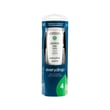
If your bottom-mount has a water filter and ice maker, keeping the filter current helps protect flow and ice production; our step-by-step guide how to replace the water filter in an Amana refrigerator walks through the process.
Last updated: January 2026
Why is my Amana refrigerator leaking water from the bottom?
Water leaking from the bottom of your Amana ABC2037DES refrigerator is usually caused by a blocked defrost drain that overflows into the cabinet, or a water-supply connection issue (kinked tubing, loose fitting, or low water pressure) that drips down to the floor. See the owner's manual for the model’s water-connection and leak-check guidance.
Most common causes (and what to check first)
- Clogged defrost drain: Meltwater cannot reach the drain pan and spills into the fresh-food section, then out the bottom.
- Leaking water line connection: A loose nut, cross-threaded fitting, or damaged tubing can drip behind the unit.
- Kinked copper tubing: Kinks restrict flow and can stress connections.
- Low water pressure or a poor shutoff valve: Can cause slow fill and odd leaking at connections.
- Cracked or shifted drain pan: Water reaches the pan but does not stay contained.
Quick troubleshooting steps
- Unplug the refrigerator and pull it out enough to inspect behind it.
- Check for active dripping at the household shutoff valve, tubing, and inlet valve area.
- Inspect the drain pan for cracks and confirm it is seated correctly.
- Clear the defrost drain (common DIY fix): remove interior panels as needed, flush the drain with warm water, and clear debris.
- If the leak is tied to the ice maker or dispenser, confirm your water connection is secure and not overtightened.
Water supply specs and leak-check guidance
The manual guidance for this style of Amana refrigerator emphasizes proper tubing and careful leak checks.
| Item | What to look for | Typical target |
|---|---|---|
| Water pressure | Weak flow, hollow ice, slow dispenser | 35 to 100 PSI (35 PSI minimum recommended with filters) |
| Tubing condition | Kinks, rubbing, flattened spots | Smooth bends, no kinks |
| Connection check | Drips after moving fridge | Monitor for leaks for 24 hours |
Parts that may be involved
If you find the leak is coming from the water system (not the defrost drain), these model-matched parts are commonly involved:
- Refrigerator water inlet valve assembly WP67006531 (controls water flow to ice maker)
- Refrigerator water supply tube union, 5/16 x 5/16-in WP2300868 (connects sections of water line)
Why it matters
Bottom leaks can damage flooring and also lead to ice buildup under drawers or in the freezer. Fixing the root cause (drain blockage vs. water-supply leak) prevents repeat leaks and helps the refrigerator maintain stable temperatures.
Last updated: January 2026
How do you reset the ice maker on an Amana refrigerator?
On the Amana ABC2037DES, the most reliable ice maker reset is to restart ice production: confirm the ice bin is installed and the wire shutoff arm is down (ON), then unplug the refrigerator for 1 minute and plug it back in. Allow up to 24 hours for normal ice.
Quick reset checklist (ABC2037DES)
- Confirm the ice bin is fully seated under the ice maker.
- Lower the wire shutoff arm until it is down (ice maker ON).
- Unplug the refrigerator for 1 minute, then restore power.
- Verify the freezer is at about 0°F (-18°C) before expecting ice.
- Wait: ice typically harvests about every 3 hours once conditions are correct.
For model-specific operating details (arm position, first harvest timing, and what to discard), use the ABC2037DES owner’s manual.
What “reset” fixes (and what it does not)
A power reset clears minor control glitches, but the ice maker still needs proper temperature and water flow to run.
| Symptom after reset | Most common cause | What to check next |
|---|---|---|
| No ice after 24 hours | Freezer too warm | Set freezer colder; limit door openings |
| Small or irregular cubes | Air in water line | Discard first batches; purge air by running water |
| Ice maker stops making ice | Arm blocked or raised | Clear items from bin; lower arm |
| Buzzing/clicking sounds | Normal valve operation | Occasional buzzing/clicking is normal |
If it still will not make ice
- Make sure the shutoff arm moves freely and is not jammed by food packages.
- If the bin was removed, raise the arm to prevent dumping; reinstall the bin, then lower the arm.
- If the water supply was shut off, turn it back on and monitor the connection for leaks.
- After restoring water, discard the first ice produced (at least the first few harvests) to flush the system.
Parts that commonly relate to ice maker issues
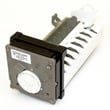
If the ice maker will not cycle even with correct temperature and water supply, a failed component is the next likely cause.
Why it matters
Ice makers are temperature and water-flow dependent. Getting the shutoff arm position, bin placement, and freezer temperature right prevents false “no ice” symptoms and helps avoid unnecessary part replacement.
Last updated: January 2026