Owner’s manual


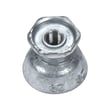
How do I know if my Kenmore dryer thermal fuse is blown?
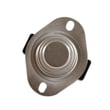
A blown thermal fuse on your Kenmore dryer model 11096274100 usually shows up as a dryer that will not run at all, or a dryer that runs but will not heat (depending on the design). The sure way to know is a continuity test with a multimeter after unplugging the dryer.
Quick symptoms to look for
- Dryer will not start (no motor run)
- Dryer tumbles but there is no heat (electric models)
- Cycle stops early because airflow is restricted and the dryer overheats
- Burning smell or very hot cabinet before the failure (often tied to vent restriction)
How we test the thermal fuse (simple continuity check)
- Unplug the dryer (and shut off gas if you have a gas version of this platform).
- Access the thermal fuse (commonly on the blower housing or exhaust duct).
- Remove at least one wire from the fuse terminal.
- Set a multimeter to continuity or lowest ohms.
- Touch probes to the fuse terminals.
Results:
- Good fuse: continuity (beep) or near 0 ohms
- Blown fuse: no beep, OL, or infinite resistance
For access steps and panel removal guidance, follow the 11096274100 owner's manual.
What to fix so the new fuse does not blow again
A thermal fuse usually opens because the dryer overheated from poor airflow. Address the cause before running the dryer.
- Clean the lint screen and lint chute
- Inspect and clear the vent duct to the outside
- Replace crushed, kinked, or extra-long venting
- Check the blower wheel for looseness or lint packing
- Confirm the operating thermostat is cycling heat normally
Common airflow-related parts for this model
| What you find | What it can cause | Related part option |
|---|---|---|
| Weak airflow, rumbling, lint buildup at blower | Overheating, long dry times | Dryer blower wheel WP694089 |
| Heat does not regulate well | Overheating or poor drying | Dryer operating thermostat WP3387134 |
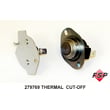
| Repeated overheat shutdowns | Fuse opens again | Cut-off kit 279769 |
Why it matters
The thermal fuse is a one-time safety device. If it is blown and you only replace the fuse without correcting airflow or temperature control issues, the dryer can keep overheating and fail again quickly.
Last updated: February 2026
How do I tell what model Kenmore dryer I have?
Your Kenmore dryer’s model number is printed on the appliance ID label; for Kenmore models like 11096274100, it’s usually inside the door opening on the cabinet frame, and it’s the fastest way to match the correct parts, wiring diagram, and specifications.
Where to find the model number label
Check these common locations on Kenmore dryers:
- Inside the dryer door opening (on the cabinet frame)
- On the back panel of the dryer cabinet
- Around the lint screen housing area (depending on design)
- On the side panel near the front edge (less common)
What the model number looks like (and why it matters)
Kenmore model numbers are typically a long string of digits. For this model page, the model number is 11096274100. Once you have it, use it exactly as printed to avoid ordering the wrong drum belt, thermostat, or door parts.
Quick ID tips
- Write down the full model number and the serial number
- Take a clear photo of the label before it wears or smudges
- Match every digit; one wrong number can point to a different series
Model number vs. stock/catalog numbers
Some Kenmore documentation also lists a stock number or catalog number. Those help identify a retail package, but the model number is what we use to select the correct parts list.
| Label item | Example you might see | What we use it for |
|---|---|---|
| Model number | 11096274100 | Parts lookup, diagrams, specs |
| Stock/catalog number | 62741 | Retail identification |
| Serial number | (varies) | Production run tracking |
Why it matters
The model number ties your dryer to the correct component set and specifications (for example, this series is a 29-inch extra capacity design in the feature information). Using the exact model number helps prevent returns and gets you the right fit the first time.
For additional identification details and specs, use the 11096274100 manual.
Last updated: February 2026
How much does it cost to replace a heating element in a Kenmore dryer?
For Kenmore dryer model 11096274100, replacing the heating element typically runs $30 to $150 for the part (more if it’s sold as a full heater housing assembly) and $150 to $350 total when you include professional labor. Exact pricing depends on the heater style and what failed.
Typical cost breakdown
- Heating element (part only): $30 to $150
- Service call and labor: $100 to $250 (varies by area)
- Common add-ons: thermal cut-off, thermostat, wiring repair
| Scenario | What you pay for | Typical total |
|---|---|---|
| DIY element replacement | Part only | $30 to $150 |
| Pro replaces element | Part + labor | $150 to $350 |
| Pro replaces element + safety parts | Part(s) + labor | $200 to $450 |
What matters for this model
Your 11096274100 is a 29-inch extra capacity electric dryer with a listed heat input of 5,400 watts. That means the heater circuit runs hot and draws significant current, so we treat any heat issue as both a parts and airflow problem. See the 11096274100 owner's manual for model-specific features and specs.
Parts that often get replaced with the element
If the element failed from overheating or restricted venting, these parts are commonly addressed at the same time:
- Thermal cut-off kit: cut-off kit 279769
- Operating thermostat: dryer operating thermostat WP3387134
- Heater wiring repair (if terminals are heat-damaged): dryer heating element wire kit 279457
Why the price varies
A heating problem can be caused by more than the element itself. These factors change the final cost:
- Electric vs. gas dryer (your model is electric)
- Element sold bare vs. element in a housing assembly
- Vent restriction (can overheat and take out fuses/thermostats)
- Access time (some repairs require more disassembly)
Why it matters
Replacing only the heating element when the real issue is poor airflow or a failed thermal safety device can lead to repeat failures and longer dry times. Pairing the repair with vent checks and the right safety parts keeps drying performance and temperatures stable.
Last updated: February 2026
How to tell if a dryer start switch is bad?
A bad start switch on your Kenmore dryer model 11096274100 usually shows up as a dryer that has power but will not start when you press the Start button. The most reliable check is a continuity test with a multimeter: the switch should read closed (near 0 ohms) only while it is pressed.
Quick symptoms to look for
- Dryer has power (lights or timer works) but motor never starts
- Pressing Start does nothing, or you have to press unusually hard
- Start button feels loose, sticky, or “mushy” compared to normal
- Dryer starts intermittently, especially if you wiggle the knob/button
- No motor hum at all when Start is pressed (with the door closed)
How we test the start switch (simple continuity check)
- Unplug the dryer (or switch off the breaker) before opening any panels.
- Access the console area where the start switch is mounted; follow the steps in the 11096274100 owner's manual.
- Label and remove the wires from the switch terminals.
- Set your multimeter to continuity (beep) or the lowest ohms setting.
- Test across the switch terminals:
- Not pressed: meter should show open (no beep, OL/infinite)
- Pressed: meter should show closed (beep, near 0 ohms)
What the readings mean
| Switch position | Expected reading | What it tells us |
|---|---|---|
| Released | Open (OL / no beep) | Switch is not stuck closed |
| Pressed | Closed (0 to a few ohms / beep) | Switch can complete the start circuit |
If the switch tests good but the dryer still will not start
A “no start” complaint is often caused by another safety or drive component. Check these common items next:
- Door switch (dryer will not run if it thinks the door is open)
- Thermal cut-off or fuse circuit (many models stop the motor if overheated)
- Drive system drag (seized pulley or blower wheel)
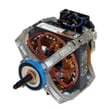
- Motor and centrifugal switch
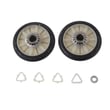
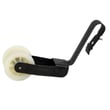
If you are already inside the cabinet and the drum is hard to turn by hand, inspect the dryer idler pulley WP691366 and the dryer blower wheel WP694089 for binding or damage.
Why it matters
The start switch is a momentary contact that sends power to the motor start circuit. If it cannot close electrically when pressed, the motor never gets the “start” signal, so the dryer stays completely still even though the unit has power.
Last updated: February 2026
What is the average life of a Kenmore dryer?
Most Kenmore dryers average 10 to 13 years of service life with normal household use and basic maintenance. For Kenmore model 11096274100 (a 29-inch extra-capacity dryer), keeping airflow strong and the drum drive system in good shape is what most often determines whether it reaches that typical lifespan.
Typical lifespan and what affects it
A dryer’s life is usually limited by heat stress, restricted venting, and wear items such as belts and pulleys.
- Vent and lint buildup (overheating and longer dry times)
- Overloading (extra strain on the drum belt and idler pulley)
- High-heat cycles used constantly (more wear on thermostats and wiring)
- Moisture and corrosion in laundry areas
- Preventive maintenance (cleaning and timely part replacement)
Maintenance checklist that helps you reach 10 to 13 years
Use the maintenance schedule and safety notes in the 11096274100 owner’s manual and follow these habits.
- Clean the lint screen every load
- Inspect and clean the exhaust ducting regularly (short, smooth metal venting dries fastest)
- Keep the dryer from being pushed tight against the wall (prevents crushed venting)
- Stop using the dryer if you smell burning or hear loud squealing; address it immediately
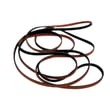
- Replace worn drive parts early, such as the drum belt 341241 and idler pulley, to prevent secondary damage
Quick guide: symptoms vs. common wear items
| Symptom | What it often points to | Example part for this model |
|---|---|---|
| Drum will not tumble | Belt or drive system issue | Drum belt |
| Squealing or chirping | Idler pulley or drum support wear | Idler pulley |
| Long dry times, very hot cabinet | Airflow restriction or heat control issue | Operating thermostat |
| Thumping | Blower wheel or drum components | Blower wheel |
Why it matters
A dryer that is venting well dries faster, runs cooler, and puts less strain on the motor, heater circuit, and drum drive. That combination is what most consistently pushes a Kenmore dryer into its full expected service life.
Last updated: February 2026