 Installation guide
 Owner’s manual





How long should an Amana dryer last?
Most Amana dryers, including the Amana NED5100TQ1, typically last 10 to 15 years with normal household use. Consistent airflow maintenance (lint screen and venting) and quick repairs to wear items like the drum belt help you reach the high end of that range; see the owner's manual for the recommended cleaning intervals.
Typical lifespan and what affects it
A dryer’s life is mostly determined by heat stress, airflow restriction, and drum support wear.
- Vent and lint buildup: restricted airflow overheats components and shortens life
- Load habits: frequent overloading strains the drive motor and drum support
- Heat settings: high heat all the time increases wear on thermostats and the heating circuit
- Preventive cleaning: lint inside the cabinet and exhaust should be cleaned periodically
- Timely part replacement: replacing worn rollers, belt, or blower wheel prevents bigger failures
Maintenance schedule we recommend
The manual for this style of dryer calls out lint removal inside the cabinet and exhaust vent about every 2 years (more often with heavy use). Use this as a practical baseline.
| Task | How often | Why it matters |
|---|---|---|
| Clean lint screen | Every load | Keeps airflow strong and drying times normal |
| Check outside vent hood for strong airflow | Monthly | Prevents overheating and long dry times |
| Clean vent duct (full run) | Yearly | Reduces heat stress on the heater and thermostats |
| Clean lint inside cabinet and blower area | About every 2 years | Prevents lint buildup around hot and moving parts |
Parts that commonly extend dryer life
If your NED5100TQ1 starts squealing, thumping, or the drum stops turning, these are common wear items to address early:
- Belt 341241 (drum won’t turn, slipping, burning rubber smell)
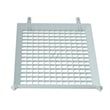
- Dryer repair kit 4392065 (common drum support wear items bundled together)
- Dryer blower wheel WP694089 (poor airflow, rumbling, vibration)
- Dryer high-limit thermostat WP3977767 (overheating symptoms tied to airflow issues)
Why it matters
A dryer that takes longer to dry runs hotter and longer each cycle. That extra heat time accelerates wear on the heating element, thermostats, motor, and drum support system, which is the main reason dryers fail before the 10 to 15 year mark.
Last updated: February 2026
How do I know if my dryer thermal fuse is blown?
A blown thermal fuse on your Amana NED5100TQ1 dryer is confirmed with a continuity test: with power disconnected, a good fuse reads near 0 ohms (or the meter beeps), and a blown fuse reads OL or no continuity. After replacement, we always address airflow restrictions that caused overheating.
Quick symptoms that point to a blown thermal fuse
These symptoms are common on electric dryers like the NED5100TQ1:
- Dryer will not start at all (no motor run)
- Dryer starts but stops quickly
- No heat (on some designs, the drum may still tumble)
- Burning smell before failure (often from restricted venting)
- Repeated fuse failures after replacement (airflow problem not fixed)
How we test the thermal fuse (safe, accurate method)
- Unplug the dryer (electric shock risk).
- Access the fuse area (location varies by design; follow the owner's manual).
- Remove at least one wire from the fuse terminal.
- Set a multimeter to continuity or ohms.
- Test across the fuse terminals.
What the meter reading means
| Meter result | What it means | What to do next |
|---|---|---|
| Beep or ~0 to 1 ohm | Fuse is good | Keep troubleshooting (door switch, start switch, timer, power) |
| OL, infinite, no beep | Fuse is blown | Replace the fuse and correct venting/airflow |
Parts that are commonly replaced with overheating or no-heat issues
If your dryer overheated or lost heat, these model-compatible parts are often involved:
- Dryer thermal cut-off fuse kit 279816 (common fix when overheating opens the safety circuit)
- Dryer high-limit thermostat WP3977767 (can open if temperatures get too high)
- Dryer element 279838 (for true no-heat complaints on electric dryers)
Why it matters
The thermal fuse is a one-time safety device designed to shut the dryer down if it overheats. Replacing it without fixing the root cause (usually a clogged lint screen, lint buildup in the blower housing, or a restricted vent) often leads to another failure.
Airflow checks we recommend after replacing a fuse
- Clean the lint screen and confirm strong airflow
- Inspect and clear the lint duct and blower area
- Check the vent hose for kinks, crushing, or long runs
- Make sure the exterior vent hood opens freely
- Run a timed dry cycle and verify heat after 5 minutes (a basic heat check is also described in the installation guide)
For ordering, you can use the parts list for your NED5100TQ1 on this page, or search by model on Sears PartsDirect.
Last updated: February 2026
Is it worth replacing the heating element in a dryer?
Yes; for an Amana NED5100TQ1 electric dryer that still tumbles and runs normally, replacing the heating element is usually worth it because a no-heat failure is a common, repairable issue and the part cost is typically far less than replacing the dryer. Use the installation guide to confirm power and heat checks first.
Quick checks before you replace parts
A “no heat” complaint is often caused by power supply or airflow, not the element.
- Verify the dryer has full 240V supply; electric dryers commonly use two fuses or breakers (the drum can turn with only one).
- Run the dryer about 5 minutes, then open the door and feel for heat.
- Clean the lint screen and confirm the vent is not crushed, kinked, or clogged.
- If the dryer is being heated for the first time after installation or repair, a brief odor can be normal.
Parts that commonly fix “no heat” on NED5100TQ1
If power and venting are good, these heat-circuit parts are the usual next step:
- Dryer element 279838
- Dryer thermal cut-off fuse kit 279816
- Dryer high-limit thermostat WP3977767
- Dryer heating element wire kit 279457
Symptom-to-part guide
| What you notice | Most likely direction | Why it matters |
|---|---|---|
| Drum turns, no heat | Power supply or heater circuit | Heater needs full 240V and intact safety devices |
| No heat after overheating or poor venting | Thermal cut-off or high-limit thermostat | Safety parts open to prevent unsafe temps |
| Intermittent heat, scorched terminals | Wire/terminal issue | Burned connections reduce current to the element |
Why it matters
Replacing the element restores drying performance, but fixing airflow at the same time prevents repeat overheating that can blow the thermal cut-off again.
You can order replacement parts from the parts list for NED5100TQ1, or search by model number on Sears PartsDirect.
Last updated: February 2026
How to tell if a dryer thermostat is bad?
A bad thermostat in your Amana NED5100TQ1 typically causes no heat, overheating, or heat that cycles incorrectly (drying takes too long). The sure check is unplugging the dryer and testing the thermostat with a multimeter for continuity, then confirming it opens and closes as temperature changes.
Quick symptoms checklist
- Dryer runs but there is no heat
- Loads feel unusually hot or the dryer shuts down from overheating
- Dry times get much longer than normal
- Heat seems to surge on and off unpredictably
- A hot or “scorched” smell during normal drying (not just first-time use)
How we test a dryer thermostat (continuity)
- Disconnect power (unplug, or switch off both breakers).
- Access the thermostat using the installation guide.
- Pull at least one wire off the thermostat terminal.
- Set the meter to continuity or lowest ohms.
- Measure across the thermostat terminals.
How to read the results
| Meter result at room temp | What it usually means | Next step |
|---|---|---|
| Continuity (near 0 ohms) | Thermostat is closed (often normal) | If heating is still wrong, keep diagnosing airflow and heat circuit |
| No continuity (open) | Thermostat stuck open (often no heat) | Replace the thermostat |
| Continuity never changes when warmed | Not cycling correctly | Replace the thermostat |
Rule out common “no heat” causes first
The NED5100TQ1 is an electric dryer that needs 240 volts; it commonly uses two household fuses or breakers, and the drum can still tumble if one side trips.
- Check both breakers (or both fuses)
- Confirm a heat cycle is selected (not air-only)
- Make sure the door is fully closed and Start is pressed firmly
Parts often involved in overheating or no-heat
Why it matters
A thermostat that does not regulate temperature correctly can cause poor drying, overheating, and repeated failure of heat-safety parts.
You can order replacement parts from the parts list for your model, or search by model number on Sears PartsDirect.
Last updated: February 2026





