Installation guide
 Owner’s manual
 Error Codes


What is the average lifespan of a KitchenAid dishwasher?
A KitchenAid dishwasher typically lasts 10 to 14 years. For your KitchenAid KDTE104ESS0, you can stay closer to the high end of that range by keeping filters and spray paths clean, using the right detergent, and fixing small issues (like poor draining) early using the KDTE104ESS0 owner’s manual.
What affects dishwasher lifespan most
- Water quality: Hard water speeds up mineral buildup on the heating element and inside the sump.
- Cleaning and maintenance: Regular cleaning reduces strain on the circulation system.
- Loading habits: Overloading blocks spray arms and increases pump workload.
- Detergent and rinse aid use: Too much detergent can leave residue; too little can reduce cleaning and cause rewashes.
- Drain performance: Slow draining keeps dirty water in the tub and can stress the drain pump.
Maintenance checklist to help it reach 10 to 14 years
- Clean the filter area and remove debris from the sump regularly.
- Run a monthly cleaning cycle (dishwasher cleaner or approved method in the manual).
- Confirm spray arms spin freely and holes are not clogged.
- Use rinse aid if you have hard water or frequent drying issues.
- Address draining problems early; a failing drain system can shorten overall life.
Common wear items vs. “big” repairs
| What you notice | Often involved | Typical impact |
|---|---|---|
| Rack won’t roll smoothly | Dishrack rollers/adjusters | Annoying, usually easy fix |
| Water left in bottom | Drain system | Can lead to odors and poor cleaning |
| Poor drying | Heating system, rinse aid, cycle choice | Usually correctable |
| Door won’t latch | Door latch | Prevents starting or stops mid-cycle |
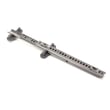
If your lower rack is hard to slide, replacing the dishwasher dishrack roller assembly, lower WPW10195417 is a common fix that reduces wear on the rack and rails.
Why it matters
A dishwasher that is maintained and draining correctly runs shorter, more efficient cycles and puts less stress on the pump, heater, and seals. That directly improves reliability and helps you avoid premature failures.
Last updated: January 2026
What is the most common problem with the KitchenAid dishwasher?
For the KitchenAid KDTE104ESS0 dishwasher, the most common problem we see is poor cleaning (dishes come out dirty) caused by restricted water flow or drainage, usually from a clogged filter area, blocked spray arms, or a wash system issue that reduces spray pressure.
Most common symptoms customers notice
- Food soil left on glasses or plates after the cycle
- Grit or debris re-deposited on dishes
- Upper rack not cleaning as well as the lower rack
- Standing water in the bottom after the cycle
- Unusual humming or grinding during wash or drain
Quick checks that fix many “not cleaning” complaints
- Clean the filter and sump area; remove trapped labels, seeds, and broken glass.
- Inspect spray arms; clear clogged holes and confirm arms spin freely.
- Confirm hot water supply; run the kitchen faucet hot before starting a cycle.
- Use the right detergent and rinse aid; old detergent and no rinse aid often reduce performance.
- Load correctly; avoid blocking the detergent dispenser and spray paths (see how to load a dishwasher video).
When it is likely a part problem
If the dishwasher fills and drains but still does not wash well, these parts are common suspects on KDTE104ESS0:
| What you notice | Likely area | Example part to check |
|---|---|---|
| Weak spray, poor cleaning across both racks | Wash circulation system | Circulation pump and motor assembly |
| Water left in tub, slow drain | Drain system | Dishwasher drain pump WPW10348269 |
| Not filling or fills too slowly | Water supply | Water inlet valve |
| Poor drying and cooler-than-normal cycles | Heating circuit | Heating element |
Why it matters
Poor cleaning is usually a water movement problem; when spray pressure drops or water cannot drain correctly, soil stays on dishes and can also trigger KitchenAid error codes. Using the correct cycle, hot water, and a clean filter prevents repeat issues.
Helpful references for KDTE104ESS0
- Cycle and care guidance: KDTE104ESS0 manual
- If you see flashing lights or codes: KitchenAid microclean he dishwasher error codes
Last updated: January 2026
Is it worth fixing a KitchenAid dishwasher?
Yes, it’s worth fixing a KitchenAid dishwasher like model KDTE104ESS0 when the failure is isolated and the total repair cost stays under about half the price of a comparable new dishwasher; replacement makes more sense when you have repeated breakdowns or multiple major symptoms at once.
Quick decision checklist
- Repair for a single symptom (won’t drain, won’t fill, won’t start, rack won’t roll).
- Repair when the tub and door seal area are dry and solid.
- Replace when you’ve had multiple repairs in the last 12 to 24 months.
- Replace when several systems act up together (drain plus heat plus random stopping).
- Repair when the fix is a common service part and labor is straightforward.
Simple cost rule
| Total repair cost vs. similar new dishwasher | Best choice |
|---|---|
| Under ~50% | Repair |
| Over ~50% | Replace |
Common “worth it” repairs on KDTE104ESS0
- Not draining: clear the drain path; replace the dishwasher drain pump WPW10348269 if the pump won’t run.
- Not filling: confirm the shutoff valve is open; replace the dishwasher water inlet valve W11175771 if fill is weak or absent.
- Won’t start or won’t latch: replace the dishwasher door latch WPW10653840 if the door doesn’t close firmly.
- Rack problems: replace the dishwasher dishrack roller assembly, lower WPW10195417 when the lower rack binds or falls off track.
Why it matters
A dishwasher usually fails as either one worn part (great repair candidate) or a pattern of electrical, motor, and heating issues (poor repair candidate). Using age, repeat failures, and repair cost prevents overspending.
What we recommend before deciding
- Check cycle options, indicator meanings, and basic troubleshooting in the KDTE104ESS0 owner’s manual.
- If you see a fault pattern or blinking lights, match it to the KitchenAid he dishwasher error codes guide before ordering parts.
Last updated: January 2026