Owner’s manual


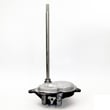
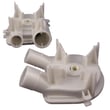
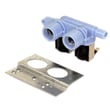
How to identify a Kenmore washer model?
To identify your Kenmore washer model, we look for the model and serial number on the washer’s model and serial number plate, then record the full model number exactly as shown (for example, 11022852100). The location and format are shown in the owner's manual.
Where to find the model and serial number plate
On Kenmore top-load washers like model 11022852100, the model and serial number plate is a physical label attached to the washer cabinet. Common places to check include:
- Under the lid, around the tub opening
- Along the top rim of the cabinet (near the lid opening)
- On the back of the control console area
- On the rear panel of the washer cabinet
How to read the model number correctly
Use the model number exactly as printed on the plate. That helps us match the correct parts list, diagrams, and troubleshooting info.
- Copy every digit in order (do not skip or rearrange numbers)
- Keep any dashes or extra characters if they appear
- Write down the serial number too (it helps identify production details)
- Save the information with your purchase date for future reference
Quick checklist: model number vs. serial number
| Item | What it’s used for | Example format |
|---|---|---|
| Model number | Identifies the exact washer design and correct replacement parts | 11022852100 |
| Serial number | Identifies the unit’s production run and build details | Letters and numbers |
Why it matters
Kenmore washers often look similar across multiple model series, but internal parts like the drive system, drain pump, or inlet valve can differ. Using the exact model number helps ensure you get the right replacement part the first time.
Last updated: February 2026
Is it worth repairing a Kenmore washing machine?
Yes, it’s usually worth repairing a Kenmore washer like model 11022852100 when the fix addresses a specific failed part and the total repair cost is clearly less than replacing the washer. This model is designed for years of dependable operation, and many common failures are straightforward part replacements using the correct components.
How we decide if repair makes sense
Use these practical checkpoints before you spend money on parts or labor:
- Age and condition: If the cabinet, tub, and controls are in good shape, repairs pay off.
- Symptom type: No-agitate, no-spin, or no-drain problems are often economical fixes.
- Part cost vs. replacement cost: If the repair is a small fraction of a new washer, repair wins.
- Repeat failures: Multiple recent breakdowns point toward replacement.
- Leak or rust severity: Major tub or basket corrosion usually pushes toward replacement.
For model-specific operating and troubleshooting guidance, use the owner's manual.
Common repairs that are often worth it on this washer
These are frequent wear items on direct-drive style Kenmore top-load washers, and they’re typically cost-effective to replace:
- Agitator not moving properly: agitator dog 80040
- Washer won’t drain or leaves water in the tub: washer drain pump WP3363394
- Washer won’t spin or makes a grinding/rattling noise: coupling 285753A
- Spin issues tied to drive engagement: clutch 285785
- Fill problems (slow fill, no fill, wrong temperature): washer inlet valve 285805
Quick cost-to-benefit guide
| Repair situation | Typical outcome | Usually worth it? |
|---|---|---|
| Single failed wear part (pump, coupling, agitator parts) | Restores normal washing quickly | Yes |
| Multiple drive-train parts needed | Higher labor and downtime | Sometimes |
| Major internal drive failure (gearcase) | Higher part cost and labor | Depends |
Why it matters
A targeted repair keeps a solid Kenmore washer running, avoids the learning curve of a new machine, and can prevent secondary damage (for example, running with a failing pump can lead to leaks or overflow issues).
Last updated: February 2026
What is the average lifespan of a Kenmore washer?
A Kenmore washer typically lasts 10 to 15 years with normal household use. For your Kenmore 11022852100, lifespan depends most on load size, how often you run it, and whether wear items (like the drive system and pump) are maintained and replaced when symptoms show up.
What affects washer lifespan the most
- Overloading (stresses the motor, clutch, and gearcase)
- Frequent heavy cycles (more wear per year)
- Drain issues (standing water strains the pump and can cause odors)
- Out-of-balance loads (extra vibration stresses suspension and basket components)
- Delayed repairs when early symptoms appear (noise, slipping, leaking)
Signs your washer is nearing end-of-life
- Won’t spin or agitate consistently (common drive-train wear)
- Grinding, burning smell, or loud clunking during spin
- Leaks from the tub area or pump connections
- Slow or no draining
- Repeated out-of-balance shaking even with properly sized loads
Common wear parts that can extend life on model 11022852100
Replacing a few high-wear parts often restores performance and helps you get closer to the 10 to 15 year range.
| Symptom | Commonly involved part | What it does |
|---|---|---|
| Drains poorly or won’t drain | Washer drain pump WP3363394 | Pumps water out of the tub |
| Agitator moves weakly or “ratchets” | Agitator dog 80040 | Helps the agitator grip and move clothes |
| No agitation/spin, loud rattling | Coupling 285753A | Connects motor to the drive system |
| Spins poorly or slips | Clutch 285785 | Helps the basket reach and hold spin speed |
Why it matters
A washer that is maintained and repaired early usually costs less to keep running and is less likely to damage clothing or develop bigger failures (like gearcase wear). Your owner's manual also includes operating and care guidance that helps reduce day-to-day stress on the washer.
Last updated: February 2026
What is the most expensive part to replace on a washing machine?
On most washing machines, the most expensive repairs are usually major drive and tub components (the transmission/gearcase, inner basket, or drive motor) because they involve high-cost parts and significant labor. For Kenmore model 11022852100, the gearcase and drive motor are typically the priciest parts.
Most expensive parts (and why)
These repairs cost the most because they involve heavy components, deep disassembly, and precise reassembly.
- Gearcase / transmission: drives agitation and spin; replacement is labor-intensive
- Drive motor: powers the wash system; often requires cabinet and pump access
- Inner basket / drive basket: large, costly assembly; may require special tools
- Timer or control (on mechanical models): can be expensive and may be misdiagnosed
- Tub and basket-related components: leaks or rust can push repairs into major tear-down territory
Examples from Kenmore 11022852100 parts
Here are some of the higher-cost parts commonly associated with major repairs on this model:
| Part (example) | What it affects | Typical symptom when failing |
|---|---|---|
| Gear case 3360629 | Agitate and spin drive | Won’t spin, grinding noise, oil leak |
| Washer drive motor WP3352287 | Power to drive system | Hums, won’t start, weak agitation |
| Drive basket W10820043 | Spin basket assembly | Out-of-balance, basket damage |
| Washer timer WP3955190 | Cycle progression | Stalls mid-cycle, won’t advance |
Before replacing an expensive part
We recommend ruling out simpler, lower-cost failures first, especially when the washer will not agitate or spin.
- Confirm the load is balanced and not overloaded (overloading increases vibration and wear)
- Check for draining problems that can prevent spin (a clogged pump or hose can mimic drive failure)
- Inspect common drive items such as the motor coupling and clutch
- Look for leaks or oil residue under the washer (often points toward gearcase issues)
- Use the troubleshooting and safety guidance in the owner's manual
Why it matters
High-cost parts can be worth replacing when the rest of the washer is in good condition, but misdiagnosis is common. A quick check of drain, coupling, clutch, and loading issues can prevent replacing a gearcase or motor unnecessarily.
Last updated: February 2026