Error Codes


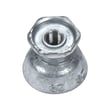
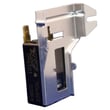
How do I know if my Kenmore dryer thermal fuse is blown?
On Kenmore dryer model 11087873100, a blown thermal fuse most often causes a no-start condition; on some builds it can also cause the dryer to run but not heat. The only sure confirmation is a multimeter continuity test with power disconnected.
Quick symptoms checklist
- Dryer will not start when you press Start
- Drum light works but motor will not run
- Dryer runs but produces no heat (some configurations)
- Burning smell or unusually hot cabinet before it stopped
- Weak airflow at the outside vent hood
How to test the thermal fuse (continuity)
- Unplug the dryer (or turn off the breaker). For gas dryers, shut off the gas supply.
- Access the fuse (commonly on the blower housing or exhaust duct area).
- Remove the wires from the fuse terminals.
- Set the meter to continuity or ohms and test across the fuse terminals.
| Meter reading | Fuse status | Next step |
|---|---|---|
| Beep or near 0 Ω | Good | Check door switch, start circuit, belt switch, motor |
| OL or no beep | Blown | Replace the fuse and fix the airflow restriction |
Fix the cause so it does not blow again
A thermal fuse opens when the dryer overheats; restricted airflow is the usual cause.
- Clean the lint screen every load
- Clear the lint chute and blower housing area
- Inspect the vent duct for kinks, crushing, or lint buildup
- Confirm the outside vent hood opens fully
- Check the blower wheel for damage or slipping
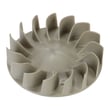
If airflow is weak or you hear rattling, inspect the dryer blower wheel WP694089.
Why it matters
Replacing a thermal fuse without correcting venting or airflow problems leads to repeat failures, longer dry times, and overheating.
Last updated: February 2026
How do I tell what model my Kenmore dryer is?
Your Kenmore dryer’s model number is printed on the appliance’s ID label; for Kenmore units it’s usually inside the door opening on the frame, and it will look like a long number (for example, 11087873100). Use that exact model number to match the correct parts and diagrams.
Where to find the model number label
Check these common Kenmore dryer locations (start with the door opening):
- Inside the dryer door opening on the front frame (most common)
- On the back panel of the dryer cabinet
- Around the lint screen housing area (near the lint filter opening)
- On the side panel edge near the door hinge area
- On the lower front area behind the toe panel (some designs)
What to write down (and why)
Record the full information from the label so we can match parts correctly.
- Model number (example: 11087873100)
- Serial number (helps identify production run)
- Type of dryer (gas vs. electric; this affects heating parts)
- Power requirements (helpful for installation checks)
Quick ID checklist
| What you see on the label | What it helps with | Example |
|---|---|---|
| Model number | Correct part fit and diagrams | 11087873100 |
| Serial number | Version changes within a model | (varies) |
| Gas or electric | Heating and ignition parts | Gas |
Why the first three digits matter on Kenmore models
Many Kenmore model numbers start with a 3-digit prefix (often shown as 110 on the label). That prefix helps identify the manufacturing source, which is useful when you’re narrowing down compatible components like a drum belt, idler pulley, or drive motor.
If the label is missing or unreadable
Use these practical workarounds:
- Look for a second label on the back panel
- Check your purchase receipt or delivery paperwork
- Search your home inspection notes or warranty paperwork
- Compare your dryer’s door style and lint screen location to parts diagrams for similar Kenmore models
If you’re already working on a symptom (no heat, won’t start, squealing), matching the model first prevents ordering the wrong component; for example, the correct drum belt for this model is the belt 341241.
Last updated: February 2026
How to remove front panel of Kenmore dryer?
On Kenmore model 11087873100, the front panel typically comes off after you disconnect power, lift the top, remove the mounting screws (often inside the door opening and at the top corners), then lift the panel up and off the bottom clips while supporting the drum.
Before you start (safety and prep)
- Unplug the dryer from the wall outlet.
- If it is a gas dryer, shut off the gas supply valve.
- Pull the dryer forward so you can reach the back and sides.
- Have a container ready for screws and a phone to take reference photos.
- Wear work gloves; sheet metal edges can be sharp.
Step-by-step: removing the front panel
- Remove the lint screen (if it is on top) and take out the screws in the lint screen housing (if present).
- Release the top panel: insert a putty knife a few inches in from each front corner to release the spring clips, then lift the top.
- Disconnect the door switch: locate the door switch wire harness and unplug it (note the connector orientation).
- Remove front panel screws:
- Open the door and remove screws around the door opening that secure the front panel to the cabinet.
- Remove any screws at the upper inside corners of the front panel.
- Lift the front panel off: pull the top of the panel slightly forward, then lift up to unhook it from the bottom retaining clips.
- Support the drum if the front panel also supports the drum on your build; avoid letting the drum drop or pull on the belt.
What you can access once the front is off
| Area you need | Common parts involved | Example part for this model |
|---|---|---|
| Drum not turning | Belt, idler pulley, motor | Belt 341241 |
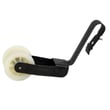
| Squealing or thumping | Idler pulley, drum bearing surfaces | Dryer idler pulley WP691366 |
| Poor airflow and lint buildup | Lint chute, blower wheel | Dryer lint chute assembly W11117429 |
Why it matters
Removing the front panel the right way prevents cabinet damage, protects the door switch wiring, and keeps the drum aligned so you can accurately diagnose issues like a broken belt, worn idler pulley, or airflow restrictions.
Last updated: February 2026