Installation guide
 Owner’s manual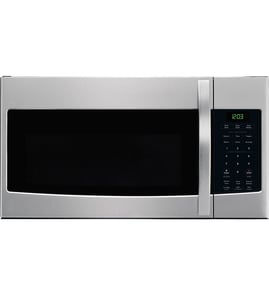


What are common problems with whirlpool microwaves?
Common problems on Whirlpool microwaves like model WMH73521CS5 include a no-heat condition, the microwave not operating at all, door-related start issues, sparking or burning in the cavity, and fan or light problems. Many symptoms trace back to power supply, door interlocks, or a failed heating circuit component.
Most common symptoms and what they usually mean
- Microwave will not operate: tripped breaker, blown house fuse, or a door that is not fully latched (the manual calls out checking power and firmly closing the door). See the WMH73521CS5 user manual.
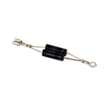
- Runs but does not heat: often points to the high-voltage heating circuit (for example a failed diode W11256462) or related safety devices.
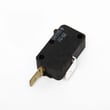
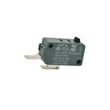
- Starts only sometimes or stops when the door moves: worn door switch or interlock parts (common on over-the-range units). Consider the microwave door interlock switch W10269458.
- Sparking, arcing, or burn marks: damaged waveguide cover, metal in the cavity, or food splatter buildup. The microwave waveguide cover W10533497 is a common wear item.
- No display or dead unit: internal fuse or power issue; a blown internal fuse can be related to door switch problems.
Quick checks we recommend before replacing parts
- Confirm power: reset the circuit breaker or replace the household fuse.
- Check the door: close it firmly; if the display shows a door message, open and close the door, then start.
- Test with water: heat 1 cup of cold water for 2 minutes on High; if it does not heat, focus on the heating circuit.
- Inspect the cavity: remove any metal, clean splatter, and check the waveguide cover for damage.
- If the unit is completely dead: internal fuse and door switch/interlock issues are common causes.
Common problem-to-part map (WMH73521CS5)
| Symptom | Common area to check | Example part for this model |
|---|---|---|
| No heat but runs | High-voltage circuit | Diode (W11256462) |
| Won’t start / intermittent | Door interlock circuit | Microwave door interlock switch (W10269458) |
| Sparking in cavity | Waveguide area | Microwave waveguide cover (W10533497) |
Why it matters
Microwave/hood combos use door interlocks and high-voltage components to control heating safely. Correctly identifying whether the issue is power, door switching, or heating circuit prevents repeat failures and avoids replacing the wrong Whirlpool parts.
Last updated: February 2026
How to remove whirlpool microwave vent cover?
To remove the vent cover (vent grille) on your Whirlpool WMH73521CS5 microwave/hood combo, shut off power, remove the two screws holding the top front grille, then tilt the grille forward and lift it out. This is the same access used for the charcoal filter and cavity light.
Steps to remove the vent cover (vent grille)
- Turn off power at the breaker (recommended) or unplug the microwave if accessible.
- Stand in front of the unit and locate the vent grille at the top front.
- Remove the two screws securing the vent grille.
- Tilt the grille forward.
- Lift the grille up and out to remove it.
- Use a Phillips screwdriver to avoid stripping the screw heads.
- Support the grille with your free hand as the last screw comes out.
- Set screws aside together so they do not fall into the range area.
- If you are accessing the charcoal filter, note the filter orientation (wire mesh side up).
What you can access after the vent cover is off
With the vent grille removed on WMH73521CS5, you typically have access to common service items:
| Item | Location | Typical reason to remove grille |
|---|---|---|
| Charcoal filter (recirculating setups) | Behind the vent grille | Replace about every 6 months or when prompted |
| Cavity light bulb cover | Behind the vent grille | Replace interior light bulb |
| Top-front intake area | Behind the vent grille | Cleaning and inspection |
If you meant the top damper plate (venting conversion)
Some customers call the exterior top damper plate a “vent cover.” During wall or roof venting changes, the installation steps have you remove screws attaching the damper plate on top of the microwave, slide it toward the front, then lift it up. Use the WMH73521CS5 installation guide for the exact venting configuration steps.
Why it matters
Removing the correct cover prevents broken tabs, air leaks, and poor hood vent performance. It also keeps the door interlock and electrical areas protected while you service filters or lights.
For diagrams and screw locations specific to this model, use the WMH73521CS5 owner’s manual.
Last updated: February 2026
What are the parts of a microwave called?
A Whirlpool microwave like model WMH73521CS5 is made up of cooking, safety, and power components. Common names you will see include the turntable system, door interlock switches, high-voltage heating parts (magnetron circuit), the waveguide cover, and cooling and venting parts.
Common microwave part names (and what they do)
Here are the most common component names customers use when troubleshooting or ordering parts:
- Turntable system: glass tray and drive parts that rotate food for even heating
- Magnetron circuit (high voltage): creates microwave energy for heating (supported by the transformer and diode)
- Waveguide cover: shields the waveguide opening from splatter and helps prevent arcing
- Door interlock system: switches and latches that confirm the door is closed so the unit can run safely
- Cooling fan: moves air to protect internal components from overheating
- Control board and keypad: runs cook cycles, timing, and sensor functions
Model WMH73521CS5 examples you may see on parts lists
These are real part names used for this Whirlpool microwave/hood combo:
- Microwave waveguide cover W10533497
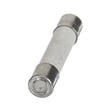
- Microwave fuse W11707984
- Microwave door interlock switch W10269458
- Diode W11256462
Quick reference: “customer term” vs “parts list term”
| What people call it | What it’s often listed as | Example for WMH73521CS5 |
|---|---|---|
| Door safety switch | Door interlock switch / door switch | W10269458 or W10727360 |
| Plate inside | Waveguide cover | W10533497 |
| Microwave won’t power on | Fuse / fuse holder | W11707984 / W10245194 |
| No heat | High-voltage diode / transformer | W11256462 / W10733412 |
Why it matters
Using the correct part name helps you match the symptom to the right section of the parts diagram. For example, “won’t start with the door closed” points to the interlock system, while “sparks inside” often points to the waveguide cover or a damaged cavity surface.
For component locations and venting-related parts used on over-the-range installs, use the WMH73521CS5 installation guide.
Last updated: February 2026