

How do I figure out what dryer I have?
To figure out what dryer you have, find the model number tag on your Whirlpool dryer and match it to the parts list. For Whirlpool model 7MWGD1750EQ1, the tag is typically on the door opening (cabinet frame) or on the back of the dryer near the top.
Where to look for the model number tag
Check these common locations first:
- Inside the dryer door opening on the cabinet frame
- On the back panel near the top edge
- Along the door opening near the lint screen housing (varies by design)
- On the side of the cabinet behind the front panel lip (less common)
What to write down (so you get the right parts)
We recommend recording these details exactly as shown on the tag:
- Model number (example: 7MWGD1750EQ1)
- Serial number (helps confirm production run)
- Type: gas or electric (this model number format is commonly used on Whirlpool gas dryers)
- Any option codes or engineering numbers listed after the model
Quick check: gas vs. electric dryer
If you are unsure which type you have, use these visual clues.
| What you see | Usually means | Why it matters |
|---|---|---|
| Flexible gas connector and a shutoff valve behind the dryer | Gas dryer | Heating parts like igniters and gas valve coils are gas-specific |
| Large 240V power cord (typically 3 or 4 prongs) | Electric dryer | Heating circuit and heater parts are electric-specific |
Why it matters
Using the exact model number is the fastest way to get the correct Whirlpool dryer parts, diagrams, and troubleshooting help for your dryer. Even small model-number differences can change the belt, motor, timer, or burner components.
If you are already troubleshooting a symptom (no heat, no start, error code), our Whirlpool duet dryer error codes guide can help you narrow down the failure.
Last updated: February 2026
What's the average lifespan of a whirlpool 7MWGD1750EQ1 dryer?
A Whirlpool dryer like model 7MWGD1750EQ1 typically lasts 10 to 13 years. With consistent airflow maintenance (lint and venting) and prompt repair of wear items, it commonly reaches the upper end of that range.
Typical lifespan and what changes it
Most dryers fail early due to heat and airflow stress or drum-drive wear. For the Whirlpool 7MWGD1750EQ1, these factors have the biggest impact:
- Vent restriction (long runs, crushed flex duct, clogged hood)
- Lint buildup inside the cabinet or blower housing
- Overloading (extra strain on belt, rollers, motor)
- High-heat cycles used constantly
- Worn drum support parts that create drag and overheating
Parts that commonly wear first
If the dryer still heats but gets noisy, squeals, thumps, or stops tumbling, these are the usual wear items to check and replace:
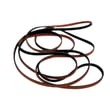
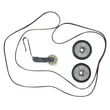
- Belt 341241
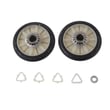
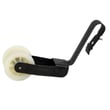
- Dryer repair kit 4392065 (common drum support wear items bundled together)
- Dryer motor pulley WP8066184
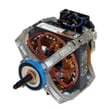
- Drive motor 279827
- Dryer blower wheel WP694089
Quick symptom-to-part guide
| Symptom | Most common cause | Part to consider |
|---|---|---|
| Drum will not turn, motor runs | Broken/slipping belt | Belt 341241 |
| Squealing or thumping | Worn rollers/idler components | Dryer repair kit 4392065 |
| Weak airflow, longer dry times | Loose/damaged blower wheel or venting issue | Dryer blower wheel WP694089 |
| Starts then stops, or struggles to start | Motor or drag from worn supports | Drive motor 279827 |
Why it matters
A dryer can look “fine” but still lose years of life when airflow is restricted. Good airflow keeps temperatures stable, reduces cycling stress on gas and electrical components, and prevents the motor and drum supports from running hotter than they should.
What we recommend for maximum life
- Clean the lint screen every load
- Inspect and clean the vent path regularly (dryer outlet to exterior hood)
- Avoid overloading; dry bulky loads in smaller batches
- Stop using the dryer if you hear persistent squealing or grinding; repair wear parts early
- If dry times increase, address airflow first before replacing heating parts
Last updated: February 2026
How do you fix the PF code on a dryer?
The PF code on your Whirlpool dryer model 7MWGD1750EQ1 means the dryer detected a power interruption. Restoring steady power and clearing the code usually fixes it; if PF keeps returning, focus on the home power supply and the dryer’s power cord connection.
How to clear the PF code
- Press Power/Cancel (or Stop/Cancel) once to clear the display.
- If the code returns immediately, unplug the dryer (or switch the breaker off) for 1 minute, then restore power.
- Start a timed cycle and watch for the code to reappear.
What to check first (most common causes)
- Tripped breaker: Reset the dryer’s breaker fully (off, then on).
- Loose plug: Make sure the plug is fully seated in the outlet.
- Voltage drop: Avoid running the dryer on the same circuit as high-draw devices.
- Power cord/terminal block connection: A loose connection can cause intermittent power loss.
- Household outage or flicker: PF can appear after even a brief interruption.
When PF points to a repair issue
If PF happens repeatedly during normal operation (not after an outage), inspect for symptoms that suggest a mechanical or electrical problem:
| Symptom | What it often indicates | What to do next |
|---|---|---|
| Dryer stops mid-cycle and shows PF | Intermittent power connection | Check outlet, cord, terminal block connections |
| Dryer runs but display resets | Voltage instability | Check breaker, circuit load, outlet condition |
| Dryer won’t restart after PF | Control not getting steady power | Verify power supply first; then consider control diagnostics |
Why it matters
A dryer needs consistent power for the motor, controls, and (on gas models) ignition sequence. Repeated PF events can cause nuisance shutdowns and can mimic other problems like a “won’t start” complaint.
Helpful DIY resources
For additional troubleshooting steps that often overlap with PF-related symptoms, use our DIY guide: gas dryer wont start troubleshooting video.
Last updated: February 2026
Why is my whirlpool dryer not getting hot enough?
If your Whirlpool dryer model 7MWGD1750EQ1 runs but does not get hot enough, the most common causes are restricted airflow (lint buildup or a crushed vent), a weak gas ignition system, or a failing blower or drive system that reduces airflow through the drum.
Quick checks that fix many “not hot enough” complaints
- Clean the lint screen before every load.
- Check the exhaust vent for kinks, crushing, or long runs; strong airflow should be felt outside.
- Clear lint from the blower housing and internal ducting if airflow is weak.
- Avoid overloading; packed loads block airflow and trap moisture.
- Try a timed dry cycle to compare performance (auto cycles can end early if sensing is affected).
Gas heat system parts to suspect on 7MWGD1750EQ1
On a gas dryer, “some heat but not enough” often points to ignition components that work intermittently.
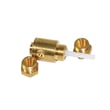
- If the burner ignites once and then stops heating during the cycle, the gas valve coils are a top suspect: dryer gas valve coil kit WPW10328463
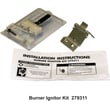
- If the igniter does not glow reliably, inspect the igniter: igniter 279311
- If the flame starts but drops out quickly, check the radiant sensor: dryer radiant sensor WP338906
Airflow and tumbling problems that reduce drying heat
Even with a good flame, poor airflow or poor drum movement makes clothes feel like they never get hot enough.
| Symptom | What it usually means | Part to check |
|---|---|---|
| Drum turns slowly or stops | Belt slipping or motor issue | Belt 341241, drive motor 279827 |
| Weak airflow, longer dry times | Blower wheel loose or clogged | Dryer blower wheel WP694089 |
| Squealing or thumping plus long dry times | Worn rollers and supports causing drag | Dryer repair kit 4392065 |
Why it matters
Low heat is often a safety control response to poor airflow; the dryer cannot move enough air to carry heat and moisture out. Fixing venting and airflow first improves drying time, helps protect the burner system, and reduces repeat shutdowns.
Helpful DIY guidance
For step-by-step troubleshooting patterns (including heat and cycle issues), use: gas dryer wont heat troubleshooting video
Last updated: February 2026