Owner’s manual


How do I tell what model my Kenmore dryer is?
Your Kenmore dryer’s model number is printed on the model and serial number plate. On model 11060602990, you’ll typically find that plate in the door opening area; write down the full model number exactly as shown so we can match the correct parts, wiring, and specifications.
Where to look for the model number plate
Check these common locations first (in order):
- Inside the dryer door opening on the cabinet frame
- On the back panel of the dryer cabinet
- Near the lint screen housing area (depending on the console and lint filter style)
- On a metal plate or sticker labeled “Model” and “Serial”
For the exact plate location and how it’s referenced in documentation, use the 11060602990 owner's manual.
What to write down (and why it matters)
Record the information exactly as it appears on the plate:
- Model number (example format: 11060602990)
- Serial number (used to identify production details)
- Date of purchase (helpful for your records)
Why it matters
Kenmore model numbers can look similar, but small differences change the correct replacement parts (like a heating element, thermostat, or belt) and the correct troubleshooting steps.
Quick model number tips for Kenmore dryers
Here’s how we recommend using the number once you find it:
| What you have | What to do with it | Result |
|---|---|---|
| Full model number | Use it when searching parts | Ensures correct fit |
| Serial number | Keep it with your records | Helps with service history |
| Only partial digits | Re-check the plate for the full string | Avoids ordering errors |
If the plate is hard to read
Try these practical steps:
- Wipe the plate gently with a damp cloth and dry it
- Use a flashlight at an angle to make faint printing stand out
- Take a close-up photo and zoom in
- Copy letters and numbers carefully (avoid swapping 0 and O)
Last updated: February 2026
How much does it cost to replace a heating element in a Kenmore dryer?
For Kenmore electric dryer model 11060602990, replacing the heating element typically costs $50 to $120 for the part and $150 to $350 total if you hire a technician (part plus labor). DIY replacement usually stays close to the part cost.
Typical cost breakdown
- Heating element part: commonly $50 to $120 (this model’s element is often in the mid-range)
- Service call and labor: commonly $100 to $250
- Optional related parts: $10 to $60 if heat damage is found at terminals or safety parts test open
- Tools/supplies: $0 to $25 (nut driver, vacuum, gloves)
| Repair approach | What you pay for | Typical total cost |
|---|---|---|
| DIY element replacement | Part only (plus basic tools) | $50 to $120 |
| Pro repair | Part + labor + service call | $150 to $350 |
| “No-heat” diagnosis first | Diagnostic + possible parts | $100 to $200+ before parts |
Parts that commonly get replaced together
If the dryer overheated from restricted airflow, the element can fail along with safety components. These are common pairings for this model:
- Dryer element 279838 (the heater that produces heat)
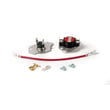
- Cut-off kit 279816 (thermal safety parts that open if temperatures get too high)
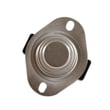
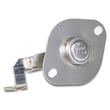
- Dryer operating thermostat WP3387134 (helps regulate drum temperature)
Why the price varies
A “heating element replacement” bill changes based on what caused the failure and what else is damaged.
- Airflow restriction: crushed/kinked venting or lint buildup can overheat the heater circuit
- Electrical issues: loose or burned wire terminals can require a wire repair kit
- Access time: some installations (tight closets, long vent runs) increase labor time
Before you buy parts (quick checks)
We recommend these basics first because they often explain repeated heater failures:
- Clean the lint screen and confirm strong airflow at the outside vent hood
- Make sure the vent is not crushed or kinked behind the dryer
- Review venting and safety guidance in the 11060602990 owner’s manual
Last updated: February 2026
How do I know if my Kenmore dryer thermal fuse is blown?
If your Kenmore electric dryer model 11060602990 runs but won’t heat, or it won’t run at all, a blown thermal fuse (or thermal cut-off) is a top suspect. We confirm it by unplugging the dryer and checking the fuse for continuity with a multimeter.
Quick symptoms to watch for
- Dryer tumbles but produces no heat (common when one house fuse trips, too)
- Dryer won’t start even though the door is closed and controls are set
- Cycle seems normal but clothes stay damp and dry times get longer
- Weak airflow at the outside vent hood (overheating can open safety fuses)
How we test it (safe, reliable method)
- Unplug the dryer (electric shock risk).
- Access the thermal fuse or thermal cut-off area (location varies by design; follow the 11060602990 owner's manual).
- Pull at least one wire off the fuse terminal.
- Set a multimeter to continuity or lowest ohms.
- Test across the fuse terminals.
Interpreting the meter
| Meter result | What it means | What to do next |
|---|---|---|
| Beep or near 0 Ω | Fuse is good | Keep troubleshooting heat or start circuit |
| No beep or OL | Fuse is blown (open) | Replace the failed safety part and fix airflow issue |
Parts that commonly get replaced together
On this Kenmore dryer, overheating often involves more than one safety device. If your test shows an open safety component, we typically replace the matched kit when applicable.
- Cut-off kit 279816 (includes thermal cut-off components used for overheat protection)
- Dryer operating thermostat WP3387134 (helps regulate normal operating temperature)
- Venting materials (rigid or heavy metal venting is preferred for airflow)
Why it matters
A thermal fuse or thermal cut-off opens to prevent overheating. Replacing the fuse without correcting restricted airflow (lint screen, crushed vent, clogged duct) can cause the new part to fail again and can also lead to poor drying.
Last updated: February 2026
What size is a Kenmore Model 11060602990 dryer?
Kenmore electric dryer model 11060602990 is a 29-inch wide electric dryer (full-size cabinet class). For the exact outside height and depth for your specific unit and door style, use the dimension and installation sections in the 11060602990 owner's manual.
What “29-inch wide” means for fit
A 29-inch wide Kenmore dryer is designed to fit standard laundry alcoves and sit next to most full-size washers. Width is the first measurement to confirm when you are replacing a dryer or planning cabinetry.
- Measure the opening width at the front and back (walls can be out of square)
- Leave space for the power cord and rear vent connection
- Plan clearance so the vent is not crushed or kinked
- Confirm the door swing clears nearby walls, a washer, or shelving
- Allow room to level the dryer using the adjustable legs
Typical planning dimensions (use for space planning)
These ranges help you plan the installation footprint; your exact height and depth depend on the rear vent elbow, leveling legs, and how close the dryer sits to the wall.
| Measurement | Typical range for this style of dryer | What affects it most |
|---|---|---|
| Width | 29 in | Cabinet class |
| Height | 43 to 44 in | Leveling legs, top design |
| Depth | 27 to 29 in | Vent elbow, clearance to wall |
Quick measurement tips we use
To get accurate numbers before moving the dryer:
- Measure width across the widest points (cabinet edges, not the drum)
- Measure depth from the back panel to the front edge of the door (door closed)
- Add 3 to 6 inches behind the dryer for venting and cord clearance
- Recheck after positioning; pushing the dryer too tight can pinch the vent
Why it matters
Correct sizing prevents a pinched vent, poor airflow, longer dry times, and overheating. It also helps reduce vibration and noise by ensuring the dryer sits level.
Last updated: February 2026