Installation guide
 Owner’s manual
 Error Codes


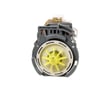
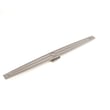
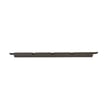
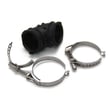
Can I replace dishwasher parts myself?
Yes, for Kenmore dishwasher model 66513223N414, we can replace many common parts ourselves (racks, rollers, spray arms, door latch, drain hose) with basic tools, as long as we shut off power and water first and follow the steps in the 66513223N414 installation guide and 66513223N414 owner's manual.
Many repairs are straightforward “remove and replace” jobs. Others involve wiring, leak risk, or heavy disassembly.
Good DIY candidates
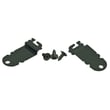
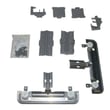
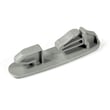
- Upper rack hardware and stops (example: dishwasher rack adjuster W10712395)
- Rack wheels and track rollers
- Door latch and strike alignment (example: dishwasher door latch WPW10653840)
- Drain hose replacement (routing and high loop)
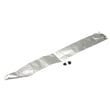
- Lower spray arm replacement (example: dishwasher spray arm, lower W10849471)
Usually better for a technician
- Electronic control and user interface diagnosis
- Motor, sump, and circulation system repairs
- Electrical troubleshooting beyond basic checks
Before touching any internal component, we make the dishwasher safe to work on.
- Turn off power at the breaker (not just the control panel)
- Shut off the water supply valve under the sink
- Protect the floor and pull the unit carefully to avoid kinking the water line or drain hose
- Keep screws out of the pump area (a towel over the pump/spray arm area helps during certain steps)
- Re-center the dishwasher in the opening if the door rubs after reassembly
| Question | If yes | If no |
|---|---|---|
| Is it a bolt-on part (rack, latch, hose, spray arm)? | DIY-friendly | Consider service |
| Does it involve wiring or control boards? | Consider service | DIY-friendly |
| Could a mistake cause a leak? | Proceed slowly, test for leaks | Consider service |
| Do you need to remove the dishwasher from the cabinet? | Use install steps and a helper | DIY-friendly |
DIY replacement can restore cleaning and reliability quickly, but dishwashers combine water, heat, and electricity. Following the model-specific guidance helps prevent leaks, door alignment problems, and damage to the pump area.
Last updated: February 2026
Does a Kenmore dishwasher model 66513223N414 have a filter?
Yes. Kenmore dishwasher model 66513223N414 uses an ULTRA WASH® HE filtration system with removable filters located at the bottom center of the tub; cleaning them periodically helps keep wash performance at its best. See the 66513223N414 owner's manual for filter location and removal steps.
This dishwasher uses a triple filtration system made up of:
- Upper filter assembly (helps keep oversized items and fine particles out of the pump)
- Lower filter (helps keep food from being recirculated onto dishes)
- A removable design intended for routine maintenance
The filters sit under the lower rack, centered over the sump area.
Quick check steps:
- Pull out the lower rack.
- Look at the bottom center of the tub for the round filter assembly.
- Twist and lift the upper filter assembly out (then remove the lower filter as needed).
- Rinse under warm water; use a soft brush for stuck-on soil.
- Reinstall and lock the filter in place before running a cycle.
We suggest monthly filter maintenance for typical use. Clean more often if you notice:
- Grit or food bits left on dishes
- Slow draining or standing water
- Odors
- Reduced spray pressure or poor cleaning
Do not run the dishwasher unless the filters are properly installed and locked. If the upper filter assembly turns freely, it is not locked.
| Item | What it does | Common symptom when dirty |
|---|---|---|
| Upper filter assembly | Protects pump from debris | Grinding noise, poor wash |
| Lower filter | Prevents food recirculation | Specks on glasses, residue |
A clean filter helps your Kenmore dishwasher maintain strong water flow and cleaning action while keeping noise and energy use under control.
Last updated: February 2026
How do I tell what model Kenmore dishwasher I have?
To identify your Kenmore dishwasher model, open the door and look for the model and serial number label on the inside edge of the tub or door frame. For Kenmore model 66513223N414, the label is typically easy to spot once the door is fully open.
Check these common label locations first:
- Along the left side of the door opening (inside the tub frame)
- Along the right side of the door opening
- On the top edge of the inner door
- Near the front kickplate area (less common)
If you see multiple numbers, use the one labeled Model (not the serial number).
Kenmore dishwashers often use a 3-digit prefix followed by more digits/letters.
| What you see on the label | What it means | Example |
|---|---|---|
| Model | Identifies the exact dishwasher design | 66513223N414 |
| Serial | Identifies the specific unit built | (varies by unit) |
We use the exact model number to match the correct parts and diagrams for your dishwasher. Even small model changes can affect fit for items like a door latch, rack adjusters, or a water inlet valve.
- Write the model number down exactly as shown (include all letters and numbers)
- Take a clear photo of the label for reference
- Use the model number when ordering parts or checking troubleshooting steps in the 66513223N414 owner's manual
Last updated: February 2026
Is it worth repairing a Kenmore dishwasher?
Yes, repairing a Kenmore dishwasher is worth it when your 66513223N414 has a specific, fixable failure (leak, drain issue, rack hardware, latch) and the total repair cost stays well below the cost of replacement. Replacement makes more sense when multiple major systems are failing at once.
- Repair when the problem is isolated (one part, one symptom) and the tub is in good shape.
- Repair when the fix is a common wear item: rack adjusters, wheels, door seal, drain hose.
- Repair when the dishwasher still fills, washes, and drains but has a nuisance failure (door won’t latch, rack won’t roll).
- Replace when you have repeated leaks, persistent electrical issues, or multiple expensive parts needed.
- Replace when the unit has heavy corrosion, a damaged tub, or chronic odor from long-term standing water.
| Scenario | What it usually involves | Typical direction |
|---|---|---|
| Minor mechanical issue | Rack parts, seal, latch, hose | Repair |
| Single functional failure | Drain pump or inlet valve | Repair if otherwise solid |
| Major electrical or multiple failures | Control plus motor/pump work | Replace more often |
These are common, targeted fixes on Kenmore dishwashers like model 66513223N414:
- Dishwasher door latch WPW10653840 if the door won’t close or the cycle won’t start
- Dishwasher drain pump W10876537 if it won’t drain and the drain path is clear
- Dishwasher water inlet valve W11175771 if it won’t fill (and the supply valve is on)
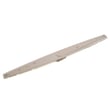
- Dishwasher door seal, lower W10909089 if you see water at the bottom edge of the door
- Dishwasher rack adjuster W10712395 if the upper rack won’t stay level or adjust
A dishwasher is a system: fill, wash, heat, and drain. When only one system is failing, a focused part replacement usually restores full performance. When several systems fail together, costs stack quickly and replacement becomes the better value.
- Check the troubleshooting section in the 66513223N414 owner’s manual for symptom-based guidance.
- If you’re seeing an error code, match it first using Kenmore 665 model dishwasher error codes.
- Price the likely part(s) and compare to a replacement budget, including installation.
Last updated: February 2026
What are the common problems with Kenmore dishwashers?
Common problems we see on the Kenmore 66513223N414 dishwasher include poor cleaning, cloudy or spotted dishes, not starting or stopping mid-cycle, and draining or leaking issues. Many of these trace back to loading, water temperature (120°F), or a worn part such as a latch, inlet valve, or drain pump; see the 66513223N414 owner's manual for model-specific checks.
- Dirty dishes or food left behind: clogged filter, blocked spray arm nozzles, or poor loading that prevents spray coverage
- Cloudy or spotted glassware: hard water, low rinse aid, or incorrect detergent amount
- Won’t start or lights blinking: door not fully closed/latched, Control/Lock enabled, or a cycle not selected
- Not draining: kinked/blocked drain hose, debris in sump area, or a failing drain pump
- Leaks: door seal wear, loose hose connections, or overfilling related to the float
- Confirm the door closes firmly; if the Start/Resume light blinks, press Start/Resume and close the door within 3 seconds.
- Verify hot water supply is at 120°F (49°C) before starting a cycle.
- Clean the filter area and inspect spray arm holes for debris.
- Use rinse aid and adjust detergent for your water hardness.
- Check the drain hose routing for kinks and ensure the sink/disposer connection is clear.
| Symptom | Common fix | Model-matched part to consider |
|---|---|---|
| Won’t start, stops mid-cycle | Door not latching | Dishwasher door latch WPW10653840 |
| Not filling or weak wash | Water supply not entering correctly | Dishwasher water inlet valve W11175771 |
| Not draining | Pump not evacuating water | Dishwasher drain pump W10876537 |
| Poor wash coverage | Spray arm worn or clogged | Dishwasher spray arm, lower W10849471 |
Dishwashers depend on correct fill level, strong spray action, and proper draining. A small issue like a partially latched door or low incoming water temperature can look like a major failure, while a worn latch, inlet valve, or drain pump can prevent the cycle from running correctly.
Last updated: February 2026