

How deep will a rear tine tiller go?
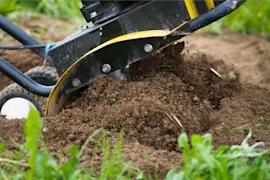
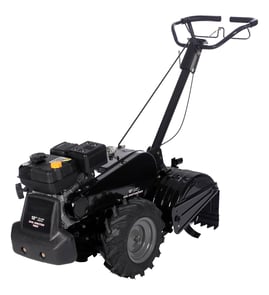
Most rear-tine tillers, including the Poulan PPRTH5A, typically till about 6 to 8 inches deep in average garden soil, and can reach up to around 10 to 12 inches in ideal conditions with multiple passes and proper depth-stake settings.
Typical tilling depth ranges
Depth depends more on soil conditions and setup than on engine power alone.
| Situation | Typical depth you can expect |
|---|---|
| First pass in firm or unbroken soil | 2 to 4 inches |
| Normal garden prep (most common) | 6 to 8 inches |
| Deep tilling after multiple passes | 8 to 12 inches |
What affects how deep your PPRTH5A will till
We see these factors make the biggest difference on rear-tine tillers:
- Soil type and moisture: hard clay and dry ground limit depth; slightly moist soil tills deeper.
- Number of passes: depth increases gradually; forcing full depth in one pass strains the drive.
- Depth stake setting: a more aggressive setting lets the tines bite deeper.
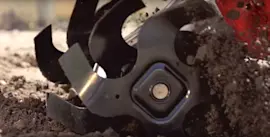
- Tine condition: worn or bent tines reduce bite and cause shallow tilling.
- Drive belt and traction: slipping reduces tine speed and digging power.
How to get deeper tilling (without overworking the machine)
Use a controlled approach so the tiller does the work instead of bouncing or bogging down.
- Start shallow, then lower the depth stake one step at a time.
- Make a second pass perpendicular to the first for better breakup.
- Remove rocks, roots, and debris before deep passes.
- If the tines slow down or stop, inspect the drive system; a worn husqvarna rear-tine tiller drive belt 591372401 commonly causes slipping.
- If the wheels and tines do not pull consistently, use our rear tine tiller troubleshooting tips wheels and tines to pinpoint the cause.
Why it matters
Tilling deeper than needed can bring up weed seeds and subsoil that is less fertile. For most planting beds, 6 to 8 inches gives strong root-zone prep while keeping the tiller, belt, and gear case under normal load.
Last updated: February 2026
What is the bar on the back of a tiller for?
On the Poulan PPRTH5A rear-tine tiller, the bar on the back is the drag bar (depth stake). We use it to control how deep the tines dig and to steady the tiller so it does not lunge forward; lowering it increases resistance and helps the machine till more evenly.
What the drag bar does
- Sets tilling depth by limiting how far the rear of the tiller can drop
- Acts like a brake to slow forward travel in hard soil
- Helps keep the tiller stable and reduces bouncing
- Improves soil breakup by letting the tines work longer in one spot
- Helps prevent the tiller from pulling you forward when the tines bite
How to adjust it (typical setup)
- Park on level ground and shut the engine off; let moving parts stop.
- Pull the locking pin and remove the clevis pin.
- Move the drag bar up or down to the hole that matches your desired depth.
- Reinstall the clevis pin and locking pin; confirm it is fully secured.
Quick adjustment guide
| Soil condition | Drag bar position | What you will notice |
|---|---|---|
| Hard, packed soil | Lower (more drag) | Slower travel, better control |
| Average garden soil | Middle | Balanced depth and speed |
| Loose soil or finishing pass | Higher (less drag) | Faster travel, shallower till |
If the tiller still will not hold depth
These issues commonly affect depth control on rear-tine tillers:
- Drag bar holes or pins are worn, bent, or missing
- Wheels are set too low or too high for the pass you are making
- You are trying to cut too deep in one pass (make multiple shallow passes)
- Drive components slip under load (belt or pulley wear)
If you suspect belt slip (tines slow down in soil), check the husqvarna rear-tine tiller drive belt 591372401 and the pulley 592642101 for wear or glazing.
Why it matters
Correct drag bar adjustment is the difference between a tiller that feels like it is “running away” and one that tills smoothly at a consistent depth. It also reduces strain on the drive belt, chain, and gear case.
Last updated: February 2026
Are rear tine tillers better?
Rear-tine tillers are better for most heavy-duty jobs because the tines are driven from behind the wheels, which improves traction and control when breaking new ground, working rocky soil, or tilling larger gardens. For your Poulan PPRTH5A, a rear-tine design is a strong choice for tougher conditions.
When a rear-tine tiller is the better pick
- Breaking new ground (packed soil, sod, or previously untilled areas)
- Working soil with rocks, roots, or heavy clay
- Tilling larger plots where stability matters more than portability
- Needing better forward pull and less “bouncing” than many front-tine units
- Wanting more consistent till depth with less operator effort
When a front-tine tiller can be the better pick
Front-tine models still make sense when you prioritize lighter weight and maneuverability.
- Small garden beds and already-loose soil
- Tight spaces and frequent turning
- Easier lifting, loading, and storage
- Lower cost for occasional use
Quick comparison
| Feature | Rear-tine tiller (like PPRTH5A) | Front-tine tiller |
|---|---|---|
| Best use | New ground, tough soil | Maintained beds, lighter soil |
| Traction/control | Strong | Moderate |
| Typical weight | Heavier | Lighter |
| Operator effort | Lower in hard soil | Higher in hard soil |
Why it matters
Choosing the right tine layout affects how well the machine “bites” into soil and how much the tiller pulls itself forward. If your garden has compacted soil or you want to cover more ground efficiently, rear-tine performance usually saves time and reduces strain.
Keeping a rear-tine tiller working its best
If your tiller struggles to move or till consistently, these are common wear items to check:
- Drive belt condition and tension (glazing, cracking, stretching)
- Gear case sealing (oil residue around the case)
- Chain drive wear (slop, noise, uneven tine motion)
For repair and maintenance help, use our DIY guide rear tine tiller troubleshooting tips wheels and tines. If you suspect a worn belt, the model-matched husqvarna rear-tine tiller drive belt 591372401 is a common fix for loss of drive or weak tine engagement.
Last updated: February 2026
Do you push or pull a rear tine tiller?
On a Poulan PPRTH5A rear-tine tiller, you typically guide it and let the drive wheels pull it forward while the tines dig; you do not muscle it by pushing hard or pulling it backward. Keep a light grip and steer for a straight, even pass.
How to operate it (safe, controlled technique)
- Start with the depth stake set shallow for the first pass.
- Engage the drive and tines, then walk behind and guide the handlebar.
- Let the machine advance at its own pace; resist the urge to force it.
- Make a second pass deeper only after the first pass breaks the soil.
- If it bucks or hops, reduce depth and slow down.
Push vs. pull: what you actually do
In real use, it is more like steering than pushing or pulling.
| Situation | What to do | Why |
|---|---|---|
| Normal forward tilling | Lightly guide; let wheels pull | Best traction and consistent tine bite |
| Hard, packed soil | Shallow first pass; guide firmly | Prevents hopping and loss of control |
| Turning at row ends | Disengage tines; pivot on wheels | Protects the drivetrain and your arms |
| If it won’t move forward | Check belt/drive engagement | Restores propulsion and tine load |
Why it matters
Rear-tine tillers are designed so the wheels provide forward motion and the tines do the digging. Forcing the machine (heavy pushing or yanking) increases fatigue and can accelerate wear on drive components like the belt and pulleys.
Parts that affect “pulling” performance
If the tiller stops pulling itself forward or feels like it is slipping, these model-compatible parts are common suspects:
- Husqvarna rear-tine tiller drive belt 591372401 (worn, stretched, or oil-soaked)
- Pulley 592642101 (wobble or groove wear can reduce belt grip)
- Tiller chain, #25-50 532102134 (excess slack or damage affects drive)
For step-by-step belt service basics, use our guide: how to replace a tiller drive belt.
Last updated: February 2026