Installation guide
 Owner’s manual
 Error Codes


What is the most common problem with KitchenAid dishwashers?
The most common issue we see with KitchenAid dishwashers like model KUDS30IXWH8 is poor cleaning or poor drying, usually caused by restricted water flow (clogged filter or spray arms), low water temperature, or not using rinse aid. Start with the basic checks in the installation guide.
Quick checks that fix most “not cleaning” complaints
- Confirm the water supply valve is fully open.
- Run hot water at the sink until it’s hot, then start the cycle.
- Clean the filter area and remove debris that can block circulation.
- Check spray arms for clogs and make sure they spin freely.
- Use rinse aid for better drying and fewer hard-water deposits.
- Load correctly: don’t block the detergent dispenser or spray paths.
If it’s not operating correctly, check these first
The KUDS30IXWH8 installation instructions call out a few basics that commonly stop a cycle from running normally:
- Circuit breaker tripped or house fuse blown
- Door closed tightly and latched
- Cycle set correctly and started properly
- Water turned on
Parts that commonly relate to cleaning and draining problems
If the dishwasher fills but doesn’t wash well, drains slowly, or leaves water behind, these parts are frequent suspects:
| Symptom | What it often points to | Example part for KUDS30IXWH8 |
|---|---|---|
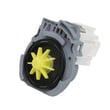
| Standing water after cycle | Drain restriction or weak drain pump | Dishwasher drain pump WPW10348269 |
| Poor wash pressure | Circulation issue in sump and motor | Dishwasher sump and motor assembly WPW10780877 |
| Cloudy dishes, grit, redeposit | Filtration issue | Roper dishwasher filter W10084567 |
Why it matters
Modern, energy-efficient dishwashers often run 2 to 3 hours per load and rely on proper water flow plus rinse aid to deliver strong cleaning and drying. When flow is restricted or rinse aid is missing, performance drops fast.
Last updated: February 2026
What is the average lifespan of a KitchenAid dishwasher?
A KitchenAid dishwasher typically lasts 10 to 12 years. With normal household use, good water quality, and basic upkeep (filters, seals, and proper loading), many units reach the upper end of that range before major parts like the pump or heater need attention. See the installation guide for care and operating tips that help prevent early wear.
Typical lifespan and what affects it
Most KitchenAid undercounter dishwashers like KUDS30IXWH8 land in this range:
- Typical lifespan: 10 to 12 years
- Common overall range: 9 to 14 years
- Heavy-use homes: often shorter due to more cycles and heat exposure
Key factors that change lifespan:
- Water hardness and mineral buildup (affects heater, seals, and wash performance)
- How often you run loads (daily use adds wear to the motor and drain system)
- Installation quality (leveling, centering, and door alignment)
- Routine cleaning (filter area, door seals, spray arms)
Parts that most often drive “end of life” decisions
When a dishwasher starts leaking, won’t drain, or won’t heat, the repair often comes down to a few high-wear components.
| Symptom | Common part area | Example part for KUDS30IXWH8 |
|---|---|---|
| Water on floor at the door | Door sealing surfaces | Dishwasher door seal W11177741 |
| Not draining or standing water | Drain system | Dishwasher drain pump WPW10348269 |
| Poor drying, cool water, long cycles | Heating circuit | Dishwasher heater W10703867 |
Why it matters
Knowing the typical lifespan helps you plan: if your KUDS30IXWH8 is near 10 to 12 years old, issues like slow draining, weak wash action, or door leaks often point to normal wear parts rather than a one-time fluke.
Quick steps that help your dishwasher last longer
- Keep rinse aid filled; it improves drying and helps reduce hard-water deposits.
- Make sure the door closes and latches firmly; misalignment can cause leaks and strain.
- Confirm the unit is level and centered so the door does not rub or bind.
- Address draining issues early; repeated poor draining can stress the pump and motor.
- Avoid overloading racks; it can damage rack adjusters and wheels over time.
Last updated: February 2026
Is KitchenAid higher end than Whirlpool?
Yes. KitchenAid is positioned as a more premium line than Whirlpool overall, even though many KitchenAid and Whirlpool dishwashers share core engineering and parts. For your KitchenAid KUDS30IXWH8 undercounter dishwasher, the “higher-end” difference is usually in design, sound control, and feature set rather than basic wash performance.
What “higher end” typically means in dishwashers
KitchenAid models commonly emphasize a more upgraded ownership experience, while Whirlpool focuses on strong value and straightforward reliability.
- Quieter operation (more insulation and sound-damping design)
- More premium styling and finishes
- More rack flexibility and adjustability
- More cycle and option choices (drying, wash zones, sensors)
- More emphasis on fit-and-finish details
What matters most for repairs and parts on KUDS30IXWH8
When you are maintaining an older KitchenAid dishwasher, parts availability and correct fit matter more than brand tier. Use the parts list for KUDS30IXWH8 and confirm procedures and safety steps in the installation guide.
Common “premium feature” parts you may replace over time include rack and door components:
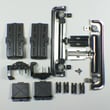
- Dishrack adjuster kit (W10712394) - dishwasher rack component by whirlpool W10712394 (rack height/position hardware)
- Whirlpool dishwasher dishrack wheel W10195416V (rack rolling and alignment)
- Dishwasher door seal WPW10497235 (helps prevent leaks at the bottom of the door)
- Dishwasher door balance link 8194001 (helps the door open and close smoothly)
Quick comparison: KitchenAid vs Whirlpool (typical positioning)
| Category | KitchenAid (typical) | Whirlpool (typical) |
|---|---|---|
| Brand tier | Premium | Mainstream/value |
| Design focus | Fit, finish, features | Practical features |
| Noise control | Often more emphasis | Varies by model |
| Parts/repairs | Similar core components across families | Similar core components across families |
Why it matters
If you are deciding whether it is “worth it” to repair a KitchenAid like KUDS30IXWH8, the premium value usually shows up in day-to-day usability (racks, noise, options). If the tub, pump, or heater is failing, the decision often comes down to repair cost versus remaining service life.
Last updated: February 2026
How old is my KitchenAid oven by serial number?
That serial-number dating method is for KitchenAid ovens, but KUDS30IXWH8 is a KitchenAid undercounter dishwasher. To determine the age of your dishwasher, use the serial number from the dishwasher’s rating label and follow the identification details in the KUDS30IXWH8 installation guide.
Find the serial number on a KitchenAid dishwasher
On most undercounter dishwashers like model KUDS30IXWH8, the model and serial tag is typically located:
- On the tub frame along the top or side edge of the door opening
- On the left or right side of the inner door area (visible when the door is open)
- Occasionally on the side of the tub near the front (still visible with the door open)
What to record before decoding the date
Write down these details exactly as shown on the label; they help match parts and production revisions.
- Full model number: KUDS30IXWH8
- Full serial number (all characters)
- Any revision, type, or engineering code listed
- Your installation date (if known)
Dishwasher vs. oven serial dating (why the earlier answer was misleading)
| Appliance type | Serial-number date code location | Best next step |
|---|---|---|
| Oven/range | Varies by serial format (often a specific character position) | Use the oven’s tech sheet or manual |
| Undercounter dishwasher (KUDS30IXWH8) | Format differs from ovens; use the dishwasher rating label | Use the dishwasher documentation and parts lookup |
Why it matters
Dishwashers often have mid-production part changes (controls, pumps, seals). Knowing the correct dishwasher serial number helps us match the right replacement parts, such as the electronic control board W11035586 or dishwasher water inlet valve WPW10327249, when troubleshooting or repairing.
Last updated: February 2026