


Are radial arm saws worth anything?
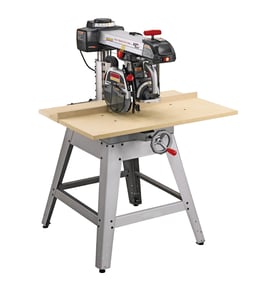
Yes. A Craftsman radial arm saw like model 11329440 is worth money when it is complete, runs smoothly, and can be tuned accurately; most value comes from condition, included accessories (guard, fence, table), and how tight the arm and carriage feel. For many owners, it is still “worth it” for wide, repeatable crosscuts and dado work.
What affects value the most
- Completeness: blade guard, anti-kickback parts, yoke and carriage hardware, fence, and table boards
- Mechanical tightness: minimal play in the arm, column, and carriage bearings
- Motor health: starts quickly, no burning smell, no excessive sparking at brushes
- Accuracy potential: can be aligned for square crosscuts and consistent depth for dadoes
- Overall condition: rust, bent arm, cracked castings, damaged cord or switch
Typical used-price ranges (what we see most often)
These are common ranges for older 10-inch radial arm saws in the U.S. market; your local demand can push pricing up or down.
| Condition | What it usually means | Typical range (USD) |
|---|---|---|
| Parts-only | missing guard/fence, won’t run, heavy rust | $0 to $50 |
| Working, needs tune-up | runs but needs alignment/table refresh | $50 to $150 |
| Clean, complete, tuned | smooth travel, solid lockups, safer setup | $150 to $300 |
Why many people still keep a radial arm saw
A radial arm saw earns its space when you need capacity and repeatability.
- Wide crosscuts without wrestling long boards across a table saw
- Good control for dadoes and half-laps with the right setup
- Easy length stops for batch cutting
Safety and “worth it” considerations
Radial arm saws demand correct setup and conservative use.
- Keep the guard installed and working
- Use sharp, correct blades for crosscutting and dado work
- Keep the fence straight and the table flat
- Avoid “do-everything” setups; ripping is where many users get into trouble
Finding parts and diagrams for 11329440
If you are restoring value, start by identifying what is missing, then match it to the diagrams for model 11329440. We list replacement parts by model so you can confirm fit before ordering; you can also search by model number on Sears PartsDirect.
Last updated: February 2026
What are the common problems with radial arm saws?
Common problems with the Craftsman 11329440 10-inch accra-arm radial saw include inaccurate cuts (arm or fence out of square), rough or hard travel (dirty or worn rollers/bearings), weak power (brushes or switch issues), and unsafe blade behavior (blade coasting too long or grabbing). For parts lookup by model, use Sears PartsDirect.
Most common symptoms and what they usually point to
- Cuts not square or repeatable: arm yoke not aligned, fence not straight, table worn or uneven
- Carriage binds or feels gritty: pitch buildup on tracks, dry rollers, worn bearings
- Motor runs weak, surges, or smells hot: worn carbon brushes, failing switch, poor cord connection
- Excessive vibration or noise: dull blade, bent arbor, loose hardware, worn bearings
- Blade takes too long to stop: switch issue or mechanical drag problems (always treat as a safety hazard)
Quick checks we recommend before replacing parts
- Unplug the saw before touching the blade area, guard, or motor housing.
- Confirm the blade is sharp, correct type, and installed correctly (a dull blade causes grabbing and vibration).
- Clean resin and sawdust from the arm tracks and carriage; then verify smooth travel end-to-end.
- Check the fence and table for flatness and secure mounting; re-square the setup.
- Inspect the power cord and switch for looseness, heat damage, or intermittent operation.
Troubleshooting guide (symptom to likely cause)
| Symptom | Most likely cause | What to do first |
|---|---|---|
| Out-of-square crosscuts | Alignment/fence/table issue | Re-square arm and fence; verify table flat |
| Carriage sticks | Dirty track or worn rollers | Clean tracks; check rollers/bearings |
| Motor hums or lacks power | Brushes/switch/connection | Inspect brushes; check switch and cord |
| Vibration | Blade/arbor/bearings | Try known-good blade; check arbor play |
Why it matters
Radial arm saw issues are not just about cut quality. Binding travel, misalignment, and electrical problems can increase the chance of kickback, grabbing, or unexpected movement. Keeping the carriage smooth, the setup square, and the electrical system solid helps protect both the tool and the operator.
Last updated: February 2026
What is the best brand of radial arm saw?
There isn’t one single “best” brand for every shop; the best radial arm saw depends on whether you want a modern production saw or a vintage heavy-duty saw. For owners of the Craftsman 11329440 (10-inch Accra-Arm radial saw), the best choice is the brand and model that matches your cut capacity, accuracy expectations, and parts support.
Quick brand guide (what each is best for)
- Original Saw Company: new, premium, production-grade machines and support
- DeWalt (vintage): classic cast-iron saws with strong enthusiast support and proven durability
- Delta/Rockwell (vintage): heavy-duty builds; great when you find a well-kept example
- Northfield Unipoint: top-tier industrial saws (rare, expensive, built for serious production)
- Craftsman (vintage, like 11329440): strong value when tuned correctly; common in home shops
- Maggi: modern industrial options for higher-volume work
How to choose the “best” radial arm saw for your needs
Focus on these decision points before you buy or rebuild:
- Use case: hobby projects, trim work, furniture, or production cutting
- Accuracy and repeatability: condition of the arm, carriage, and column lock matters more than the badge
- Cut capacity: crosscut width and depth you actually need (10-inch class saws vary)
- Parts availability: can you still get wear items like switches, cords, bearings, and guards
- Safety features: blade guard condition, return spring action, and a reliable power switch
Brand vs. condition: what matters more
| What you’re comparing | Usually matters most | Why |
|---|---|---|
| Vintage vs. vintage | Condition and alignment | Wear in the arm/carriage drives accuracy issues |
| Vintage vs. new | Support and intended workload | New saws often win for production uptime |
| “Deal” price | Completeness | Missing guards, fences, or hardware can erase savings |
Why it matters
Radial arm saw performance is dominated by alignment, rigidity, and safe guarding. A well-maintained Craftsman 11329440 can outperform a “better” brand that’s worn out or missing key safety parts.
Finding parts for your saw
Start with the parts list for the Craftsman 11329440, then use Sears PartsDirect to search by model number if you are comparing availability across brands or looking for compatible maintenance items.
Last updated: February 2026
When did Craftsman stop making radial arm saws?
Craftsman radial arm saws like model 11329440 were largely discontinued in the early 1990s; most Craftsman-branded radial arm saws stopped being sold new through Sears around 1992, with some smaller versions continuing into the mid-1990s. For parts support on older saws, we recommend searching by the exact model number on Sears PartsDirect.
What “stopped making” usually means for Craftsman radial arm saws
For many customers, the key change was when Sears stopped selling new units, not when every last unit was manufactured. For Craftsman radial arm saws, the timeline most commonly referenced is:
- Most models: sales ended around 1992
- Some smaller (often 8-inch) versions: continued into about 1995
- After that: the market shifted heavily toward miter saws and table saws for similar crosscut work
Why radial arm saws faded out
Radial arm saws are versatile, but they require careful setup and guarding to use safely and accurately. Over time, many woodworkers moved to other tools that are simpler to guard and easier to keep aligned.
Common reasons the category declined:
- More complex guarding and safety setup than many newer saw designs
- Alignment and calibration can drift (arm, carriage, fence, and table surfaces)
- Sliding miter saws became a more common choice for crosscuts and miters
- Parts availability varies by model and production era
If you are trying to date your specific saw (11329440)
You can usually narrow the production window by checking the identification markings and electrical plate.
Look for these details:
- Model number (11329440) and any revision/suffix markings
- Serial number (often on the motor tag or base)
- Motor plate information (voltage, amps, and sometimes a date code)
- Original guard style and table/fence design (often changed across generations)
Quick guide: what to record before ordering parts
| What to record | Where to look | Why it matters |
|---|---|---|
| Model number | ID plate on saw | Ensures correct diagrams and part match |
| Serial number | Base or motor tag | Helps narrow production run |
| Motor specs | Motor nameplate | Confirms electrical compatibility |
| Missing/damaged assemblies | Guard, table, fence, switch | Helps you plan a complete repair |
Why it matters
Knowing the approximate discontinuation period helps set expectations for parts sourcing and upgrades (for example, replacing a switch, power cord, or worn table/fence components) so your Craftsman radial arm saw stays reliable.
Last updated: February 2026