Owner’s manual



Where is the model number on a Craftsman rear tine tiller?
On the Craftsman rear-tine tiller model 917293550, the model number and serial number are on the model plate attached to the top of the transmission. Use that plate information when ordering parts or looking up service procedures in the owner's manual.
Where to look on the tiller
Check these common spots in this order:
- Top of the transmission (this is the correct location for model 917293550)
- Around the transmission housing where the shifter linkage enters
- Near the frame rails above the tines (labels can be easier to see from the side)
- On older, dirty machines: under a layer of soil or oil film on the transmission case
What the model plate tells you
The plate typically includes the key identifiers you need for parts lookup.
| Item on plate | What it’s used for | Example for this tiller |
|---|---|---|
| Model number | Matches the correct parts diagrams | 917.293550 |
| Serial number | Helps confirm production run details | Varies by unit |
| Date of purchase (your record) | Warranty and maintenance tracking | Your records |
Tips to read a worn or dirty label
If the plate is hard to read, these steps usually solve it:
- Brush off loose dirt with a dry nylon brush
- Wipe with a rag and mild degreaser, then dry
- Use a flashlight at a low angle to make stamped text stand out
- Take a close-up photo and zoom in to read small characters
Why it matters
Using the exact model number (917293550) keeps you from ordering the wrong Craftsman tiller parts, especially for fit-critical items like the drive belt, clutch cable, and transmission components.
Last updated: February 2026
What tiller is made in the USA?
Some tillers are made in the USA, but it depends on the brand and the specific model. Your Craftsman gas rear-tine tiller model 917293550 is supported with model-specific operation and maintenance details in the owner's manual, which is the best place to confirm what applies to your exact machine.
USA-made tiller brands you will commonly see
When shoppers ask “made in the USA,” they usually mean final assembly and manufacturing location for the tiller itself (not just the engine). These brands are commonly associated with USA-made tillers in at least some product lines:
- Mantis (lightweight tiller/cultivator models)
- MacKissic (Merry Tiller models)
- Power Dog (commercial and garden tillers)
- Northwest Tillers (heavy-duty farm tillers)
How to confirm “made in USA” for any tiller
Use these quick checks so you are verifying the exact model, not just the brand name:
- Look for a country-of-origin label on the frame, transmission housing, or engine shroud
- Check the model plate (often near the transmission on rear-tine tillers)
- Review the owner’s manual and any packaging labels
- Confirm whether the claim is “made,” “assembled,” or “designed” in the USA
- If the tiller has a separate engine brand, check the engine label too
What “made in USA” can mean (quick comparison)
| Label wording | What it usually indicates | Why it matters |
|---|---|---|
| Made in USA | Most manufacturing and assembly done in the USA | Strongest origin claim |
| Assembled in USA | Final assembly in the USA; parts may be global | Parts sourcing can vary |
| Designed in USA | Engineering in the USA; manufacturing may be elsewhere | Does not confirm build location |
Why it matters
Country of origin can affect parts sourcing, service expectations, and long-term maintenance planning. For example, wear items such as belts, tines, and cables are normal maintenance parts on rear-tine tillers; using the correct model number (like 917293550) helps you match parts accurately.
Last updated: February 2026
What are the common problems with lawn tillers?
Common problems on a Craftsman 917293550 gas rear-tine tiller include hard starting, poor tilling power, excessive bouncing in hard soil, and tine drive issues caused by overload or a jam (often breaking the tine shear pins to protect the transmission). For model-specific operation and maintenance intervals, use the owner's manual.
Most common symptoms and what they usually mean
- Engine will not start or starts then dies: stale fuel, choke setting, fouled spark plug, or carburetor adjustment.
- Tines will not turn or stop under load: broken shear pins, clutch cable out of adjustment, or drive wear.
- Tiller surges or runs rough: fuel restriction, dirty carburetor passages, or incorrect choke use.
- Excessive bouncing or hard handling: soil too dry or too hard; tines cannot penetrate well.
- Machine pulls forward suddenly: tines catch in hard ground; release the handlebars and do not restrain the unit.
Quick checks we recommend (fastest to slowest)
- Verify fresh gasoline and open fuel shutoff (if equipped).
- Check spark plug condition and gap (listed in the manual).
- Inspect tine area for vines, wire, or debris wrapped on the tine shaft.
- Check for broken shear pins after a jam or overload.
- Confirm the clutch engagement feels normal; replace a stretched or damaged cable if needed.
Parts that commonly relate to these issues
If you find wear or damage during inspection, these model-matched parts are commonly involved:
| Symptom | Likely area | Example part for this model |
|---|---|---|
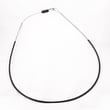
| Tines do not engage | Clutch linkage | Tiller clutch cable 532110675 |
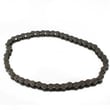
| Grinding, skipping, or no drive | Chain drive | Tiller chain, #25-50 532102134 |
| Poor traction or wobble | Wheel assembly | Tiller wheel 532102190 |
Why it matters
This tiller is designed so shear pins break before internal transmission damage occurs when the tines are overloaded or jammed. Also, soil condition directly affects performance; hard, dry soil increases bounce and makes the tiller difficult to control.
Last updated: February 2026
Are Craftsman rear tine tillers any good?
Yes. Craftsman rear-tine tillers like model 917293550 are a solid choice for home gardens because they are built for traction and steady soil mixing, and they hold up well when you operate them at a reasonable depth and speed and keep up with routine maintenance.
What “good” means for a rear-tine tiller
Rear-tine tillers are designed to do heavier work than small front-tine units. With a Craftsman gas rear-tine tiller, “good” typically comes down to:
- Consistent starting and power for breaking and mixing soil
- Controlled forward pull (rear tines can grab hard ground and surge)
- Durability of wear items like belts, chains, and tines
- Parts support for cables, wheels, and drivetrain components
For model-specific operating and maintenance guidance, use the owner's manual.
How to keep your 917293550 performing well
The manual’s safety and maintenance guidance is a big part of long-term reliability. We recommend these habits:
- Till in shallow passes instead of trying to go deep in one pass
- Avoid high speeds on slippery surfaces and use extra care when backing
- Keep guards and protective devices installed during operation
- Check fasteners regularly (including engine mounting bolts)
- Store safely; never store with fuel indoors near ignition sources
Quick wear check: tines
Worn tines make the tiller work harder and dig more shallow. The manual notes that if the gap between tines exceeds 3-1/2 inches, the tines should be replaced or straightened as needed.
| What you notice | Likely cause | What to do |
|---|---|---|
| Shallow tilling, poor chopping | Worn or bent tines | Inspect tine wear; replace if needed |
| Tiller “lunges” in hard ground | Tines catching aggressively | Reduce depth, slow down, keep a firm stance |
| Drive feels weak under load | Belt or clutch issue | Inspect belt and clutch cable adjustment |
Parts that commonly affect performance
If performance drops, these model-matched parts are often involved:
- Tiller clutch cable 532110675 (engagement and control)
- V-belt 532132672 (power transfer under load)
- Tiller chain, #25-50 532102134 (drivetrain motion)
- Tiller wheel 532102190 (traction and handling)
Why it matters
A rear-tine tiller can do excellent work, but it is also powerful enough to become difficult to control if you overload it (too deep, too fast) or run it with worn tines or slipping drive components. Good operation plus basic upkeep is what makes a “good tiller” stay good.
Last updated: February 2026
What is the bar on the back of a tiller for?
On the Craftsman 917293550 rear-tine tiller, the “bar” people point to at the back is usually the depth stake (also called the drag stake). We use it to control how deep the tines dig and to help stabilize the tiller so it does not surge forward (see the owner's manual).
What the rear depth stake does
The depth stake is a simple but important control for tilling performance.
- Sets tilling depth by limiting how far the tines can pull the machine downward
- Helps keep the tiller from “running away” in loose soil
- Improves traction and control by adding drag and stability
- Lets us switch between shallow cultivating and deeper soil breaking
- Can be positioned for easier transport so the tines do not scuff the ground
How to adjust it (typical steps)
We adjust depth by moving the stake up or down and locking it with the stake pin.
| Depth stake position | What you get | Best for |
|---|---|---|
| Higher (less in ground) | Deeper tilling | Breaking new ground, deeper mixing |
| Lower (more in ground) | Shallower tilling | Cultivating, weeding, lighter soil work |
| Transport setting | Tines kept from scuffing | Moving the tiller around the yard |
Why it matters
Depth control protects your garden and your machine. A properly set depth stake reduces bouncing and strain on the drive system, helps produce an even seedbed, and makes the tiller easier to handle.
Quick safety and control tips
- Release the drive control bar before making adjustments.
- Make small depth changes; one hole at a time is usually enough.
- For deeper tilling, make multiple passes instead of forcing full depth in one pass.
- Keep feet clear of the tines; never reach near the tine area with the engine running.
Last updated: February 2026