Owner’s manual
 Error Codes


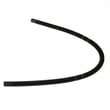
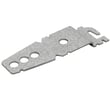
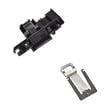
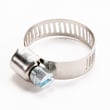
How to fix rubber seal on KitchenAid dishwasher?
On the KitchenAid KUDC10IXBL1 dishwasher, a “rubber seal” problem is usually a door gasket that has slipped out of its channel, torn, or is no longer sealing evenly. Reseating the gasket correctly and cleaning the sealing surfaces fixes most leaks; replace the seal if it is hardened, split, or permanently deformed.
Quick fix: reseat the door gasket
- Turn off power at the breaker and let the unit cool.
- Open the door and inspect the gasket for twists, gaps, or sections pulled out.
- Clean the tub lip and gasket with warm water and mild dish soap; remove detergent film and debris.
- Starting at the top center, press the gasket firmly into the channel a few inches at a time.
- Work evenly down both sides; avoid stretching the gasket.
- Close and latch the door for a few hours so the gasket “sets” into position.
When the seal needs replacement
Replace the gasket if you see any of these conditions:
- Cracks, splits, or missing chunks
- Flattened areas that do not spring back
- A section that will not stay seated in the channel
- Persistent leaking after reseating and cleaning
For the correct gasket style and installation notes for KUDC10IXBL1, use the KUDC10IXBL1 owner’s manual.
Leak checks that prevent repeat problems
These common issues can mimic a bad seal:
- Dishwasher not level, causing water to pool at one corner
- Lower rack or tall items preventing the door from closing fully
- Excess suds from wrong detergent or pre-rinsing with hand soap
- Spray arm obstruction causing water to blast directly at the door
Fast troubleshooting table
| What you see | Most likely cause | What to do |
|---|---|---|
| Drip at one lower corner | Unit not level or gasket not seated | Level the dishwasher; reseat gasket evenly |
| Water along bottom edge | Suds or door not latching tightly | Use proper detergent; check racks/items |
| Leak during wash only | Spray pattern hitting door | Clear obstructions; inspect spray arm |
Why it matters
A properly seated door gasket keeps wash water inside the tub, protects the door insulation and wiring, and helps the dishwasher dry and run quietly.
Last updated: February 2026
How to get KitchenAid replacement parts?
For KitchenAid undercounter dishwasher model KUDC10IXBL1, the fastest way to get the right replacement part is to match your model number to the exact part ID, then confirm fit using the diagrams and part list in the KUDC10IXBL1 owner's manual.
Step-by-step: order the correct part
- Find the model tag on the tub frame (inside the door) and confirm it reads KUDC10IXBL1.
- Identify the failed part by symptom (not draining, leaking, not heating, rack issues).
- Cross-check the part location using the exploded-view diagrams in the manual.
- Match by part ID (best) or manufacturer part number (backup).
- Compare your old part to the listing photos and mounting style before ordering.
- Install the replacement and run a short cycle to verify operation.
Common KUDC10IXBL1 parts customers replace
If you are troubleshooting a specific symptom, these are frequent replacements for this model:
| Symptom | Part to check first | Example part for this model |
|---|---|---|
| Won’t drain / standing water | Drain pump, drain hose | Dishwasher drain pump WPW10348269 |
| Poor cleaning | Spray arm, filter, wash motor | Dishwasher spray arm WPW10320510 |
| Not drying / water not heating | Heater | Dishwasher heater W10703867 |
| Leaking at door | Door seal | Seal WPW10497235 |
Why it matters
KitchenAid dishwashers often use similar-looking components across multiple model series. Ordering by model number (KUDC10IXBL1) and verifying the part ID prevents fit issues, repeat repairs, and return delays.
Quick safety checklist before replacing parts
- Shut off power at the breaker before opening panels or handling wiring.
- Turn off the water supply valve under the sink.
- Use a towel or shallow pan when disconnecting hoses.
- Take a photo of wire connections and hose routing before removal.
Last updated: February 2026
How to reset KitchenAid dishwasher error code?
To reset an error code on your KitchenAid KUDC10IXBL1 dishwasher, we recommend a simple power reset first: turn the dishwasher off at the breaker (or unplug it) for 1 minute, then restore power and try a cycle. This clears many temporary faults.
Quick reset steps (most common)
- Press Cancel/Drain once to stop the cycle and start draining.
- Wait until the draining stops (you should hear the pump stop).
- Turn OFF power at the breaker (or unplug) for 60 seconds.
- Turn power back ON.
- Run a short cycle and watch for the code returning.
If the code comes back right away
A repeating error usually means the dishwasher is still detecting a real problem (drain, fill, heating, or wash motor). Use these checks before replacing parts:
- Confirm the door is fully latched and the control responds normally.
- Check the sink drain and garbage disposal inlet for a clog.
- Verify the drain hose is not kinked or crushed under the cabinet.
- Make sure the dishwasher has water supply turned on at the shutoff valve.
- Listen for draining: a strong, steady drain sound points away from a drain blockage.
Common causes and the parts that match the symptom
| Symptom after reset | What it often points to | Example part for KUDC10IXBL1 |
|---|---|---|
| Won’t drain, water left in tub | Drain restriction or failed drain pump | Dishwasher drain pump WPW10348269 |
| Won’t fill or fills slowly | Water supply issue or inlet valve problem | Dishwasher water inlet valve WPW10327249 |
| Stops mid-cycle, poor drying | Heating circuit issue | Dishwasher heater W10703867 |
Why it matters
Resetting clears a “stuck” control state after a power glitch or interrupted cycle. If the error returns, the dishwasher is protecting itself by stopping when it senses a drain, fill, or heating problem.
For model-specific button sequences, diagnostics, and error-code meanings, follow the steps in the KUDC10IXBL1 owner’s manual.
Last updated: February 2026
How to tell if a KitchenAid dishwasher is running?
On the KitchenAid KUDC10IXBL1, you can tell it’s running by listening for the fill and wash sounds: you should hear water enter first, then a steady spraying or swishing as the circulation pump runs. If it fills but stays quiet, the wash system is not running.
Quick checks you can do right away
- Start a cycle and close the door firmly; within a minute or two you should hear the fill valve bring water in.
- After filling, listen for a consistent “spray” or “whoosh” sound (that’s the wash pump circulating water).
- Put your hand lightly on the door panel; a running wash motor often creates a gentle vibration.
- Pause the cycle and open the door carefully; if it’s running, you’ll typically see water movement and may hear the spray stop immediately.
- If the unit is silent after filling, check for standing water in the tub (a drain issue can prevent normal washing).
What the sounds usually mean
| What you notice | Most likely meaning | What to check next |
|---|---|---|
| Fills, then steady spraying sound | Normal washing | Let it run 5 to 10 minutes and confirm water is hot |
| Fills, then mostly quiet (no spray) | Circulation problem | Wash pump motor, sump area, or control issue |
| Hums briefly, then stops | Motor trying to start | Possible jam, failing motor, or electrical issue |
| Water remains in tub at end | Drain problem | Drain hose routing, drain pump, clogs |
Parts that commonly affect “running” symptoms
If your KUDC10IXBL1 fills but doesn’t wash, these parts are common suspects:
- Dishwasher sump and motor assembly WPW10780877 (drives water circulation through the spray arms)
- Dishwasher pump motor WPW10239401 (circulation motor on some configurations)
- Dishwasher electronic control WPW10380685 (can prevent the wash motor from being powered)
- Dishwasher drain pump WPW10348269 (if it can’t drain properly, cycles can act abnormal)
Why it matters
A dishwasher can sound “on” because it fills or drains, but true cleaning only happens when the circulation system is spraying water through the spray arm. Catching a no-wash condition early helps prevent poor cleaning and repeated cycle failures.
For model-specific cycle behavior and indicator details, follow the operating steps in the KUDC10IXBL1 owner’s manual.
Last updated: February 2026
What is the most common problem with a KitchenAid dishwasher?
Drain and water-flow issues are the most common problems we see with KitchenAid dishwashers like model KUDC10IXBL1. Typical symptoms include standing water in the tub, poor cleaning, or a cycle that stops early; these problems usually trace back to a clogged filter area, a restricted drain hose, or a failing drain pump.
Most common symptoms (and what they usually mean)
- Water left in the bottom after the cycle: drain path restriction or weak drain pump
- Dishes still gritty or cloudy: wash water not circulating well, filter area dirty, or spray arm blockage
- Gurgling at the sink or disposer: partial drain restriction or missing/incorrect high loop
- Cycle seems to run but cleaning is poor: spray arm holes clogged or circulation issue
- Intermittent draining: debris in the sump area or a drain pump starting to fail
Quick checks we recommend first
- Cancel/drain the cycle and listen for a strong drain sound.
- Check the drain hose routing under the sink; it should be elevated in a high loop.
- Inspect for kinks or clogs in the hose and at the sink/disposer connection.
- Clean the tub bottom area where debris collects (glass, labels, food).
- Confirm hot water supply to the dishwasher (poor hot water can mimic “cleaning problems”).
For model-specific operating steps and care guidance, use the KUDC10IXBL1 owner's manual.
Parts that commonly solve drainage complaints
If the drain path is clear but the unit still leaves water behind, these are the most common repair parts for this model:
| Problem you see | Most likely part | What it does |
|---|---|---|
| Hums but won’t drain | Dishwasher drain pump WPW10348269 | Pumps water out to the sink/disposer |
| Slow drain or leaks under sink | Dishwasher drain hose 8269144A | Carries drain water to the plumbing |
| Won’t fill or fills too slowly | Dishwasher water inlet valve WPW10327249 | Controls incoming water to the tub |
Why it matters
Drainage and water-flow problems affect everything: if the dishwasher cannot drain completely or circulate clean water, you can get odors, redepositing soil, and repeated “not cleaning” complaints even when detergent and loading are correct.
Last updated: February 2026
What's the average lifespan of a KitchenAid dishwasher?
A KitchenAid undercounter dishwasher like model KUDC10IXBL1 typically lasts 10 to 15 years with normal household use, good loading habits, and routine cleaning. Consistent maintenance helps protect key wear items like the pump, heater, and door seals.
What affects dishwasher lifespan most
- Hard water scale buildup on the heater and internal parts
- Food soil left on filters and in the sump area
- Overloading racks or blocking the spray arm
- Leaks that damage wiring, the motor, or the control
- Heat-drying performance (poor drying can signal heater issues)
Maintenance that extends life (simple, high impact)
Use these habits to reduce strain on the wash system and drainage:
- Run hot water at the sink for 30 to 60 seconds before starting a cycle.
- Clean the filter area and remove debris from the sump regularly.
- Keep the spray arm holes clear so water pressure stays strong.
- Check for slow draining and correct it before it stresses the motor.
- Inspect the door sealing surfaces and wipe them clean to prevent leaks.
Common “end-of-life” symptoms and likely parts
| Symptom | What it often points to | Example part for KUDC10IXBL1 |
|---|---|---|
| Standing water after cycle | Drain restriction or weak drain pump | Dishwasher drain pump WPW10348269 |
| Poor drying or lukewarm water | Heating circuit problem | Dishwasher heater W10703867 |
| Water leaking at the bottom of the door | Worn lower door seal | Seal WPW10497235 |
| Dishes not getting clean | Low spray action or circulation issue | Dishwasher spray arm WPW10320510 |
Why it matters
Knowing the typical 10 to 15 year lifespan helps you decide whether to repair or replace. If your KUDC10IXBL1 is near that range and showing multiple symptoms (leaks plus poor washing plus draining issues), addressing maintenance first and then targeting the failing part usually gives the best value.
For model-specific care and cleaning guidance, follow the KUDC10IXBL1 owner’s manual.
Last updated: February 2026