Installation guide
 Owner’s manual
 Error Codes



How do I contact Kenmore customer service?
For Kenmore model 41764182300, contact Sears PartsDirect support for parts help and order questions, and use your local service options for repair scheduling; have your model number, serial number, and purchase date ready so your request is routed correctly. Reference the 41764182300 owner's manual for model identification and service information.
Best way to get help
- Use Sears PartsDirect support for parts lookup, compatibility questions, and order status
- Use a qualified technician for diagnosis and repair service
- Keep your model and serial tag information handy
What to have ready before you reach out
Having this information speeds up troubleshooting and parts lookup:
- Model number: 41764182300
- Serial number (from the model tag)
- Purchase date
- A short symptom description (for example: “won’t start,” “no heat,” “loud squeal”)
- Any error code shown (if applicable)
Who to contact: quick guide
| What you need | Who to contact | Why |
|---|---|---|
| Replacement parts, part diagrams, order questions | Sears PartsDirect support | Correct part identification by model and symptom |
| Repair diagnosis and installation | Qualified technician | Safe testing and proper repair |
| Model tag location and basic operating info | 41764182300 owner's manual | Helps confirm the exact model and reference procedures |
Why it matters
Using the right contact helps you avoid delays and wrong parts. Confirming the exact model and describing the symptom clearly improves part matching for items like the belt, heating element, and thermostats.
Last updated: March 2026
How do I tell what model Kenmore dryer I have?
Your Kenmore dryer’s model number is printed on the appliance ID label; for Kenmore model 41764182300, you’ll use that exact number (plus the serial number) to match the correct parts, wiring, and installation requirements. Record it before ordering parts or scheduling service.
Where to find the model number label
Most Kenmore dryers have the model and serial number on an ID sticker or metal plate in one of these spots:
- Inside the dryer door opening (on the door frame)
- On the back panel of the cabinet
- Near the lint screen housing (open the lint screen area and look around the frame)
- On the side panel edge near the door opening
For model-specific label locations and how Kenmore formats the model and serial number, use the 41764182300 owner’s manual.
What to write down (and why)
When you find the label, copy these items exactly:
- Model number (example: 41764182300)
- Serial number (unique to your dryer)
- Purchase date (if available)
- Power type (electric dryer vs. gas dryer)
Why it matters
The model number controls parts compatibility. Even small differences (a single digit) can change the correct heating circuit parts, drum support parts, or door hardware.
Quick check: model number vs. serial number
| Item | What it tells us | Used for |
|---|---|---|
| Model number | Exact design and parts list | Ordering parts, diagrams, manuals |
| Serial number | Production run details | Service history, some revisions |
If the label is missing or unreadable
Use these practical options:
- Check your purchase receipt, delivery paperwork, or warranty documents
- Look for a tech sheet stored inside the cabinet (common on many dryers)
- Compare your dryer’s door style and control panel layout to the parts diagrams once you narrow the model family
If your dryer displays an error code, the Kenmore 417 model dryer error codes guide helps you match symptoms to likely systems (heating, motor, airflow) while you confirm the exact model.
Last updated: February 2026
How to hard reset a Kenmore dryer?
To hard reset your Kenmore dryer model 41764182300, unplug it (or switch the breaker off) for 5 minutes, then restore power and start a cycle. This clears many control glitches and temporary error states; if the dryer still will not run, a safety device or door switch issue is more likely.
Hard reset steps (safe and effective)
- Turn the dryer OFF.
- Unplug the power cord (or turn the dryer circuit breaker OFF).
- Wait 5 minutes.
- Restore power.
- Close the door firmly and select a timed dry cycle.
- Press Start and listen for the motor to run.
What to check if the reset does not fix it
A reset only clears the control; it will not bypass safety circuits. Check these common causes:
- Door not fully closed or a worn latch/strike alignment
- Restricted airflow (lint screen, vent duct, outside hood)
- Overheat protection tripped or failed (thermal limiter, high-limit thermostat)
- Heating problem that caused overheating (element short, blocked blower housing)
- Drive system issue (broken belt or seized drum support)
Quick symptom guide
| What you notice | Most likely area to inspect | Common next step |
|---|---|---|
| Panel lights up but will not start | Door switch/latch, control input | Verify door closes and latches consistently |
| Runs but no heat | Heating circuit, airflow | Check venting and heating components |
| Stops mid-cycle, clothes still damp | Overheating from poor venting | Clean lint path and vent to outdoors |
| Loud squeal or thump | Drum support or belt path | Inspect drum glides/bearing and belt |
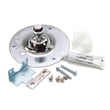
Parts that commonly relate to “won’t run” or “overheats”
Why it matters
Hard resets are a fast first step, but repeated shutdowns or no-start symptoms usually point to airflow restriction or a failed safety part. Fixing the root cause helps prevent overheating, nuisance trips, and longer dry times.
For model-specific operating and safety details, follow the steps in the 41764182300 owner's manual.
Last updated: February 2026
What causes dryer heating element failure?
Heating element failure in our Kenmore electric dryer model 41764182300 is usually caused by restricted airflow that overheats the heater, electrical issues (wrong cord/grounding, loose connections), or normal wear over time. Fixing the venting problem first helps prevent repeat failures.
Most common causes
- Clogged or restrictive venting: lint buildup, crushed duct, too many elbows, or a blocked vent hood can trap heat.
- Wrong duct material: plastic or thin foil-style ducting can restrict airflow and overheat the heater.
- Overheating safety trips: repeated overheating can open a thermal limiter and stress the heating circuit.
- Electrical supply problems: incorrect power cord setup, poor grounding, or damaged wiring can cause arcing and heater damage.
- Normal aging: the coil can eventually break after many heat cycles.
What to check first (quick troubleshooting)
- Clean the lint screen and check the lint screen housing for buildup.
- Inspect the full vent run to the outside; use 4-inch metal duct and make sure the vent hood damper opens freely.
- Confirm the vent is not overly long or full of sharp turns (long runs increase restriction and heat).
- If the dryer runs but does not heat, test the heating circuit components (heater, thermal limiter, thermostats) with a meter.
Venting limits that matter
Our 41764182300 manual includes maximum vent length guidance and warns that restricted exhaust increases drying time and creates a fire hazard. Use the vent length table in the 41764182300 owner's manual to compare your setup.
| Vent setup (4-inch metal) | Typical result when restricted | What to do |
|---|---|---|
| Long run, many 90° turns | Heater runs hotter, element life drops | Shorten run, reduce elbows |
| Crushed or kinked flex duct | Poor airflow, overheating | Replace with rigid or properly routed flex metal |
| Lint-clogged duct/hood | Slow drying, high heat | Clean duct and hood damper |
Parts that often get replaced with a failed heater
If the element is open or grounded, replacement is common, but we also correct the overheating cause.
- Frigidaire dryer heating element assembly 131553900
- Dryer thermal limiter 134120900
- Kelvinator dryer high-limit thermostat 3204267
Why it matters
A heating element usually fails because it is running too hot for too long. Restoring proper airflow and safe electrical installation helps the dryer heat correctly, dry faster, and prevents repeated heater and thermostat failures.
Last updated: February 2026
What is the life expectancy of a Kenmore dryer?
A Kenmore electric dryer like model 41764182300 typically lasts 10 to 13 years. With consistent vent cleaning, correct installation, and avoiding overloads, many dryers reach 15 years or more because heat and airflow problems are what shorten dryer life fastest.
What most affects dryer lifespan
- Airflow and venting: restricted exhaust overheats components and increases run time.
- Lint control: lint buildup raises heat stress and wear.
- Load size: chronic overloading strains the drum support system and belt.
- Heat system health: repeated overheating can trip safety devices.
- Routine inspection: catching noise or rubbing early prevents bigger failures.
Maintenance checklist (best return for the effort)
- Clean the lint screen every load.
- Inspect and clean the vent duct and outside hood regularly; use 4-inch metal duct where possible.
- Keep the dryer level and stable to reduce drum and bearing wear.
- Do not run with crushed, kinked, or excessively long venting.
- Follow the vent length and elbow limits shown in the 41764182300 installation guide.
Common wear items and what they usually mean
| Symptom | Likely wear area | Example part for this model |
|---|---|---|
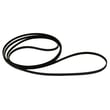
| Drum will not turn, motor runs | Drum belt | Belt 134503600 |
| Squealing, scraping, thumping | Drum support or glide surfaces | Drum bearing, drum glide |
| Dryer shuts off from overheating | Airflow restriction or safety limit opening | Dryer thermal limiter 134120900 |
Why it matters
A dryer can be mechanically “fine” but still fail early if it runs hot from poor venting. Good airflow keeps drying times normal, protects the heating circuit, and reduces stress on the belt, drum bearing, and thermostats.
Last updated: February 2026