Installation guide
 Owner’s manual


What is the most common problem with a KitchenAid dishwasher?
The most common KitchenAid dishwasher issue is poor cleaning (dirty dishes) caused by restricted water flow from a clogged filter area or spray arm, followed closely by “won’t start” or “won’t drain” symptoms tied to the door latch or drain system on model KUDC10FXSS7. See the KUDC10FXSS7 owner’s manual for the exact cleaning and operating checks.
- Dirty dishes: spray arm holes blocked, filter area/sump dirty, low water temperature, overloading
- Won’t start: door not fully latched, cycle not set to start, power issue (breaker/fuse)
- Won’t drain: drain hose restriction, drain pump problem, sink/disposer connection blocked
- Leaks: door seal wear, loose hose connections, unit not level
- No heat or slow drying: heater circuit issue, rinse aid or cycle selection
These match the basic “does not operate” checks called out in the installation instructions.
- Confirm the circuit breaker is on and the dishwasher has power
- Close the door firmly until it latches (a loose latch can stop the cycle)
- Make sure the cycle is selected correctly to start
- Verify the water supply is turned on
- Start a short cycle; after about 2 minutes, open the door and confirm there is water in the bottom of the tub
| Symptom | Most likely area | Example part for this model |
|---|---|---|
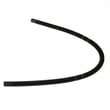
| Won’t drain / standing water | Drain system | Dishwasher drain pump WPW10348269 or dishwasher drain hose 8269144A |
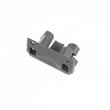
| Won’t start / stops when door moves | Door latch | Dishwasher door latch WPW10653840 |
| Poor wash pressure / noisy wash | Wash system | Sump and motor, circulation pump, spray arm |
A dishwasher can look like it is “broken” when it is really protecting itself: if the door is not latched, water is off, or draining is restricted, the control may pause or end the cycle to prevent leaks and overheating.
Last updated: January 2026
What's the average lifespan of a KitchenAid dishwasher?
A KitchenAid dishwasher typically lasts 10 to 14 years with normal household use and basic maintenance. For your KitchenAid KUDC10FXSS7 undercounter dishwasher, consistent cleaning, correct loading, and good water conditions are the biggest factors that help it reach the high end of that range.
- Water quality (hard water): mineral buildup can stress the heater, pump, and spray system.
- How often you run it: multiple loads daily shortens overall life compared to 3 to 5 loads per week.
- Detergent and rinse aid use: rinse aid helps drying and reduces deposits.
- Installation quality: poor leveling or door alignment can cause rubbing, leaks, and latch wear.
- Routine cleaning: keeping the sump area and spray paths clear reduces strain on the motor.
We recommend these practical habits for KUDC10FXSS7 owners:
- Use rinse aid regularly (helps drying and reduces hard-water deposits).
- Avoid overloading; keep spray arms from being blocked by tall items.
- Run hot water at the sink before starting a cycle when your plumbing runs cold.
- Clean the interior and check for debris that can affect draining.
- If the door does not close smoothly, correct alignment and leveling per the KUDC10FXSS7 installation guide.
| Symptom | Often related to | Example part for this model |
|---|---|---|
| Not draining, standing water | Drain path or drain pump | Dishwasher drain pump WPW10348269 |
| Poor drying, water spots | Heater performance or rinse aid habits | Dishwasher heater W10703867 |
| Won’t start or stops mid-cycle | Door not latching or control issue | Dishwasher door latch WPW10653840 |
Knowing the typical lifespan helps you decide whether to repair or replace. If your KUDC10FXSS7 is approaching the 10 to 14 year mark, investing in key repairs (like a drain pump, heater, or latch) can still be worthwhile when the tub and racks are in good shape.
Last updated: January 2026
How old is my KitchenAid oven by serial number?
Your model page is for the KitchenAid undercounter dishwasher model KUDC10FXSS7, not an oven. To estimate age, we use the serial number on the rating label to identify the manufacturing date code, then convert that to a build month and year.
On most KitchenAid dishwashers, the model and serial tag is on the tub frame, typically along the door opening edge.
- Open the dishwasher door and look along the left or right tub rim
- Write down the full serial number exactly as shown
- Also record the full model number (KUDC10FXSS7)
- If the label is worn, take a clear photo and zoom in
KitchenAid serial formats vary by production era; the serial includes a date code that points to when the unit was built. The most reliable way to match the correct decoding method is to reference the documentation for your exact model.
- Use the serial number to determine the build date code
- Convert the code to a month and year of manufacture
- Use the build year to estimate the dishwasher’s age in years
| What you have | What it tells us | Why it helps |
|---|---|---|
| Model number (KUDC10FXSS7) | Exact product family | Ensures the right decoding rules and parts |
| Serial number | Date code + plant info | Identifies manufacturing timeframe |
| Install date (if known) | In-service age | Helps plan maintenance and repairs |
Knowing the build date helps us confirm parts compatibility and plan repairs, especially for components that can change by production run (controls, pumps, and door hardware).
For installation and label-location details, use the KUDC10FXSS7 installation guide.
Last updated: January 2026