

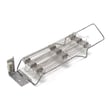
Can I replace a dryer heating element myself?
Yes. On the Kenmore 11086980800 electric dryer, replacing the heating element is a common DIY repair if you are comfortable using basic hand tools and following safe electrical practices. The key is disconnecting power, documenting wire locations, and restoring airflow so the new element does not overheat.
Safety first (before you remove any panels)
- Unplug the dryer; if it is hardwired, turn off the breaker and verify power is off.
- Let the dryer cool completely.
- Wear cut-resistant gloves; cabinet edges are sharp.
- Take a clear photo of every wire connection before you disconnect anything.
- If you see melted wiring or a burned terminal, stop and address the wiring issue before installing new parts.
What the job usually involves
Most electric dryers follow this same basic process:
- Remove the rear or lower access panel to reach the heater housing.
- Label and disconnect wires from the heater terminals.
- Remove mounting screws and slide out the heater assembly.
- Transfer any thermostats or safety devices that mount to the heater housing (if your design uses them).
- Reinstall the heater assembly, reconnect wires exactly as photographed, and reassemble panels.
Parts that are commonly replaced at the same time
A heating element often fails because of restricted venting or overheating. These related parts are common on this model family:
| Symptom | Common related cause | Example part to check |
|---|---|---|
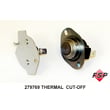
| No heat, drum tumbles | Heater circuit safety opened | Cut-off kit 279769 |
| Long dry times, burning smell | Poor airflow, lint buildup | Venting and blower path |
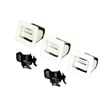
| Intermittent heat | Loose or heat-damaged connections | Dryer heating element wire kit 279457 |
Why it matters
A new heating element can fail quickly if airflow is restricted. Cleaning the lint screen housing, blower area, and the entire vent run helps the dryer heat safely and dry faster.
Helpful DIY reference
For a step-by-step walkthrough that matches the same type of repair process, use how to replace a maytag dryer heating element.
Last updated: January 2026
How to hard reset a Kenmore dryer?
To hard reset a Kenmore dryer model 11086980800, we unplug the power cord (or switch the breaker off) for 1 to 5 minutes, then restore power and try a normal cycle. This clears many temporary control glitches, but it will not fix a failed safety fuse or airflow problem.
Hard reset steps (safe and effective)
- Turn the dryer OFF.
- Unplug the dryer; if it is hardwired, turn both dryer breakers OFF.
- Wait 1 to 5 minutes.
- Restore power.
- Close the door firmly and press Start.
- If the control seems unresponsive, select a simple timed cycle and try again.
If the dryer still will not start after a reset
A “reset” often fails because a safety device opened or a start circuit part failed.
- Check the door closes and latches; a broken latch can prevent starting.
- Test the door switch; if it does not click consistently, replace it.
- If the motor only hums or the drum will not turn, inspect the belt and idler.
- If the dryer ran, then stopped and will not restart, check the thermal cut-off kit.
- Clean lint buildup and confirm strong airflow at the vent outlet.
Common symptoms and what they usually mean
| Symptom | Most common cause | What we check first |
|---|---|---|
| No response at all | Power supply issue | Breaker, outlet, cord |
| Starts then stops quickly | Overheat protection opened | Venting, thermal cut-off |
| Hums but drum does not turn | Belt or motor issue | Belt, idler pulley, motor |
| Runs but shuts off with door movement | Door switch/latch issue | Door switch, latch catch |
Parts that commonly solve “won’t start” problems on this model
- Dryer door switch W10820036 (door must read closed to start)
- Catch 279570 (helps the door latch align and stay closed)
- Belt 341241 (drives the drum; broken belt can stop tumbling)
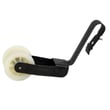
- Dryer idler pulley WP691366 (maintains belt tension)
- Cut-off kit 279769 (overheat protection; often tied to restricted venting)
Why it matters
Resetting is a quick way to clear a temporary electronic or control-state issue. If a safety device like a thermal cut-off opened due to overheating, the dryer will keep refusing to run until the underlying airflow restriction is corrected and the failed part is replaced.
Last updated: January 2026
What are signs of a bad dryer heating element?
On the Kenmore 11086980800 electric dryer, the most common sign of a bad heating element is that the dryer runs and tumbles normally but produces little to no heat, so loads take much longer to dry or never fully dry.
Common symptoms you can notice
- Clothes stay damp after a full cycle, especially towels and jeans
- Drying time suddenly doubles (or more) with the same load size
- Heat is inconsistent: warm at first, then cool air for the rest of the cycle
- A hot or “electrical” smell during operation (stop the cycle and unplug the dryer)
- The dryer trips the breaker or blows a fuse when heat should turn on
Quick checks before replacing parts
- Confirm airflow first: A clogged lint screen, crushed vent, or blocked exterior hood can mimic a failed heater by overheating and shutting heat off.
- Try a timed dry cycle: If timed dry has no heat, the issue is often in the heating circuit (element, thermal cut-off, wiring, or power supply).
- Verify power: Electric dryers need full 240V supply; if one leg is missing, the motor can run but the heater will not.
Parts that commonly cause “no heat” on this model
If airflow and power are good, these parts are frequent culprits:
| Symptom | Most likely area | Example part for this model |
|---|---|---|
| Runs but no heat | Safety cut-off opened | Cut-off kit 279769 |
| Runs but weak or intermittent heat | Heater circuit wiring issue | Dryer heating element wire kit 279457 |
Why it matters
Running an electric dryer with restricted airflow or a failing heating circuit can overheat the heater housing and repeatedly open safety devices, which increases drying time and can lead to additional part failures.
Last updated: January 2026