

How do I reset my Whirlpool dryer sensor?
To reset the sensor system on your Whirlpool dryer model 7MWGD2040JM0, we recommend doing a simple power reset: unplug the dryer (or switch off the breaker) for 5 to 10 minutes, then restore power and run a timed cycle to confirm normal operation.
What “resetting the sensor” actually does
Most Whirlpool dryers don’t have a dedicated “sensor reset” button. A power reset clears temporary control glitches and forces the control to restart its moisture-sensing logic.
- Unplug the dryer or turn OFF the circuit breaker.
- Wait 5 to 10 minutes (this matters more than a quick unplug).
- Restore power.
- Run Timed Dry for 10 to 15 minutes with a small load.
- If drying improves, switch back to an Auto/Sensor cycle.
Quick checks that fix sensor-dry problems
If the dryer runs but sensor cycles end too soon or clothes stay damp, the issue is usually airflow or sensor contact, not the control.
- Clean the lint screen before every load.
- Check the vent for kinks, crushing, or heavy lint buildup.
- Avoid overloading; bulky loads can confuse moisture sensing.
- Use Timed Dry once to “baseline” performance.
- If the dryer will not start at all, test the door switch; a failed switch can mimic control issues.
Common symptoms and what they point to
| Symptom | Most common cause | What to do first |
|---|---|---|
| Auto cycle ends fast, clothes damp | Moisture sensor not reading well | Improve airflow; run Timed Dry test |
| Long dry times on any cycle | Restricted venting | Inspect and clean venting |
| Dryer won’t start | Door switch or control issue | Check door closure; consider dryer door switch WP3406107 |
Why it matters
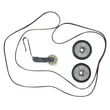
Moisture sensing depends on stable airflow and consistent drum movement. If the drum slips or airflow is restricted, the dryer can under-dry, over-dry, or shut down early. If you hear squealing or thumping, a worn belt or rollers can also affect performance; a dryer repair kit 4392065 is a common fix for multiple wear items at once.
Last updated: February 2026
Will my dryer work without the moisture sensor?
Yes. Your Whirlpool dryer model 7MWGD2040JM0 will still run and heat without the moisture-sensing circuit, but you will need to dry using Timed Dry because Sensor Dry/Auto cycles rely on moisture feedback to end the cycle correctly.
What changes when the moisture sensor is disconnected
Without a working moisture sensor, the dryer can no longer “judge” dryness during automatic cycles. Expect these common symptoms:
- Sensor Dry/Auto cycles may stop too soon (clothes still damp)
- Sensor Dry/Auto cycles may run longer than needed (overdrying)
- Timed Dry works normally because you set the run time
- Drying results vary more by load size and fabric type
- You may see inconsistent cycle completion from one load to the next
Best way to use the dryer until it’s fixed
Use Timed Dry and adjust based on results.
- Start with 30 to 40 minutes for a medium mixed load
- Use lower heat for synthetics to reduce overdrying and shrink risk
- Clean the lint screen before every load
- Avoid overloading; airflow is critical for even drying
- If drying times suddenly increase, check the venting for restriction
Quick comparison
| Cycle type | Works without moisture sensor? | What you control | Typical result |
|---|---|---|---|
| Sensor Dry/Auto | Not reliably | Very little | Can underdry or overdry |
| Timed Dry | Yes | Time and temperature | Predictable once you dial it in |
When to replace parts
If the dryer runs but Sensor Dry is inaccurate, the issue is often the sensor circuit, wiring, or control. If you are already opening the cabinet for service, many customers refresh common wear items at the same time using a kit like the dryer repair kit 4392065.
Why it matters
A working moisture-sensing system helps prevent overdrying, reduces energy use, and improves fabric care. Using Timed Dry is a solid workaround, but restoring Sensor Dry performance helps the dryer operate the way it was designed.
Last updated: February 2026
Can I search for Whirlpool parts by model?
Yes. For Whirlpool dryer model 7MWGD2040JM0, searching by the full model number is the most accurate way to get compatible replacement parts because it filters results to the exact diagrams and part listings built for your dryer.
How to search by model number (best practice)
- Use the complete model number: 7MWGD2040JM0 (match every letter and number).
- Pull the model number from the dryer’s ID tag (typically inside the door opening).
- Search the model first, then choose the section diagram (drum, door, burner, controls).
- Match the part name and ID to what you see in the diagram and symptoms.
- If multiple similar parts appear, compare your original part’s markings and mounting style.
Common parts customers look up by model
If you already know what’s failing, model search helps you land on the exact match quickly. Examples for 7MWGD2040JM0 include:
- Belt 341241
- Dryer door switch WP3406107
- Dryer thermal cut-off fuse kit W11050897
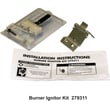
- Igniter 279311
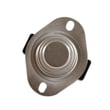
- Dryer operating thermostat WP3387134
Quick compatibility checklist
| What you enter | What you get | Accuracy |
|---|---|---|
| Model number (7MWGD2040JM0) | Parts curated for your exact dryer | Highest |
| Part ID (example: 341241) | That specific part page | High |
| Generic description (example: “Whirlpool dryer belt”) | Many possible matches | Lowest |
Why it matters
Whirlpool makes many dryers that look similar but use different belts, thermostats, igniters, and control parts. Searching by 7MWGD2040JM0 reduces returns and prevents installing a part that does not fit or perform correctly.
Last updated: February 2026
How to read Whirlpool model numbers?
Whirlpool model numbers identify the product type, series, and feature set; for your Whirlpool dryer model 7MWGD2040JM0, the letters and digits help us match the correct parts and diagrams so you get the right fit the first time.
What each section usually means
Whirlpool model numbers vary by product line, but dryers commonly follow this pattern:
- Prefix letters/numbers: product family and fuel type (gas vs. electric)
- Middle digits: series, capacity class, and feature package
- Ending letters/numbers: engineering revision, color, or market code
For 7MWGD2040JM0, the “GD” portion is commonly used on Whirlpool dryers to indicate a gas dryer family, which matters when you are choosing heating and burner-related parts.
Where to find the model number (so it matches exactly)
Use the model number from the appliance ID tag, not the control panel label.
- Open the dryer door and check the door opening frame
- Check the rear panel label if you do not see it inside the door area
- Write it down exactly, including all letters and the final revision characters
Why the model number matters when ordering parts
Even small suffix changes can affect which parts fit (switches, controls, burner components, and drum support parts).
| What you’re doing | What to use | Why it helps |
|---|---|---|
| Buying a replacement part | Full model number (7MWGD2040JM0) | Ensures correct fit and wiring/connector match |
| Troubleshooting a symptom | Model number plus symptom | Narrows to the right diagrams and common failures |
| Replacing wear items | Model number plus drum system parts | Prevents repeat teardown later |
Common “model-number-driven” parts on this dryer
If you are diagnosing noise, no-start, or poor tumbling, these are frequent matches for this model family:
- Belt 341241 (drum won’t tumble, squealing, belt snapped)
- Dryer door switch WP3406107 (dryer won’t start when door is closed)
- Dryer thermal cut-off fuse kit W11050897 (no heat or dryer shuts down from overheating)
Why it matters
Reading the model number correctly is the fastest way to avoid returns; Whirlpool often uses similar-looking dryers with different internal components, and the model suffix is what separates them.
Last updated: February 2026
What's the average lifespan of a Whirlpool dryer?
A Whirlpool dryer typically lasts 10 to 13 years with normal household use and basic maintenance. For your Whirlpool 7MWGD2040JM0, keeping airflow strong (lint screen and venting) and fixing wear items early is what most often extends service life.
Typical lifespan ranges (what to expect)
Most Whirlpool dryers fall into these practical ranges:
- 10 to 13 years: common average for everyday use
- 8 to 10 years: heavy use, restricted venting, frequent overheating
- 13 to 15+ years: light to moderate use with consistent cleaning and timely part replacement
| Usage and care level | Typical outcome | What usually fails first |
|---|---|---|
| Heavy loads, long vent runs | Shorter lifespan | Thermal safety parts, rollers, belt |
| Normal family use | Average lifespan | Belt, idler pulley, door switch |
| Light use, strong airflow | Longer lifespan | Wear parts over time |
What shortens a dryer’s life fastest
These are the most common lifespan killers we see in the field:
- Clogged lint screen or venting (heat builds up and stresses components)
- Overloading (extra strain on the drum support system and belt)
- Running with squealing or thumping noises (rollers and idler wear accelerates)
- Ignoring heat problems (cycling issues can overwork the burner and safety circuit)
- Poor installation conditions (kinked vent, crushed duct, excessive vent length)
Parts that commonly extend life when replaced on time
If your 7MWGD2040JM0 is noisy, not tumbling, or intermittently stopping, these model-matched parts are common fixes:
- Belt 341241 (drum won’t turn, slipping, burning rubber smell)
- Support WPW10314173 (thumping, rumbling, uneven drum support)
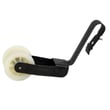
- Dryer idler pulley WP691366 (squeal, belt tension problems)
- Dryer thermal cut-off fuse kit W11050897 (no heat or shutdown from overheating)
Why it matters
A dryer can keep “running” while drying poorly; that usually means restricted airflow or worn drum support parts. Fixing those early reduces overheating, lowers cycle times, and prevents bigger failures like motor damage.
Last updated: February 2026