Owner’s manual


Where is the model number on Kenmore Elite dryer?
On the Kenmore Elite dryer model 79691572210, the model number is printed on the appliance’s rating label. You’ll usually find that label when you open the dryer door, on the door opening (cabinet frame) or on the back of the dryer near the top; confirm the exact label location in the 79691572210 owner's manual.
Most common places to check
- Open the door and look around the door opening on the cabinet frame (often along the left or right side)
- Check the inside edge of the door itself
- Look on the back panel near the top of the dryer
- If your unit is stacked, check the back label with a flashlight and mirror
What the label looks like (and what to copy)
The rating label typically includes several identifiers. For parts lookup, we recommend copying these exactly:
- Model number (for example: 79691572210)
- Serial number (helps date the unit)
- Electrical or gas information (useful for troubleshooting)
| What you see on the label | Why we need it |
|---|---|
| Model number | Ensures diagrams and parts match your exact Kenmore Elite dryer |
| Serial number | Helps confirm production version when designs change |
| Voltage or gas type info | Helps when diagnosing no-heat or power issues |
Why it matters
Kenmore Elite dryers can look similar across multiple model numbers, but internal parts like the dryer drum belt, idler pulley, thermostats, and control board can vary by model. Using the exact model number helps us match the correct replacement part the first time.
Last updated: January 2026
How to hard reset a Kenmore dryer?
A hard reset on the Kenmore Elite dryer model 79691572210 is done by disconnecting power long enough for the electronic control to fully power down, then restoring power and starting a cycle. This clears many temporary control glitches, but it will not fix airflow or heating safety trips.
Hard reset steps (most effective method)
- Turn the dryer off.
- Unplug the power cord (or switch the dryer breaker off).
- Wait 5 minutes.
- Restore power.
- Open and close the door once, then select a normal cycle and press Start.
If the dryer still will not run or keeps stopping
A reset helps when the control board is “confused”, but repeated problems usually point to a real fault such as restricted venting, an overheating condition, or a worn drive system.
- Clean the lint screen and confirm strong airflow at the outside vent hood
- Check that the exhaust duct is not crushed, kinked, or packed with lint
- If the drum will not turn, inspect the belt and idler system
- If the dryer runs but shuts down, inspect overheating protection components
- If the dryer shows an error code, use the model-family error code guide
Common causes and what a reset will (and will not) do
| Symptom | What a hard reset can do | What to check next |
|---|---|---|
| Buttons unresponsive or cycle won’t start | Clears a temporary control lockup | Door switch, power supply, control board |
| Dryer runs then stops | May clear a one-time glitch | Venting, thermostats, motor, belt system |
| No heat (gas model) | Rarely helps | Igniter, gas valve, airflow restrictions |
Parts that often relate to “won’t tumble” or overheating symptoms
If you find a mechanical or airflow-related issue during inspection, these model-matched parts are commonly involved:
- Dryer drum belt 4400EL2001F (broken belt, drum not turning)
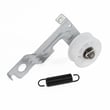
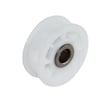
- Dryer idler pulley 4560EL3001A (squeal, belt slipping, no tumble)
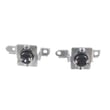
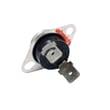
- Dryer high-limit thermostat AGM30045804 (overheating shutdown, no heat)
Why it matters
Hard resets are a safe first step because they restore normal control operation without disassembly. If the dryer repeatedly needs resetting, addressing airflow (lint and venting) and drive wear prevents overheating, nuisance shutdowns, and longer dry times.
For model-specific control behavior and any reset or error-code steps, follow the 79691572210 owner’s manual.
Last updated: January 2026
Where is the moisture sensor in a Kenmore Elite dryer?
On the Kenmore Elite dryer model 79691572210, the moisture sensor is typically mounted inside the front of the drum area, near the lint filter housing; you usually access it from the front by removing the lint screen and the lint screen housing cover. For model-specific access steps, use the 79691572210 owner's manual.
What you will usually see when you find it
In most Kenmore Elite (796 platform) dryers, the moisture sensor is a pair of metal sensor bars (or a small sensor assembly) positioned where clothes can brush against it as the drum tumbles.
Common identifiers:
- Two metal strips or bars inside the drum opening area
- A small bracket or holder secured with screws
- Two wires connected to the sensor terminals
How to access the moisture sensor (typical steps)
Always unplug the dryer before opening panels.
- Remove the lint screen from the top of the lint filter opening
- Remove screws securing the lint screen housing cover or duct area
- Lift out or open the lint duct cover to expose the sensor mounting area
- Locate the sensor bars and the two wire connections
- If replacing, match the part by model and mounting style (bars, bracket, connector)
If you are replacing the sensor itself, the correct replacement for this model is the dryer moisture sensor 6500EL3001A.
Quick troubleshooting: sensor location vs. sensor problem
If the dryer runs but shuts off too soon or leaves clothes damp, the sensor may be dirty or not making good contact.
| Symptom | Common cause | What to check first |
|---|---|---|
| Stops early on Auto/Dry | Sensor bars coated with residue | Clean bars with rubbing alcohol |
| Takes too long to dry | Restricted airflow | Lint screen, duct, vent run |
| Auto cycles inconsistent | Loose wire connection | Sensor terminals and harness seating |
Why it matters
The moisture sensor helps the control decide when clothes are dry in automatic cycles. If it is dirty, loose, or damaged, the dryer can under-dry, over-dry, or run longer than necessary.
Last updated: January 2026
What does AF mean on my Kenmore Elite dryer?
On the Kenmore Elite 79691572210 dryer, AF means the dryer is sensing restricted airflow. In most cases, the fix is cleaning lint buildup and correcting a crushed, kinked, or clogged vent so the dryer can move air properly and dry efficiently.
What to check first (fast airflow fixes)
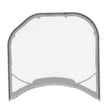
- Clean the lint screen before every load; wash it with warm water if you use dryer sheets (film can block airflow).
- Inspect the vent hose behind the dryer; replace it if it is crushed, kinked, or excessively long.
- Clear lint from the wall vent and the outside vent hood; make sure the damper opens freely.
- Confirm the dryer is not pushed tight against the wall (this commonly pinches the vent).
- If drying times are long, clean lint from the blower area and lint ducting.
How to confirm it is a venting problem
A quick way to validate airflow restriction is to run a timed heat cycle and check exhaust strength.
| What you notice | What it usually means | What to do |
|---|---|---|
| Weak airflow at the outside vent | Blocked vent run or stuck vent hood | Clean the full vent path to outdoors |
| Dryer runs hot but clothes stay damp | Air is not moving enough | Shorten/straighten vent, remove clogs |
| AF returns soon after cleaning lint screen | Lint buildup deeper in ducting or blower | Clean internal lint path and venting |
Parts that can contribute to airflow symptoms
If airflow is restricted, heat can build up and cause cycling issues. If you are also seeing overheating symptoms, these parts are commonly involved in airflow-related complaints:
- Dryer blower wheel 5835EL1002A (moves air through the drum and vent)
- Dryer blower thermostat 6931EL3002M (helps regulate temperature at the blower housing)
- Dryer high-limit thermostat 6931EL3003C (safety limit that can trip when airflow is poor)
Why it matters
Restricted airflow makes the dryer work harder, increases dry times, and can cause overheating and repeated shutdowns. Restoring proper venting protects key components like the motor, thermostats, and control system.
For model-specific guidance on indicators and operating details, use the 79691572210 owner's manual.
Last updated: January 2026