Owner’s manual
 Error Codes


What is the most common problem with a GE refrigerator?
The most common problem we see with GE refrigerators (including model GSS23HMHBCES) is a cooling complaint: the fresh food section gets warm, the freezer temperature drifts, or the unit runs too long. In many cases, the root cause is restricted airflow, dirty condenser coils, or a failing fan or sensor.
Most common causes behind “not cooling”
- Dirty condenser coils causing poor heat release and longer run times
- Evaporator fan not moving cold air through the compartments
- Air vents blocked by overpacked food (especially in the freezer)
- Defrost system trouble leading to frost buildup and blocked airflow
- Temperature sensing issues that misread compartment temperature
Quick checks we recommend first
- Confirm the controls are set correctly (check the temperature settings in the GSS23HMHBCES owner's manual).
- Make sure interior vents are not blocked by food packages.
- Clean the condenser coil area and verify the condenser fan is running.
- Listen for the evaporator fan in the freezer; it should run when the compressor is running (door switch may need to be pressed).
Parts that commonly relate to cooling problems
If basic airflow and cleaning checks do not fix the issue, these model-related parts are often involved:
| Symptom | Common suspect | Example part for this model |
|---|---|---|
| Warm fresh food, freezer OK-ish | Temperature sensing/control issue | Refrigerator temperature sensor WR55X10025 |
| Freezer cold but fridge warm | Evaporator fan not circulating air | Refrigerator evaporator fan motor WR60X10307 |
| Long run times, poor cooling | Condenser airflow problem | Condenser motor (check WR60X10209 listing) |
| Frost buildup, airflow blocked | Defrost control components | Refrigerator defrost bi-metal thermostat WR50X10065 |
Why it matters
Cooling problems usually get worse over time. When airflow is restricted or a fan is failing, the compressor often runs longer than normal, temperatures swing, and food quality suffers. Catching the cause early helps prevent repeat warm-ups and unnecessary part replacements.
Last updated: February 2026
How wide is a 25.6 cubic foot refrigerator?
Most 25.6 cu. ft. refrigerators are about 36 inches wide. For your GE GSS23HMHBCES side-by-side, the installation specs call out a 36-inch cabinet opening width; we recommend confirming the exact cutout and clearance details in the owner's manual.
Typical width you should expect
Capacity (like 25.6 cu. ft.) does not set an exact width, but it usually lands in a common size range.
- Most 25 to 26 cu. ft. side-by-side refrigerators are about 35 3/4 to 36 inches wide
- Plan for side clearance so the cabinet does not pinch the case
- Plan for top and back clearance for airflow and hookups
- If an entryway is under 38 inches, doors often need to be removed for moving the unit in
Clearances to plan for (installation)
For GE side-by-side models in this size class, the manual lists small side and top clearances and a larger back clearance for connections and airflow.
| Location | Typical planning value | Why it matters |
|---|---|---|
| Width (opening) | 36 in. | Fits the cabinet cutout for this style |
| Side clearance | 1/8 in. | Prevents rubbing and helps airflow |
| Top clearance | 1/8 in. | Helps fit and ventilation |
| Back clearance | about 1 in. | Room for cord, water line, airflow |
Measuring tips (so you buy and install once)
- Measure the tightest point: cabinet opening, trim, and any door casing
- Measure with doors open if the refrigerator sits next to a wall (door swing clearance)
- Include space for the water line if you use the ice maker or dispenser
- If you are moving through a narrow entry, measure the entry width and compare to the refrigerator with doors on
Why it matters
A “36-inch wide” refrigerator still needs clearance for air circulation, plumbing, and door swing. Planning the opening correctly helps prevent poor cooling, noisy operation, and installation damage.
Last updated: February 2026
Why is my GE side-by-side refrigerator ice maker making too much ice?
On your GE GSS23HMHBCES, “too much ice” almost always happens when the ice level shutoff cannot work correctly, usually because the feeler arm is blocked, stuck, or the ice bucket is not seated so cubes pile up in the wrong spot. Confirm the bin position and that nothing interferes with the feeler arm per the owner's manual.
Quick checks that fix most “overfilling” complaints
- Pull the ice bucket out and reinstall it fully so it sits square and all the way back.
- Make sure nothing (ice clumps, a bag, a scoop) interferes with the sweep of the feeler arm.
- Break up clumped cubes and level the ice in the bucket by hand.
- If cubes are stuck in the icemaker, turn the icemaker off, remove the cubes, then turn it back on.
- After any adjustment, give it a few cycles to see if it stops at the correct fill level.
What “normal” ice production looks like
The icemaker is designed to make about 7 cubes per cycle and roughly 100 to 130 cubes in 24 hours, depending on freezer temperature, room temperature, and door openings.
| Situation | What you’ll see | What to do |
|---|---|---|
| Bucket not seated or cubes piled unevenly | Ice keeps making because the shutoff is not triggered | Reseat bucket; level cubes by hand |
| Feeler arm blocked or stuck | Icemaker does not “sense” full bin | Clear obstruction; free the arm movement |
| New install or recently turned on | Output seems heavy at first | Discard first batches; monitor after 24 hours |
If it’s still making too much ice
Focus on the shutoff system first (bin position and feeler arm). If the icemaker is physically stopping correctly but you still get overflow into the freezer, inspect the dispenser area and bucket components for binding or misalignment; our step-by-step guide on how to disassemble the ice and water dispenser on a GE refrigerator helps you check those parts safely.
Parts that are commonly involved (when replacement is needed)
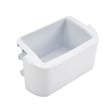
- Ice bucket assembly: refrigerator ice dispenser bucket assembly WR29X46731
- Icemaker assembly: refrigerator ice maker kit WR30X35285
Why it matters
Overfilling leads to ice jams, dispenser problems, and temperature swings from frequent door openings while clearing spills. Getting the bucket seated and the feeler arm moving freely restores normal shutoff and consistent ice production.
Last updated: February 2026
Are GE side-by-side refrigerators good?
GE side-by-side refrigerators like model GSS23HMHBCES are a solid choice for everyday use because they typically offer strong food organization (adjustable shelving and door bins), bright interior lighting, and convenient ice and water dispensing. Most performance complaints we see are tied to maintenance items such as the water filter, ice maker, or airflow.
What “good” usually means for a side-by-side
A side-by-side design is built for easy access to both fresh food and freezer items, with narrower door swing than many French door models.
Common strengths:
- Consistent access to freezer and refrigerator sections at eye level
- Adjustable shelves and bins for better organization
- Built-in water dispenser and ice maker convenience
- Bright compartment lighting on many models
Common tradeoffs:
- Freezer space can feel narrower for wide items (pizza boxes, trays)
- Ice makers can sound loud during harvest cycles
- Water and ice performance depends heavily on filter condition and water supply
Quick reliability checklist (most issues are maintenance-related)
Use this list to judge day-to-day performance and prevent common problems:
- Replace the water filter on schedule; a restricted filter can reduce flow and affect dispensing
- If a filter is removed, install the bypass plug; the dispenser and ice maker will not run without a filter or bypass plug
- Keep doors closing tightly; warm air leaks cause frost and temperature swings
- Avoid blocking vents with food packages; airflow drives even cooling
- If ice or water is slow, check for air in the line and purge the dispenser after filter changes
Parts that commonly affect “how good it feels”
If performance drops, these are frequent culprits for side-by-side refrigerators:
| Symptom | Common cause | Example part for GSS23HMHBCES |
|---|---|---|
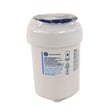
| Slow water dispensing | Clogged filter | GE refrigerator water filter MWFP |
| No water or no ice fill | Water inlet valve issue | Refrigerator water valve WR57X33326 |
| Warm temps or uneven cooling | Sensor or airflow problem | GE profile refrigerator temperature sensor WR55X10025 |
Why it matters
A “good” refrigerator is one that holds steady temperatures and dispenses water and ice reliably. On GE side-by-side models, those results depend as much on routine upkeep (filter changes, door sealing, airflow) as on the core sealed system.
For model-specific features, control settings, and care guidance, use the GSS23HMHBCES owner's manual.
Last updated: February 2026