Owner’s manual


How do I know if my Kenmore dryer thermal fuse is blown?
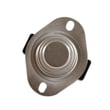
On Kenmore dryer model 11063022100, a blown thermal fuse commonly shows up as a dryer that will not run at all (no motor, no heat). The sure way to know is to unplug the dryer and test the fuse for continuity with a multimeter; no continuity means it is blown.
Quick symptoms to look for
- Dryer will not start even though the door is closed and controls are set to ON
- You have power at the outlet, but the dryer is completely dead
- The dryer stopped mid-cycle and will not restart
- You recently had poor airflow (clogged lint screen or vent restriction)
- You notice longer dry times leading up to the failure
Confirm it with a continuity test (best method)
- Unplug the dryer (or switch off the breaker).
- Access the thermal fuse location using the steps shown in the 11063022100 owner's manual.
- Remove at least one wire from the fuse terminal.
- Check continuity across the fuse with a multimeter.
How to read the meter
| Meter result | What it means | What to do next |
|---|---|---|
| Beep or near 0 ohms | Fuse is good | Keep troubleshooting (door switch, timer, motor circuit, power supply) |
| No beep or OL/infinite | Fuse is blown | Replace the fuse and correct the airflow problem |
Why the fuse blows (and what to fix so it does not happen again)
A thermal fuse usually opens because the dryer overheats from restricted airflow. The Kenmore troubleshooting guidance points to airflow checks like cleaning the lint screen and verifying strong air at the outside vent hood.
- Clean the lint screen before every load
- Check for crushed or kinked venting
- Clean lint buildup from the entire exhaust duct and outside hood
- Avoid running the dryer with a blocked outlet grille
Parts that are often involved
If you are replacing the fuse, also address airflow and heating control issues that can contribute to overheating.
Last updated: February 2026
How do I know what model my Kenmore dryer is?
Your Kenmore dryer’s model number is printed on the model and serial number plate. On model 11063022100, you’ll typically find that plate in the door opening area; record the full model number exactly as shown so we can match the correct parts and specifications in the 11063022100 owner's manual.
Where to look for the model number plate
Check these common locations on Kenmore dryers like 11063022100:
- Inside the dryer door opening on the cabinet frame
- On the door opening lip or inner front panel near the latch area
- On the back panel of the dryer cabinet
- Near the lint screen housing area (depending on the exact console and cabinet style)
How to read the number correctly
Model numbers must be copied exactly; one missing digit can pull up the wrong diagrams or parts.
- Write down the full model number and the serial number
- Keep the numbers in your records for future repairs and service
- Use the model number when ordering parts like a heating element, thermal fuse, timer, or belt components
Quick check: model number vs. serial number
| What you’re looking at | What it’s used for | Example format |
|---|---|---|
| Model number | Identifies the exact dryer design and parts list | 11063022100 |
| Serial number | Identifies the specific unit and production run | Letters and numbers |
Why it matters
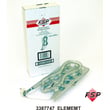
Kenmore dryers share similar styling across many years, but internal parts can differ. Using the exact model number helps us match the right component the first time, such as the dryer heating element WP3387747 or the dryer thermal fuse WP3390719.
Last updated: February 2026
How much does it cost to replace a heating element in a Kenmore dryer?
For Kenmore dryer model 11063022100, replacing the heating element typically costs $70 to $120 for the part and $150 to $350 total if you hire a technician (parts plus labor). DIY cost is usually the part price plus basic supplies; see the 11063022100 owner's manual for safety and access guidance.
Typical cost breakdown
- Heating element part: commonly $70 to $120 for this model’s style of electric element
- Labor (service call + install): often $80 to $250 depending on location and access
- Optional related parts: wire terminals, thermal cut-off, or thermostat if heat damage is present
- DIY tools/supplies: nut driver, vacuum, and a multimeter for checks
| Repair approach | What you pay for | Typical total |
|---|---|---|
| DIY replacement | Part only | $70 to $120 |
| Pro replacement | Part + labor | $150 to $350 |
| “No-heat” diagnosis first | Service call/diagnostic | $80 to $150 |
Parts that commonly get replaced with the element
If the dryer overheated or has restricted airflow, we often see heat-related parts fail along with the element.
- Dryer heating element WP3387747 (the heater assembly for this model)
- Dryer thermal fuse WP3390719 (opens if the dryer overheats)
- Dryer operating thermostat WP3387134 (helps regulate drum temperature)
Why the price varies
The total cost changes based on what caused the element to fail and how hard the dryer is to access.
- Long or clogged venting can overheat the heater area
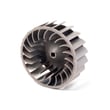
- A weak blower wheel or blocked lint path can reduce airflow
- Extra disassembly time increases labor cost
Why it matters
A new heating element will not last if the dryer is overheating from poor airflow. Cleaning the lint screen area and confirming strong exhaust airflow helps protect the heater, thermostat, and thermal fuse.
Last updated: February 2026