Installation guide
 Owner’s manual
 Error Codes


Is there a reset button on a Whirlpool dryer?
Whirlpool dryers such as model WGD5500SQ0 typically do not use a single physical reset button. In most cases, we reset the dryer by stopping the cycle and restoring power (a simple power cycle), then restarting the cycle using the normal Start procedure shown in the WGD5500SQ0 owner's manual.
How to reset a Whirlpool WGD5500SQ0 dryer
Use these steps in order; they solve most “won’t start” and control glitches.
- Turn the Cycle Control knob to OFF.
- Open the door, then close it firmly.
- Unplug the dryer (or switch the breaker off) for 5 minutes.
- Restore power.
- Select a cycle and press START.
If the dryer still will not run, the manual’s troubleshooting checks apply: verify power, door closure, and that START was firmly pressed.
Quick checks that matter before you reset
A “reset” will not fix a condition that is actively preventing operation.
- Power supply: Many dryers use 2 fuses or 2 breakers; one can trip and the drum may still run on some symptoms.
- Door closure: If the door is not fully closed, the dryer will not start.
- Cycle selection: Make sure a cycle is actually selected (not between positions).
- Start input: Press START firmly.
- Vent and lint: Clean the lint screen before each load; restricted airflow can cause overheating and performance problems.
What to do if it still won’t start (common part-related causes)
If power and settings are correct, a failed start-interlock component is common.
| Symptom | Most likely area | What we check next |
|---|---|---|
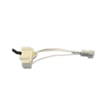
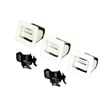
| No response when pressing START | Door circuit | Test/inspect the dryer door switch WP3406107 |
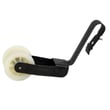
| Motor hums but drum does not turn | Drive system | Inspect belt and idler; check the dryer drum belt 341241 |
| Starts then stops quickly | Overheat protection or airflow | Check venting and thermostats; clean lint path |
Why it matters
Resetting clears temporary control states, but the real fix is confirming the dryer can safely run: correct power, a closed door, and proper airflow. Good venting and lint-screen care also help prevent overheating and long dry times.
Last updated: February 2026
Why did my Whirlpool dryer stop?
Your Whirlpool WGD5500SQ0 dryer usually stops mid-cycle because a safety device opened (overheating from restricted airflow), the door circuit opened, or the drive system quit turning the drum. Start with airflow and door checks, then move to belt, motor, and thermostat-related causes using the WGD5500SQ0 owner's manual.
Quick checks we recommend first
- Make sure the Cycle Control knob is not in OFF and the cycle is actually selected.
- Close the door firmly; a weak door switch can stop the motor.
- Clean the lint screen and check for crushed or kinked venting.
- Confirm the dryer is exhausted outdoors with 4-inch heavy metal vent (not plastic or foil).
- If it stopped and will not restart, let it cool 10 to 15 minutes, then try again.
Most common causes (and what you’ll notice)
| What failed or changed | What you’ll typically see | What to do next |
|---|---|---|
| Restricted venting or lint buildup | Dryer stops, long dry times, hot cabinet | Clean vent path; verify proper vent material and routing per the WGD5500SQ0 installation guide |
| Door switch issue | Stops when door is bumped; won’t run with door closed | Test/replace the dryer door switch WP3406107 |
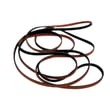
| Broken or slipped belt | Motor runs but drum does not turn | Inspect/replace the dryer drum belt 341241 |
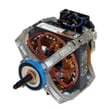
| Motor or idler problem | Hums, trips, or stops under load | Inspect idler and motor; replace worn parts as needed |
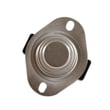
| Overheat protection opening (thermostat or high-limit) | Stops after heating; may restart after cooling | Check airflow first; then test thermostats and related components |
Why venting matters on this model
Your WGD5500SQ0 is designed to be exhausted outdoors, and improper venting can trap heat and lint. That heat buildup can trigger safety shutoffs that stop the dryer to prevent damage.
Parts that commonly solve “stops” symptoms
- Door circuit: dryer door switch WP3406107
- Drum drive: dryer drum belt 341241
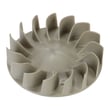
- Heat and airflow related: operating thermostat (WP3387134), high-limit thermostat kit (W11050897), blower wheel (WP694089)
Last updated: February 2026
How do I know if my Whirlpool dryer thermal fuse is blown?
On our Whirlpool WGD5500SQ0 gas dryer, a blown thermal fuse usually shows up as a dryer that will not run or a dryer that runs but has no heat. The only sure check is a multimeter continuity test; a good fuse shows continuity, a blown fuse reads open.
Fast checks before you test the fuse
These quick items rule out common look-alikes listed in the troubleshooting section of the WGD5500SQ0 owner's manual.
- Confirm the dryer is plugged in and the door fully closes
- Verify the cycle is selected and START is pressed firmly
- Check the house fuse or breaker (some dryers use more than one)
- For gas models, confirm the gas shutoff valve is open
How to test the thermal fuse (definitive)
- Disconnect power to the dryer.
- Access the fuse (use the wiring/parts views in the manual).
- Pull at least one wire off the fuse terminal.
- Set the meter to continuity or ohms and test across the fuse.
- Good fuse: meter beeps or reads near 0 ohms
- Blown fuse: no beep, infinite, or OL reading
If it’s blown, fix the airflow problem too
A thermal fuse is a one-time safety device; replace it and correct vent restriction so it does not blow again. Our venting requirements in the WGD5500SQ0 installation guide call for 4-inch heavy metal venting exhausted outdoors.
Venting checklist
- Use 4-inch heavy metal vent (no plastic, no foil)
- Make sure the vent is not crushed or kinked
- Clamp joints; avoid screws that stick into the duct
- Remove lint buildup regularly (including the exhaust path)
Parts that can mimic “no heat” on a gas dryer
| Symptom | Common cause | Example part |
|---|---|---|
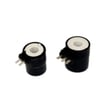
| Ignites once, then no heat | Weak gas valve coils | Dryer gas valve coil kit 279834 |
| No ignition at all | Failed igniter | Igniter 279311 |
Why it matters
The thermal fuse prevents overheating. Restoring proper airflow improves drying performance and helps prevent repeat no-heat or no-start problems.
Last updated: February 2026