Installation guide
 Owner’s manual


What is the life expectancy of a Kenmore washer?
Most Kenmore washers, including model 11015862400, typically last 10 to 15 years with normal household use. Lifespan depends most on load size, how often you run it, and whether you keep the tub, pump, and drive system maintained per the 11015862400 owner's manual.
What affects washer lifespan the most
- Weekly usage: more cycles per week shortens life faster than age alone.
- Overloading: strains the drive motor, clutch, and suspension.
- Drain health: slow draining makes the pump work harder and can leave residue.
- Water quality: hard water increases buildup and wear.
- Leveling and balance: chronic out-of-balance loads accelerate wear on the basket and springs.
Maintenance that helps you reach (or beat) 10 to 15 years
- Keep loads balanced; mix items and avoid washing one heavy item alone.
- Use the right amount of detergent; too much causes residue and odors.
- Check hoses and clamps periodically for seepage.
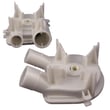
- If draining slows, inspect the drain path and consider replacing the washer drain pump WP3363394 if it is noisy, leaking, or weak.
- Follow the cleaning and care steps in the 11015862400 owner's manual.
Quick lifespan guide
| Usage pattern | Typical lifespan | What to watch for |
|---|---|---|
| Light (1 to 3 loads/week) | 12 to 15 years | Hoses, lid switch, minor leaks |
| Average (4 to 7 loads/week) | 10 to 12 years | Drain performance, vibration |
| Heavy (8+ loads/week) | 7 to 10 years | Drive components, suspension, pump |
Why it matters
Knowing the expected lifespan helps you decide when a repair is worth it. On a proven direct-drive style Kenmore washer like 11015862400, replacing common wear parts (pump, lid switch, coupling) often restores reliable operation for years.
Last updated: January 2026
How to hard reset kenmore washer?
For Kenmore washer model 11015862400, a hard reset is simple: unplug the washer (or switch off the breaker) for about 2 minutes, then restore power and restart the cycle. If the washer is paused mid-cycle, it can also pause normally for about 2 minutes before continuing.
Hard reset steps (recommended)
- Push in the Cycle Control knob to stop the washer.
- Unplug the washer (or turn off the breaker).
- Wait 2 minutes.
- Plug back in (or turn breaker on).
- Close the lid.
- Pull out the Cycle Control knob to restart.
If it still will not start, agitate, or spin
These checks solve most “won’t run” complaints on this style of Kenmore top-load washer:
- Confirm the lid is fully closed; this washer will not agitate or spin with the lid open.
- Avoid extension cords; plug directly into a wall outlet.
- Wait through a normal cycle pause (about 2 minutes in certain cycles).
- Reduce the load size if the washer is overloaded.
- Check the drain hose height and for clogs (a drain hose routed too high can prevent draining and spinning).
| Symptom after reset | Most common cause | What to do next |
|---|---|---|
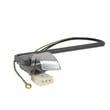
| Won’t spin or agitate | Lid not sensed closed | Inspect/replace the washer lid switch WP3949238 |
| Won’t drain | Pump jam or failure | Check/replace the washer drain pump WP3363394 |
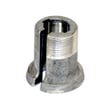
| Stops, hums, no movement | Motor coupling worn | Inspect/replace the washer motor coupling |
Why it matters
A hard reset clears a temporary “stuck” timer or pause condition and gets you back to a known starting point. If the problem returns immediately, it usually points to a lid switch, drain issue, or drive system problem rather than the control knob itself.
For cycle stopping and restarting details specific to this washer, follow the steps in the 11015862400 owner's manual.
Last updated: January 2026
How to unclog drain hose on Kenmore washer?
On Kenmore washer model 11015862400, we unclog the drain hose by safely disconnecting power, draining any standing water, then removing the hose and flushing or clearing the blockage. After clearing it, reinstall the hose so it stays kink-free and securely clamped.
Safety first
- Unplug the washer (or switch off the breaker).
- Turn off both water faucets.
- Keep towels and a shallow pan nearby for water in the hose.
- If the washer is full of water, bail out what you can before moving it.
Step-by-step: unclog the drain hose
- Pull the washer forward enough to access the rear and the drain connection.
- Remove the drain hose from the standpipe or laundry tub.
- Check the hooked end for lint, coins, socks, or a crushed section.
- If you can access the washer end of the hose, loosen the clamp and twist the hose off the drain outlet.
- Flush the hose with hot tap water; use a flexible brush or a small drain snake to push out debris.
- Reinstall the hose and clamp it correctly; the hose should reach the ribbed stop at the washer outlet and the clamp should sit on the marked clamp area.
Reinstall tips that prevent repeat clogs
Use the installation guidance to avoid kinks and siphoning issues (both can cause poor draining):
- Keep the hooked end; do not straighten it.
- Rotate the hook to eliminate kinks.
- Do not force excess hose down into the standpipe.
- Leave an air gap at the standpipe or tub so water cannot siphon back.
| What we check | What “good” looks like | What causes problems |
|---|---|---|
| Hose routing | Smooth curve, no pinches | Kinked hose behind washer |
| Standpipe/tub setup | Hose secure but not airtight | No air gap (siphoning) |
| Clamp position | Tight and seated correctly | Loose clamp (leaks, hose slips) |
When the hose is clear but it still will not drain
A clog is common, but a failed drain component can look similar. If the hose flushes clean and the washer still will not drain, the next common suspect is the washer drain pump WP3363394.
Why it matters
A partially blocked drain hose can leave water in the tub, cause slow spins, and lead to leaks if the hose is forced into the standpipe or not clamped correctly.
For the exact drain-hose routing and clamp placement for this model, follow the 11015862400 installation guide.
Last updated: January 2026
What is the capacity of Kenmore Model 11015862400?
Kenmore washer model 11015862400 is a full-size top-load washer; its wash basket capacity is typically about 4.2 cu. ft. Use the model-specific specs in the 11015862400 owner's manual to confirm the exact capacity and the recommended load levels for each cycle.
How to confirm capacity for model 11015862400
We recommend verifying the capacity in the model documentation so you load correctly and get consistent cleaning.
- Open the 11015862400 owner's manual and look for Specifications or Features.
- Find the line for basket/tub capacity (cu. ft.).
- Match the model number on the label under the lid to 11015862400.
- Use the manual’s load examples if it lists load size by item type instead of cubic feet.
- Follow the cycle guidance (Normal, Heavy Duty, Delicate) because water level and agitation can change by setting.
Practical load sizing (prevents poor cleaning and out-of-balance)
Even with a known cu. ft. rating, correct loading protects the drive system and suspension.
- Load items loosely; do not pack or compress.
- Keep the load below the top of the basket; items must move freely.
- Balance bulky items (blankets, comforters) with a few towels.
- If the washer bangs or walks, pause, redistribute, then reduce the load.
- If you see dry spots after filling starts, the load is too large or too tight.
Quick reference table
| Load type | Typical fill level (top-load) | What happens if overfilled |
|---|---|---|
| Mixed everyday clothes | About 2/3 full, loose | Poor turnover, less cleaning |
| Towels/jeans | About 1/2 to 2/3 full | Slow spin, out-of-balance |
| Bulky bedding | About 1/3 to 1/2 full | Banging, poor rinse/spin |
Why it matters
Loading to the correct capacity improves wash performance and reduces strain on high-wear parts such as the washer motor coupling 285753A and the clutch 285785.
Last updated: January 2026