Owner’s manual
 Error Codes



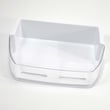
What is the bottom part of a refrigerator called?
On the Kenmore 79571313313 bottom-mount refrigerator, the “bottom part” is most often the machine compartment (also called the compressor compartment). It houses key cooling components such as the compressor, condenser area, and related electrical parts that help remove heat and keep the refrigerator cold.
What you’ll typically find at the bottom
Most bottom sections include parts that support cooling, airflow, and defrost water management:
- Compressor and start components (start relay/overload)
- Condenser coil area (heat is released here)
- Condenser fan area (on many models)
- Drain pan (collects defrost water for evaporation)
- Lower rear access cover or toe grille (depending on design)
For model-specific diagrams and naming, use the 79571313313 owner’s manual.
Common names people use (and what they mean)
| What people call it | What it usually refers to | Where it is |
|---|---|---|
| Bottom panel | Toe grille or lower access cover | Front bottom or rear bottom |
| Back bottom cover | Machine compartment cover | Rear bottom |
| Motor area | Compressor compartment | Rear bottom |
| Tray underneath | Drain pan | Under the cabinet near the compressor |
Why it matters
Knowing the correct name helps you match symptoms to the right area. For example, a loud hum or clicking from the bottom often points to compressor start components, while heat buildup can relate to the condenser coil area.
Parts you may see referenced for this model
If you’re troubleshooting a specific issue, these are examples of bottom-area related parts used on this model:
- Refrigerator compressor overload protector 6750CL0001D (helps protect the compressor during startup)
- Refrigerator condenser coil ACG73946401 (releases heat from the sealed system)
Last updated: January 2026
What does DH mean on Kenmore Elite refrigerator?
On Kenmore model 79571313313, dH (often shown as Er dH) indicates a defrost heating problem: the refrigerator is not sensing the expected temperature rise during the defrost cycle, so frost can build up and airflow can drop. Check the defrost system components and wiring using the 79571313313 manual.
What to check first (quick triage)
- Unplug the refrigerator for 5 minutes, then restore power and see if the code returns.
- Confirm the doors close fully and the gaskets seal; warm air leaks increase frost.
- Listen for the evaporator fan; weak airflow can mimic defrost trouble.
- Look for heavy frost on the rear freezer panel (a common sign of defrost failure).
- Verify the freezer temperature is near 0°F and the fresh food section near 37°F.
Likely causes of a dH / Er dH code
In this Kenmore bottom-mount design, dH typically points to one of these:
- Defrost heater circuit issue (heater, wiring, or connector problem)
- Defrost sensor or thermistor not reading correctly
- Control not powering the defrost circuit as expected
- Frost-packed evaporator restricting airflow
If you suspect a sensor issue, the refrigerator defrost sensor assembly 6615JB2005N is a common defrost-system component used on this model family.
What you can do safely (before testing live voltage)
- Unplug power and remove freezer contents as needed.
- If the rear freezer panel is iced over, do a controlled thaw:
- Leave doors open and place towels to catch water.
- Use a fan to speed thawing (avoid heat guns; they can damage liners).
- After thawing, restart and monitor for 24 to 48 hours.
Component guide (what each part does)
| Component | What it does | What you may notice when it fails |
|---|---|---|
| Defrost heater | Melts frost off the evaporator | Heavy frost, warm fridge, dH code |
| Defrost sensor/thermistor | Confirms temperature rise during defrost | dH code, erratic temps |
| Control board | Sends power to defrost circuit | Repeating dH, no defrost pattern |
Why it matters
When defrost heat is not working, frost builds on the evaporator coil and blocks airflow. That can cause warm temperatures, poor ice production, longer run times, and food spoilage risk.
Last updated: January 2026
Why is my Kenmore refrigerator leaking underneath?
On Kenmore refrigerator model 79571313313, leaking underneath is usually caused by a clogged or frozen defrost drain that overflows inside the cabinet, or by a water supply seep (ice maker line or valve) that runs down to the floor. Clearing the drain and checking the water connections typically stops the leak.
Most common causes to check
- Clogged defrost drain hole or drain tube (meltwater backs up)
- Ice blockage in the drain trough (water spills forward)
- Drain pan cracked, warped, or out of position
- Water line fitting loose (behind unit or at valve)
- Water inlet valve seeping
What to do (safe, quick checks)
- Unplug the refrigerator; pull it forward and look for a water trail from the back.
- Remove the toe grille and inspect the drain pan; dry it and watch for fresh drips.
- Check for ice or standing water at the bottom rear inside the fresh food section.
- Flush the defrost drain with warm water using a turkey baster; follow with a soft pipe cleaner.
- If the unit is plumbed in, inspect the valve area and tubing for slow leaks.
Quick symptom guide
| What you notice | Most likely source | Best next step |
|---|---|---|
| Puddle after a defrost cycle | Defrost drain restriction | Flush drain with warm water |
| Slow, constant puddle near back | Water line or valve seep | Tighten fittings; inspect valve |
| Water plus heavy frost | Door seal or defrost issue | Fix seal; clear drain |
Parts that are often involved
If you find moisture at the valve body or fittings, replace the lg refrigerator water inlet valve AJU73753101.
Why it matters
Water under the refrigerator can damage flooring and can lead to ice buildup that restricts airflow and hurts cooling.
For model-specific access points and diagrams, use the 79571313313 manual.
Last updated: January 2026