Owner’s manual
 Error Codes


How to tell cubic feet of Kenmore refrigerator by model number?
For Kenmore Elite model 10657789701, the model number by itself usually does not directly “spell out” the cubic-foot capacity. The most reliable way is to look up the capacity in the specifications section of the owner's manual, or calculate an estimate by measuring the usable interior space.
Fast ways to find the capacity
1) Check the specs in the manual
The owner's manual is the best source because it lists model-specific specifications (including capacity when provided) without guesswork.
2) Estimate cubic feet by measuring the interior
If you need a quick estimate, measure the usable interior (not the outside cabinet):
- Measure interior width, height, and depth in inches
- Multiply:
W x H x D = cubic inches - Divide by 1728 to convert to cubic feet
- Subtract a little for shelves, bins, and the ice maker area (they reduce usable space)
What to measure (so your math is meaningful)
Use these tips to avoid overestimating:
- Measure the refrigerator compartment and freezer compartment separately
- Measure to the inside liner, not to the door gasket
- Use the average depth if the back wall has bumps or channels
- Don’t include door bins unless you are intentionally estimating “total storage volume”
- If an ice maker is installed, treat that corner as “not usable” volume
Quick reference table
| What you have | What it tells you | Best use |
|---|---|---|
| Model number (106-prefix Kenmore) | Identifies the design family and parts | Parts lookup and manual lookup |
| Manual specifications | Listed capacity (when provided) | Most accurate answer |
| Interior measurements | Calculated usable volume estimate | Good when specs are unavailable |
Why it matters
Cubic-foot capacity helps you compare refrigerator sizes, choose the right replacement, and plan food storage. It also matters for situations like power outages, where guidance is sometimes given “per cubic foot” of freezer space.
Last updated: February 2026
What is the average lifespan of a Kenmore Elite refrigerator?
Most Kenmore Elite refrigerators average 10 to 15 years of service life with normal household use and basic maintenance. For your Kenmore Elite 10657789701 side-by-side refrigerator, keeping airflow clear, cleaning regularly, and fixing small issues early helps you get the full expected lifespan (and sometimes longer).
Typical lifespan and what affects it
A refrigerator’s life is driven mostly by compressor run time, heat removal, and how well doors seal.
- Maintenance habits: cleaning condenser area, keeping vents clear, replacing filters
- Door seal condition: worn gaskets cause longer run times and moisture issues
- Room conditions: hot garages and tight built-ins shorten life
- Water and ice use: heavy dispenser use increases wear on valves and ice maker parts
- Repair history: repeated cooling or defrost failures often signal end-of-life economics
Maintenance that helps a Kenmore Elite last longer
Use the schedule and procedures in the 10657789701 owner's manual and focus on the items below.
- Vacuum dust from the condenser area and surrounding vents (every 6 to 12 months)
- Keep food packages from blocking interior air returns and supply vents
- Replace the water filter on schedule; then flush the water system after changes
- Confirm doors close fully every time; adjust loading so bins do not interfere
- After power interruptions, allow temperatures to stabilize before changing settings
Quick reference: what “normal” looks like
| Item | Normal expectation | What to do if it’s not normal |
|---|---|---|
| Cooling performance | Steady temps after 24 hours | Clean airflow paths; check door sealing |
| Dispenser water temp | Chilled to about 50°F | Discard first glass if unused; allow 24 hours after heavy use |
| Ice production | Consistent once freezer is stable | Check fill, filter, and ice maker operation |
Why it matters
A refrigerator that runs longer to maintain temperature uses more energy and wears out sealed-system components faster. Simple upkeep, especially airflow and door sealing, reduces compressor strain and helps your 10657789701 reach the typical 10 to 15-year lifespan.
Last updated: February 2026
How do I know what model Kenmore refrigerator I have?
To identify your Kenmore refrigerator model, look for the model and serial tag inside the fresh food (refrigerator) compartment, most often on a side wall, near the ceiling, or behind a crisper drawer. For Kenmore Elite model 10657789701, the model number on that tag is what you use to match the correct parts and manual.
Where to look for the model tag
Check these common locations first:
- Inside the refrigerator section on the left or right side wall
- On the ceiling of the fresh food compartment
- Behind or underneath a crisper drawer (you may need to slide the drawer out)
- Along the front frame area when the door is open
- Behind the lower kick plate or toe grille (if your unit has one)
What the model number helps you do
Once you have the full model number (for example, 10657789701), it helps you:
- Pull the correct diagrams and parts list for your exact refrigerator
- Use the correct procedures and specs from the owner's manual
- Match fit and finish items like bins, drawers, and gaskets
- Choose the right water filter and ice maker parts
Quick check: model number vs. serial number
Use this as a simple guide when you find the tag:
| Item on the tag | What it’s used for | Example format |
|---|---|---|
| Model number | Identifies the exact design and parts | 10657789701 |
| Serial number | Identifies the production unit and date coding | Letters and numbers |
Why it matters
Kenmore refrigerators can look similar across multiple model series, but parts like a water filter, ice maker, or door gasket can vary by revision. Using the exact model number prevents ordering the wrong part and saves time during troubleshooting.
Last updated: February 2026
What are the common problems with Kenmore Elite refrigerators?
Common problems we see with the Kenmore Elite 10657789701 side-by-side refrigerator include warm temperatures from restricted airflow, frost buildup from defrost-system trouble, unusual fan noise, and water or ice dispenser issues (slow flow, leaks, or poor ice production). Many of these symptoms trace back to maintenance items and a few high-wear parts.
Most common symptoms and what they usually point to
- Not cooling well (fresh food or freezer): blocked vents, dirty condenser area, evaporator fan not moving air, or sealed-system trouble
- Frost or ice buildup: defrost heater or defrost thermostat issues, or doors not sealing well
- Loud humming, buzzing, or rattling: evaporator fan blade rubbing ice, worn fan motor, or vibration from the compressor area
- Water leaking: defrost drain restriction, water line connection seepage, or dispenser supply line issues
- Ice maker not making ice: water supply problem, inlet valve issue, or ice maker assembly failure
Quick checks we recommend first (fast, no parts)
- Confirm controls are set correctly and allow time for temperatures to stabilize.
- Make sure air can circulate; do not block interior vents with food packages.
- Listen for the evaporator fan in the freezer; a change in sound often signals ice buildup or a failing fan.
- If water flow is slow or tastes off, replace the filter and flush the system.
- If the dispenser water is not cold enough, remember it is typically chilled only to about 50°F (10°C); discard the first glass if it has not been used recently.
Parts that commonly solve these problems on model 10657789701
| Symptom | Common part to check/replace | Example part on this model page |
|---|---|---|
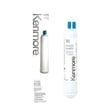
| Slow water flow, bad taste/odor | Water filter | Kenmore refrigerator water filter 9083 |
| No ice or weak ice production | Ice maker assembly | Refrigerator ice maker 2198597 |
| Warm temps, noisy freezer | Evaporator fan motor or blade | Refrigerator evaporator fan motor WP2315549 |
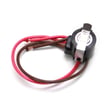
| Frost buildup, warm fridge | Defrost thermostat or heater | Refrigerator defrost bi-metal thermostat WPW10225581 |
| Leaks at dispenser or under unit | Water tubing or inlet valve | Refrigerator water inlet valve WPW10159839 |
Why it matters
Catching airflow, defrost, and water-supply problems early helps prevent temperature swings that spoil food, reduces ice buildup that can damage fan components, and keeps the dispenser system working reliably.
For model-specific operating tips (controls, water filter status light, flushing the water system, and troubleshooting), use the owner's manual.
Last updated: February 2026
How to tell if a Kenmore refrigerator compressor is bad?
A bad compressor on your Kenmore Elite 10657789701 often shows up as poor cooling with long run times, unusual clicking or buzzing, or the unit trying to start and then stopping. Before condemning the compressor, we rule out power, control settings, airflow, and start-component issues using the checks in the owner's manual.
Quick symptoms vs. normal operation
Some sounds and longer run times can be normal on this model, especially after installation or with frequent door openings.
- More likely a compressor or sealed-system problem
- Refrigerator and freezer both warm, even though the unit runs a lot
- Repeated clicking every few minutes (start attempt then shutoff)
- Compressor shell gets very hot and then shuts off on overload
- No cooling improvement after 24 hours of continuous operation
- Often normal (not a bad compressor by itself)
- Longer run times in a warm room or after adding a large food load
- Intermittent pulsating or rattling sounds as the compressor and fans adjust
- Buzzing when the water valve fills the ice maker
Checks we do before replacing a compressor
Start with the simple items the manual calls out, then move to component testing.
- Power and controls: Confirm the cord is plugged into a grounded 3-prong outlet, the outlet works, and the controls are turned on.
- Give it time: After a new installation or major temperature change, allow 24 hours for full cooling.
- Listen and feel: If you hear a click and the compressor stops, that points to a start issue or an overloaded compressor.
- Inspect airflow and cleanliness: Make sure vents are not blocked and the condenser area is clean (restricted airflow can mimic compressor trouble).
- Electrical testing (advanced): Use a multimeter to check compressor winding continuity and check for a short to ground.
What the results usually mean
| What you observe | Most common cause | What to do next |
|---|---|---|
| Clicks, tries to start, then stops | Start device/capacitor issue or compressor overload | Test start components; if they test good, suspect compressor |
| Runs constantly, both sections warm | Sealed-system/compressor not pumping | Professional sealed-system diagnosis |
| Runs a lot but temps are close to normal | Normal high-efficiency operation | Verify settings and door sealing |
Why it matters
Replacing a compressor is one of the most expensive refrigerator repairs. Doing the power, control, and run-time checks first prevents replacing major parts when the real issue is a simple electrical supply problem or normal operating behavior.
Last updated: February 2026