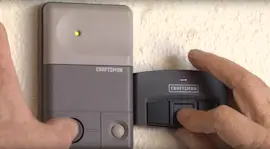
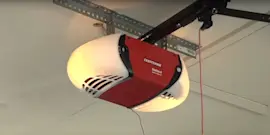
Error Codes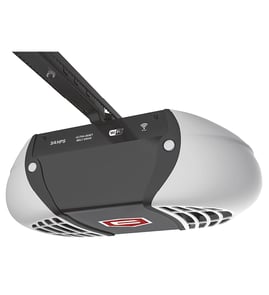

How do I know which garage door opener is compatible?
For a Craftsman 13918415SR garage door opener, compatibility is determined by matching the accessory (remote, keypad, wall control, or smart controller) to the opener’s radio system: learn button type, frequency, and whether it uses rolling-code technology. Start by identifying the opener’s learn button and then choose accessories that list Craftsman support for that system.
- Learn button color on the motor unit (commonly yellow, purple, red/orange, or green)
- Manufacture era (newer openers typically use rolling codes; very old units may use DIP switches)
- Accessory type you’re adding (remote, wireless keypad, wall console, smart hub)
- Existing working remote (its model number is often the fastest compatibility clue)
- Safety sensor setup (some upgrades require sensors to be working correctly)
| What you see on the opener | What it usually indicates | What to buy/use |
|---|---|---|
| Learn button present | Rolling-code system | Remote/keypad that supports that learn-button system |
| No learn button; DIP switches | Fixed-code system | DIP-switch compatible remote/keypad |
| Remotes work intermittently | Signal or sensor issue, not always “wrong remote” | Troubleshoot first, then replace if needed |
- Locate the learn button on the motor head (near the antenna wire/light cover area).
- Write down the learn button color and any label info (brand, logic board info, FCC ID if present).
- Match the accessory to that system (rolling-code vs DIP switch).
- If you’re seeing blinking lights or diagnostic behavior, check error code guidance first using Craftsman error codes.
Using the wrong remote or keypad usually will not program at all, but a door that starts and stops, reverses, or will not close can also be caused by safety sensors, force/travel settings, or a door hardware issue. Confirming the radio system first prevents buying an incompatible controller and helps you focus on the real failure.
We list replacement parts by model when available; if you need to broaden your search by accessory type or model number, use Sears PartsDirect.
Last updated: February 2026
Where can I buy Craftsman garage door opener parts?
You can buy replacement parts for your Craftsman garage door opener model 13918415SR from the model-specific parts list, then order what you need through Sears PartsDirect. This is the best way to match the right parts to your opener and avoid ordering the wrong item.
- Confirm the opener model number on the motor unit label: 13918415SR
- Identify the symptom first (won’t open, won’t close, remote issues, sensor issues)
- Use the model parts list to narrow to the correct section (motor head, rail/drive, safety sensors, wiring)
- Compare your original part’s markings and connector style before ordering
- If your opener shows diagnostic flashes, look up the code before buying parts
These are the most frequently needed categories when troubleshooting a Craftsman garage door opener:
| Problem you see | Parts to check first | What it affects |
|---|---|---|
| Door won’t close or reverses | Safety sensors, sensor brackets, sensor wiring | Obstruction detection and closing safety |
| Motor runs but door doesn’t move | Drive gear/worm gear, sprocket, chain/belt components | Power transfer to the rail |
| Remote or keypad won’t work | Remote, keypad, receiver logic board (if equipped) | Radio signal and control input |
| Wall button issues | Wall control, wiring, logic board | Command signal to the opener |
If your Craftsman 13918415SR has blinking lights or a diagnostic code pattern, match the code to the failure first. That helps you focus on the correct system (safety sensors, travel/force settings, motor/board).
- Reference: Craftsman error codes
Garage door opener parts are highly model-specific; the correct safety sensor style, wall control, and drive components depend on the exact Craftsman model. Starting with 13918415SR reduces returns and gets your door operating safely.
Last updated: February 2026
Is it cheaper to repair or replace a garage door opener?
Repairing a Craftsman garage door opener like model 13918415SR is cheaper when the problem is small (sensor alignment, remote issues, loose wiring, force setting). Replacing is the better value when the opener is older (typically 12+ years), has repeated failures, or needs major drive or logic-board work.
- Repair when the door is mechanically fine and the opener issue is isolated (remotes, wall control, sensors).
- Repair when the opener runs but stops or reverses and a force/travel adjustment fixes it.
- Replace when the opener strains, grinds, or intermittently fails even after basic adjustments.
- Replace when you need newer features (battery backup, quieter operation, smart controls).
- Replace when repair cost approaches a large share of a new unit (a common cutoff is $300 to $500 in parts and labor).
Costs vary by region and door size, but these ranges are common for residential openers.
| Option | Typical cost range | Best for |
|---|---|---|
| Minor repair (sensors, wiring, remote setup) | $100 to $250 | Newer openers with a clear, single fault |
| Moderate repair (wall control, safety sensor replacement, adjustments) | $150 to $350 | Opener is otherwise reliable |
| Major repair (motor/gear/logic board level work) | $300 to $500+ | Only if the opener is relatively new and in great shape |
| Replace opener (unit plus installation) | $400 to $1,000+ | Older units, repeated breakdowns, or feature upgrades |
- Safety sensors: confirm both sensor LEDs are steady and the lenses are clean.
- Door balance: disconnect the trolley and lift the door by hand; it should stay near mid-travel.
- Force and travel settings: small misadjustments can mimic “bad opener” symptoms.
- Remote and wall control behavior: isolate whether the issue is control-related or drive-related.
For step-by-step troubleshooting patterns and blink codes, use our Craftsman error codes guide.
A garage door opener can look like the problem when the real issue is door drag, spring tension, or sensor alignment. Fixing the root cause prevents repeat failures and helps you avoid paying for a replacement you do not need.
If you decide to replace or you want to compare options by model number, we recommend starting your search on Sears PartsDirect.
Last updated: February 2026
What are the common problems with Craftsman garage door openers?
Common problems on the Craftsman 13918415SR garage door opener fall into three buckets: safety sensor issues (door will not close), drive wear (grinding, slipping, or no movement), and control or remote problems (intermittent or no response). Most are fixed with basic inspection, cleaning, adjustment, or targeted part replacement.
- Door will not close; lights blink: safety sensors blocked, misaligned, or wiring issue.
- Motor runs but door does not move: stripped drive gear, broken belt/chain, or trolley issue.
- Grinding or loud clicking: worn drive gear/worm gear, loose sprocket, or dry rail.
- Remote/keypad works sometimes: weak battery, interference, or receiver/logic board issue.
- Door reverses or stops mid-travel: force/travel settings off, binding door, or sensor problem.
- Wall control dead: wiring, wall control, or logic board problem.
- Check the door balance: disconnect the opener and lift the door by hand. A heavy or dropping door points to a door hardware issue (springs/rollers/track) that can mimic opener failure.
- Inspect and clean the safety sensors: wipe lenses, confirm both LEDs are steady, and make sure brackets are not bent.
- Look for obvious drive wear: plastic shavings near the motor head often indicate a stripped gear.
- Verify power and controls: confirm the outlet has power and the wall control wiring is secure.
- Reprogram remotes if needed: especially after power outages or control board changes.
| Symptom | Most likely area | Typical fix type |
|---|---|---|
| Won’t close, blinking lights | Safety sensors | Align/clean/repair wiring |
| Motor hums/runs, no travel | Drive system | Replace worn gear/belt/chain |
| Reverses unexpectedly | Force/travel or door binding | Adjust settings, service door |
| Remote range poor | Remote/receiver/interference | Battery, reprogram, troubleshoot |
A garage door opener is designed to stop or reverse when it senses an obstruction. Sensor alignment, correct force settings, and a smoothly moving door prevent nuisance reversals and reduce wear on the motor, gears, and rail.
- Use Craftsman error codes to match flashing-light patterns to the most likely failure area.
- For sensor-related closing problems, follow garage door wont close safety sensor troubleshooting video lights blink 10 times.
- For general upkeep that prevents many common failures, see how to maintain a garage door opener.
If you need to look up replacement parts by diagram for Craftsman 13918415SR, start with the parts list for this model, or search by model number on Sears PartsDirect.
Last updated: February 2026
Can you get a universal remote for an old garage door opener?
Yes. For an older Craftsman garage door opener like model 13918415SR, a universal remote often works if it supports the opener’s coding type (learn button vs DIP switches). If it does not, adding an external receiver lets modern universal remotes work reliably.
- Look for a learn button on the motor head (near the antenna wire or light cover).
- Look for DIP switches (a row of tiny switches) on the opener or inside an old remote.
- Confirm the wall control operates the door (proves the opener and door are basically functional).
- Replace the remote battery before programming.
| What your opener uses | Best solution | Why it works |
|---|---|---|
| Learn button (rolling code) | Universal remote programmed to the opener | Matches the opener’s pairing method |
| DIP switches (fixed code) | Universal remote set to the same switch pattern | Copies the fixed code |
| Unknown or uncommon setup | External receiver + universal remote | Bypasses the built-in receiver |
- Clear and reprogram the remote if it pairs but works intermittently.
- Hang the opener’s antenna wire straight down; do not coil it.
- Reduce interference by moving LED bulbs away from the opener or swapping to a different bulb type.
Using the wrong remote type can look like an opener failure (no response or very short range). Identifying learn button vs DIP switches first prevents wasted time and points you to the most reliable fix.
If the opener shows diagnostic behavior (blinking lights or error patterns), use Craftsman error codes to narrow down the problem. For parts and accessories, check the model parts list first; for broader searching by model number, use Sears PartsDirect.
Last updated: February 2026