Owner’s manual


Where is the model number on Kenmore Elite dryer?
On the Kenmore Elite dryer model 79681028900, the model number is printed on the identification plate inside the dryer door opening. Open the door and look along the inner door frame area where the label lists both the model and serial number; see the 79681028900 owner's manual.
- Open the dryer door fully.
- Check the cabinet frame just inside the door opening.
- Look for a rectangular sticker or metal plate.
- Confirm you are reading Model No. (not just the serial number).
- Write down the full model number exactly as shown.
The identification plate is meant to give you the key details you need for parts and service.
| Label item | What it’s used for |
|---|---|
| Model number | Matching the correct Kenmore Elite dryer parts diagrams and parts |
| Serial number | Identifying production details for service and support |
| Rating information | Electrical or gas requirements reference |
Using the exact model number (for example, 79681028900) helps us match the correct parts for your dryer, such as a drum belt, heating element, or door switch. Even small model-number differences can change which part fits.
Last updated: February 2026
What is the life expectancy of a Kenmore dryer?
A Kenmore dryer typically lasts 10 to 13 years. For the Kenmore Elite 79681028900, consistent maintenance (especially lint and vent cleaning) helps it reach that range and reduces wear on key parts like the heating system, drum support, and airflow components.
- Airflow and venting: Restricted venting makes the dryer run hotter and longer.
- Lint control: A clogged lint filter or lint buildup inside the cabinet increases heat stress.
- Load habits: Overloading strains the drum belt, idler pulley, and drum rollers.
- Heat management: Overheating can shorten the life of thermostats and the heating element.
- Routine cleaning: Gentle cleaning protects finishes and seals.
The 79681028900 owner's manual emphasizes regular cleaning and vent care. Use this schedule to extend service life:
| Task | How often | Why it matters |
|---|---|---|
| Clean lint filter | Every load | Improves airflow and drying performance |
| Check and clean vent ductwork | At least yearly | Reduces drying time and overheating risk |
| Wipe door opening and seal | Monthly | Prevents lint and dust buildup that can damage seals |
| Clean exterior with mild detergent | As needed | Protects finish; avoids abrasive damage |
- Drying times keep getting longer even after vent cleaning
- Burning smell, excessive heat, or repeated thermal shutoffs
- Loud squealing, thumping, or rumbling from the drum area
- Drum stops turning or slips under load
- Intermittent power, unresponsive controls, or cycle failures
If the dryer is otherwise in good shape, replacing wear items often adds years of reliable use:
- Dryer drum belt 4400EL2001F (drum not turning or slipping)
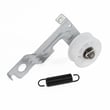
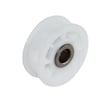
- Dryer idler pulley 4560EL3001A (squealing, belt tension issues)
- Dryer heating element 5301EL1001J (no heat on electric models)
A dryer that runs with poor airflow or heavy mechanical drag works harder every cycle. That extra run time and heat accelerates wear on Kenmore Elite components, increases energy use, and leads to more frequent repairs.
Last updated: February 2026
What are common problems with Kenmore dryers?
Common problems we see on the Kenmore Elite dryer model 79681028900 are no heat, long dry times from restricted venting, the drum not turning, and loud thumping or squealing. Many symptoms trace back to airflow (lint and duct restrictions), power supply issues, or normal wear on drum-drive parts; see the 79681028900 owner's manual for model-specific checks.
- Dryer runs but does not heat: tripped breaker or blown fuse (some electric dryers can run without heat), failed heating circuit parts
- Long drying times: clogged lint filter, crushed or dirty exhaust duct, blocked vent hood (poor venting is a top cause)
- Drum will not tumble: worn belt, idler pulley issue, motor problem
- Loud noise (thump, squeal, rumble): worn drum support rollers, idler pulley wear, belt wear
- Check Vent light blinking: serious restriction in the home exhaust duct (not a dryer failure)
- Clean the lint filter before every cycle; hold it up to a light and wash it if it looks film-coated.
- Inspect venting end-to-end; use rigid or semi-rigid metal ducting, not plastic or foil.
- Check the outside vent hood; remove lint and confirm the damper opens freely.
- Confirm the dryer is not overloaded or underloaded; both can affect sensor cycles and dry time.
- If the dryer will not start or will not heat, check the house breaker and outlet power.
| Symptom | Common wear item | Example part for this model |
|---|---|---|
| Drum not turning | Drum belt | Dryer drum belt 4400EL2001F |
| Squealing or rumbling | Drum support roller | Dryer drum support roller 4581EL2002L |
| Squeal, belt slipping | Idler pulley | Dryer idler pulley 4560EL3001A |
| No heat or overheating symptoms | High-limit thermostat | Dryer high-limit thermostat 6931EL3003D |
| Poor temperature sensing | Thermistor | Dryer thermistor AGM30045804 |
Airflow problems make the dryer work harder, increase cycle time, and can trigger indicators like CHECK VENT. Fixing vent restrictions and replacing worn drum-drive parts restores normal drying performance and reduces strain on the motor and heater.
Last updated: February 2026
What does AF mean on my Kenmore Elite dryer?
On Kenmore Elite dryer model 79681028900, AF means the dryer is detecting restricted airflow through the exhaust venting. When airflow is blocked, drying times increase and the dryer can run hotter than intended, so clearing the vent system is the fix.
- Clean the lint filter before every load; never run the dryer without it.
- Check the lint screen housing and chute for packed lint.
- Inspect the vent hose behind the dryer for kinks, crushing, or a long sag.
- Make sure the outside vent hood opens freely and is not clogged by lint.
- If the vent run is long, check for lint buildup in elbows and the wall duct.
- Run a timed dry cycle with the vent temporarily disconnected (only long enough to test airflow); strong airflow at the outlet points to a home vent restriction.
Your dryer uses a duct blockage sensing system (often shown as a “Check Vent” indicator) to alert you when exhaust flow is seriously restricted. AF is the same basic message: the dryer is not moving enough air.
| What you notice | Most likely cause | What to do |
|---|---|---|
| AF shows up, clothes take longer to dry | Lint buildup or crushed vent | Clean and straighten the full vent path |
| AF shows up, dryer feels very hot | Severe restriction at vent hood or duct | Stop and clear blockage before continued use |
| AF shows up after a move/installation | Vent hose kinked or too long | Re-route with a smooth, short run |
Restricted airflow traps heat and moisture in the dryer, which drives up energy use, increases cycle time, and can lead to overheating symptoms. Keeping the exhaust duct clean (at least yearly) helps the dryer run efficiently and reduces service calls.
For venting, indicator lights, and maintenance steps for your Kenmore Elite 79681028900, use the 79681028900 owner's manual.
Last updated: February 2026
Is Kenmore Elite high end?
Yes. Kenmore Elite is Kenmore’s higher-end line, and the Kenmore Elite dryer model 79681028900 is built around premium convenience features (like specialized cycles and options) plus a more refined fit and finish than entry-level Kenmore models; exact feature sets vary by model.
On the 79681028900, “Elite” typically shows up as more cycle choices and advanced options you use every day.
- More specialized cycles (for example, Sanitize, SteamRefresh, Bulky/Bedding, Delicates, Air dry/Rack dry)
- Convenience features such as Control lock (CL) and drum light
- Designed for years of dependable operation with routine care
- Better results depend on proper airflow and regular lint and vent maintenance
For cycle details and default settings (like Sanitize running HIGH heat and EXTRA DRY), use the 79681028900 owner’s manual.
Use these quick checks to decide if this Elite dryer fits what you consider premium.
| What you care about | What to look for on 79681028900 | Why it matters |
|---|---|---|
| Hygiene-focused drying | Sanitize cycle (fixed HIGH heat, EXTRA DRY) | Helps target bacteria on sturdy fabrics |
| Wrinkle reduction | SteamRefresh, Touch Up | Less ironing and faster refresh |
| Delicate handling | Delicates, Air dry/Rack dry | Reduces heat stress on sensitive items |
| Ease of use | Drum light, Control lock | Better visibility, fewer accidental changes |
Even a premium dryer can feel underpowered if airflow is restricted.
- Clean the lint filter before every load
- Check and clean vent ductwork at least once per year
- If drying times increase, inspect for crushed, kinked, or blocked venting
- Vacuum lint and dust from around and under the dryer regularly
Elite-level features help most when the dryer can move air efficiently; good venting and a clean lint path protect drying performance, energy efficiency, and cycle accuracy.
Last updated: February 2026
What size is a Kenmore Model 79681028900 dryer?
For Kenmore Elite dryer model 79681028900, the cabinet dimensions are 27 inches wide x 28 11/16 inches deep x 38 inches high; with the door open, the depth is 52 1/4 inches. These measurements help you confirm fit in a laundry room, closet, or alcove.
| Measurement | Size |
|---|---|
| Width | 27 in. |
| Depth (door closed) | 28 11/16 in. |
| Height | 38 in. |
| Depth (door open) | 52 1/4 in. |
Use these checks to avoid clearance and venting problems:
- Measure the space width, depth, and height where the dryer will sit.
- Confirm door swing clearance using the 52 1/4-inch door-open depth.
- Plan room for the exhaust duct outlet behind the dryer.
- If installing in a closet, allow for airflow openings in the door.
- If you are adding a pedestal or stacking kit, verify the required installed height.
For the full clearance diagrams and location requirements, follow the measurements in the 79681028900 owner’s manual.
Correct sizing prevents crushed venting, restricted airflow, and installation headaches. It also helps you decide whether a pedestal base or stacking kit will work in your space without blocking access to the lint screen or door.
Last updated: February 2026
How do I know if my Kenmore dryer thermal fuse is blown?
If your Kenmore Elite dryer model 79681028900 won’t start at all, or it runs but produces no heat, a blown thermal fuse is a common cause. The sure way to confirm is to unplug the dryer and test the fuse for continuity with a multimeter, following the checks in the 79681028900 owner's manual.
- Dryer will not turn on (no motor run)
- Dryer tumbles but does not heat (some configurations)
- Heat stops mid-cycle and the load stays damp
- Vent indicator may blink if airflow is restricted (overheating risk)
- Unplug the dryer (and shut off gas if you have a gas model).
- Access the thermal fuse area (typically on the blower housing or exhaust duct).
- Remove at least one wire from the fuse terminal.
- Set a multimeter to continuity or lowest ohms.
- Test across the fuse terminals.
| Meter result | What it means | Next step |
|---|---|---|
| Beep or near 0 ohms | Fuse is good | Check airflow, thermostats, heater circuit |
| No beep or OL/infinite | Fuse is blown | Replace the fuse and correct the overheating cause |
A thermal fuse usually opens because the dryer overheated from poor airflow. The manual calls out checking venting and cleaning lint buildup at least yearly.
- Clean the lint screen and lint screen housing
- Inspect the vent duct for kinks, crushing, or long runs with many turns
- Make sure the outside damper opens freely
- Clean lint from the blower area if accessible
- If drying is slow, treat it as an airflow problem first
These are common heat and airflow related parts for this model:
- Dryer high-limit thermostat 6931EL3003D
- Dryer blower thermostat 6931EL3002M
- Dryer heating element 5301EL1001J
Replacing a blown thermal fuse without fixing restricted venting often leads to repeat failures, longer dry times, and higher energy use.
Last updated: February 2026
How to take off the front panel of a Kenmore dryer?
To remove the front panel on your Kenmore Elite 79681028900 dryer, we start by disconnecting power, then release the top, remove the mounting screws (often inside the door opening and along the top edge), and lift the front panel up and off while supporting it and unplugging any wire connectors.
- Unplug the dryer (or switch off the breaker).
- If it is a gas dryer, shut off the gas supply valve.
- Pull the dryer forward enough to work comfortably.
- Have a container ready for screws.
- Support the panel as you remove the last screws so it does not drop.
For model-specific fastener locations and the correct disassembly order, follow the 79681028900 owner's manual.
- Remove the lint screen (if it blocks top-panel screws on your version).
- Release the top panel: insert a putty knife under the front edge to pop the spring clips, then lift the top.
- Remove screws securing the front panel:
- Look inside the door opening for screws along the door frame.
- Check the upper corners where the front panel meets the cabinet.
- Disconnect wiring (door switch harness) as you separate the panel.
- Lift the front panel up to unhook it from the lower retaining tabs, then pull it away.
| Area you can reach | Common reason you are opening the dryer |
|---|---|
| Drum and belt path | Squealing, thumping, drum not turning |
| Idler and rollers | Chirping, rumbling, belt slipping |
| Blower housing area | Poor airflow, overheating symptoms |
If the drum will not turn or you find a broken belt, the dryer drum belt 4400EL2001F is a common replacement for this model.
Removing the front panel correctly prevents bent cabinet edges, broken plastic tabs, and pinched wiring. It also makes it easier to diagnose drum, belt, and airflow problems that can increase dry time and trigger venting warnings.
Last updated: February 2026
How to hard reset a Kenmore dryer?
To hard reset your Kenmore Elite dryer model 79681028900, unplug it (or switch the breaker off) for at least 1 minute, then restore power and press Power to turn it back on. This clears many temporary control glitches; if the dryer still will not run, check for Control Lock and basic start conditions in the 79681028900 owner's manual.
- Press Power to turn the dryer off.
- Unplug the power cord (or turn the dryer breaker off).
- Wait 1 to 5 minutes.
- Restore power.
- Press Power, select a cycle with the cycle selector knob, then press Start/Pause.
- If the dryer was paused or stopped, restart within 4 minutes or it may shut off automatically.
These checks solve most “reset didn’t help” situations on electronic Kenmore dryers:
- Control Lock: Press and hold Control Lock for 5 seconds to unlock the controls.
- Door fully closed: Open and firmly re-close the door, then press Start/Pause.
- Cycle selection: Re-select a cycle using the knob; some options are not allowed on some cycles.
- Power supply: Confirm the outlet and breaker are on (electric dryers need full power to run and heat).
- Airflow restriction: Clean the lint screen and check venting for blockage.
| Action | What it helps | What it will not fix |
|---|---|---|
| Unplugging 1 to 5 minutes | Frozen display, unresponsive buttons, minor logic errors | Broken door switch, failed heater, open thermostat, worn belt |
| Unlocking Control Lock | Controls appear “dead” or buttons do nothing | Power problems or airflow issues |
A hard reset restores the control to a known state, but drying performance and safety still depend on good airflow. We recommend checking and cleaning vent ductwork at least once per year to prevent long dry times and overheating.
Last updated: February 2026
What are the codes for Kenmore Elite dryer?
For Kenmore Elite dryer model 79681028900, the most common display codes include PF (power failure) and several F-codes that point to a control, keypad, heating relay, or temperature-sensing problem. Use the code to guide quick checks, then follow the diagnostic steps in the 79681028900 owner's manual.
Here are the codes customers most often ask about on Kenmore Elite dryers:
- PF: Power failure or power interruption during a cycle.
- F:01: Main electronic control board problem.
- F:02: Keypad or user interface problem.
- F:20: Heater relay problem.
- F:22 / F:23: Outlet thermistor (temperature sensor) problem.
- F:24 / F:25: Inlet thermistor (temperature sensor) problem.
Before replacing parts, we recommend these basics because they solve many PF and heating-related complaints:
- Reset the dryer by unplugging it for 1 minute, then restore power.
- Check the house breaker or fuses; an electric dryer can sometimes run but not heat if a circuit issue exists.
- Confirm strong airflow at the outside vent; restricted ducting can trigger performance warnings.
- Clean the lint filter and inspect the lint screen area for buildup.
- If you are using steam cycles, refill the steam feeder if the ADD WATER indicator is flashing.
Use this as a practical starting point for model 79681028900. If a code repeats after a reset, testing is the next step.
| Code | Most likely system | Common next step | Parts that often relate |
|---|---|---|---|
| PF | Power supply | Check breaker, cord, outlet | None (power issue) |
| F:01 | Control | Inspect connections, consider board | Kenmore dryer electronic control board CSP30102605 |
| F:02 | User interface | Check stuck keys, wiring | Control panel components |
| F:20 | Heating control | Verify heat output, wiring | Dryer heating element 5301EL1001J |
| F:22-F:25 | Temperature sensing | Check sensor harness, airflow | Dryer thermistor AGM30045804 |
Error codes help narrow the problem fast. For example, thermistor-related codes often show up when airflow is restricted or the sensor circuit is out of range, while PF points to an interruption that can stop a cycle mid-dry.
Last updated: February 2026