View engine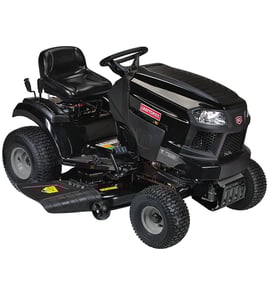


How to find Craftsman model number?
On a Craftsman riding mower like model 917271040, the model number is typically on an ID label on the frame under the seat or on the underside of the seat itself. Once you have it, you can match the correct diagrams and replacement parts for your tractor.
Where to look on a Craftsman riding mower
Check these common label locations first:
- Under the seat on the frame (lift the seat and look down at the chassis rails)
- On the underside of the seat pan
- Near the rear fender area under the seat
- On the frame near the engine (less common)
- On the mower deck shell (sometimes a separate deck tag)
What you should write down
We recommend recording all the ID information on the tag:
- Model number (example: 917271040)
- Serial number
- Product number (if listed)
- Engine model and type (often on a separate engine label)
Quick ID guide
| Label item | What it’s used for | Why it matters |
|---|---|---|
| Model number | Finds the correct parts diagrams | Prevents ordering the wrong belt, blade, or steering part |
| Serial number | Identifies production range | Helps match running changes |
| Engine model/type | Engine-specific tune-up parts | Filters, plugs, and carb parts vary by engine |
Why it matters
Craftsman tractors can look similar across years, but parts like a drive belt, mandrel assembly, or starter solenoid can differ by model and production run. Using the exact model number keeps your repair accurate and avoids returns.
Helpful DIY reference
If you’re troubleshooting a no-start while you’re identifying the tractor, use our guide: riding lawn mower engine clicks but doesnt turn over video.
Last updated: February 2026
What year did Craftsman make the 917271040?
Craftsman model 917271040 was made across a range of production years (not a single year). The exact build year for your specific tractor is determined from the serial number/date code on the ID tag, typically found under the seat or on the frame; we use that code to pinpoint the manufacture date.
How to find the build year on your tractor
Look for the model and serial label, then record the full serial number exactly as shown.
- Lift the seat and check the underside of the seat pan area
- Check the frame rails near the rear wheels
- Look near the engine compartment or dash support
- Clean the label gently so every digit is readable
- Write down both the model number (917271040) and the full serial number
How the serial number helps (what to do with it)
Once you have the serial number, match it to the date format used on many Craftsman-built riding tractors. A common format encodes the month and day, and in many cases the year is included or can be inferred from the full code.
| What you have | What it tells you | What to record |
|---|---|---|
| Model number | The tractor family/configuration | 917271040 |
| Serial number/date code | The specific unit’s build date | Full serial number |
| ID tag location | Helps confirm you found the correct label | Under seat or frame |
Why it matters
Knowing the exact build year helps us match the correct parts diagrams and compatible replacements for your Craftsman riding mower, especially for deck components, belts, steering parts, and electrical items that can change mid-series.
Parts that commonly vary by production run
If you are ordering parts, the build date can prevent wrong-fit issues for items like these:
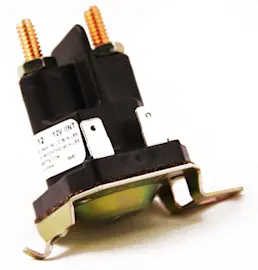
- Starter solenoid (example: solenoid 532146154)
- Deck drive components (example: lawn tractor drive belt 532144200)
- Spindles/mandrels (example: husqvarna lawn tractor mandrel assembly 532130794)
- Steering components (example: steering assembly service kit 584371701)
Last updated: February 2026
What engine does Craftsman riding mower use?
For Craftsman model 917271040, the exact engine make and horsepower depend on the engine spec originally installed on that tractor; this model family commonly uses a single-cylinder gasoline engine (often Briggs & Stratton) in the mid-teen to high-teen HP range. For engine-related repairs, we match parts by the tractor model and the engine’s ID tag.
How to identify the exact engine on 917271040
Look for the engine identification label on the engine shroud or valve cover area. Record these items:
- Engine brand (commonly Briggs & Stratton on many Craftsman tractors)
- Model number
- Type number
- Code (date code)
- Any spec number shown on the tag
Quick check table
| What you have | What it tells us | What to do next |
|---|---|---|
| Tractor model: 917271040 | Confirms the tractor platform and compatible chassis/deck parts | Use the parts list for tractor components |
| Engine model/type/code | Identifies the exact engine build | Use those numbers to match engine-specific parts |
| Symptoms (no crank, clicks, etc.) | Points to starting/charging circuit vs. engine issue | Follow the troubleshooting steps below |
If you are troubleshooting a no-start or clicking issue
Many “engine” problems on riding mowers are actually starting circuit issues. Check these in order:
- Battery connections: clean and tight at both battery posts and frame ground
- Brake/clutch pedal fully depressed (safety interlock)
- PTO/blade switch in OFF position
- Starter solenoid operation (a common failure point)
- Wiring at the solenoid and starter for corrosion or loose terminals
If the solenoid is faulty, a direct-fit replacement is the solenoid 532146154.
Why it matters
Craftsman tractors can share the same tractor model number while using different engine variants over production runs. Using the engine’s model/type/code prevents ordering the wrong carburetor, ignition, starter, or tune-up parts, and it speeds up diagnosis.
For step-by-step help diagnosing a click-no-crank condition, use our riding lawn mower engine clicks but doesnt turn over video.
Last updated: February 2026
What size belt is 917271040?
For the Craftsman 917271040 front-engine lawn tractor, belt size depends on which belt you mean (ground drive belt vs. deck/blade drive belt). We match the correct belt by using your model’s parts list and the belt routing for that exact deck and transmission setup.
Which belt are you trying to size?
Most riding mowers use more than one belt. On 917271040, the most common belt types are:
- Deck (blade) drive belt: spins the mower blades
- Ground drive belt: drives the tractor forward and reverse
- Variable speed or motion belt (on some builds): links engine pulley to transmission input
If your belt is slipping, squealing, or jumping off, the belt type matters because length and width are different.
Model-matched belt options we see for this tractor
These are belt-type parts available for Craftsman 917271040 on this page:
| Belt type | What it does | Part to check on this page |
|---|---|---|
| Deck (blade) drive belt | Runs the mower deck pulleys and blades | Lawn tractor drive belt 532144200 |
| Ground drive belt | Drives the transmission | Ground v-belt 532161588 |
How to confirm you have the right belt (fast)
We recommend confirming by belt location and routing:
- Deck belt routes around the deck mandrels and idlers; inspect the lawn tractor blade idler pulley 532139245 area for wear.
- Ground drive belt routes from the engine pulley toward the transmission; check for glazing, cracks, or stretched sections.
- Measure the old belt only as a backup; worn belts often measure longer than the correct spec.
- If the belt keeps coming off, inspect pulleys and mandrels for wobble (a worn husqvarna lawn tractor mandrel assembly 532130794 can throw belts).
Why it matters
Using the correct belt size for Craftsman 917271040 keeps blade speed and ground speed correct, prevents repeated belt failures, and reduces wear on idler pulleys, mandrel bearings, and the PTO engagement system.
Last updated: February 2026
Is it worth replacing a lawn mower engine?
Replacing the engine on your Craftsman 917271040 front-engine lawn tractor is worth it when the tractor’s deck, steering, and drive system are still solid and the total engine-swap cost stays well below the cost of replacing the whole machine. If the deck is rusted through or the drivetrain is failing, put that money toward a replacement instead.
Quick decision checklist
- Deck condition: no cracks, no severe rust-through, spindles mount tightly
- Drive system: moves smoothly forward and reverse; no slipping or loud hydro/gear noises
- Steering and front end: minimal play; no bent linkage
- Parts support: common wear parts are still available for your model
- Total cost: engine + hardware + belts/blades you should replace anyway
Cost and value guide (practical rule)
| If your engine swap total is... | And the tractor is... | Best move |
|---|---|---|
| Under ~40% of replacement cost | Otherwise in good shape | Replace the engine |
| ~40% to 60% | Mixed condition | Decide based on deck and drivetrain |
| Over ~60% | Older or worn | Replace the tractor |
Parts we often replace during an engine swap
Even if the engine is the main failure, we usually inspect and refresh wear items so the new engine is not fighting old drag or vibration.
- Deck belt condition and routing (consider replacing the lawn tractor drive belt 532144200)
- Blade condition and balance (consider replacing the husqvarna lawn tractor mulching blade, 21-in 532134149 if your setup matches)
- Spindle and pulley noise or wobble (inspect the husqvarna lawn tractor mandrel assembly 532130794)
- Starter circuit reliability (a weak solenoid can mimic engine problems; check the solenoid 532146154)
Why it matters
An engine swap only pays off when the rest of the tractor can reliably deliver power to the wheels and deck. If the deck shell, mandrel area, or drive system is near end-of-life, a new engine can turn into a chain of expensive follow-up repairs.
A smart first step before you commit
If the engine “clicks” or “spins but won’t start,” confirm it is truly an engine failure (not battery, solenoid, safety switch, or starter circuit) using our DIY walkthrough: riding lawn mower engine clicks but doesnt turn over video.
Last updated: February 2026